
Spain Tells Trump “No to War,” Blocks U.S. Bases for Iran Strikes


Spain’s decision to block U.S. military access to Rota and Morón bases has ignited tensions with Washington and revived memories of the Iraq War.
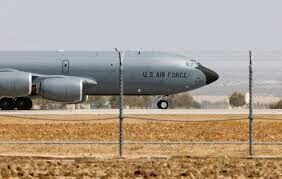
MADRID, March 5, 2026 — A diplomatic rift between Pedro Sánchez and Donald Trump has thrust Spain into the center of a widening international dispute over the escalating confrontation with Iran, after Madrid refused to allow the United States to use key Spanish air bases for military strikes.
The standoff erupted when Spain vetoed the use of the Rota naval base and Morón air base, two facilities that have long supported U.S. and NATO operations in Europe and the Middle East. Washington had reportedly sought access to the bases to support potential operations against Iran amid rising regional tensions.
The refusal prompted a sharp response from Trump, who publicly criticized Spain as a “terrible partner” and threatened to cut off trade with the country if it continued blocking U.S. military use of the facilities.
Instead of quietly negotiating behind closed doors, Sánchez addressed the confrontation directly in a televised speech to the nation on March 4 — a ten-minute address that quickly reverberated across Europe and Washington.
A Historical Warning
In his speech, Sánchez framed Spain’s decision not simply as a diplomatic disagreement, but as a lesson drawn from recent history.
He invoked the Iraq War, launched in 2003 by the United States and its allies, reminding viewers that the invasion had been justified by claims that Iraq possessed weapons of mass destruction — claims that were later discredited.
“Twenty-three years ago,” Sánchez said, “another U.S. administration persuaded its allies to go to war over weapons that were never found.”
The consequences, he argued, were profound: prolonged instability in the Middle East, the growth of extremist movements, waves of migration into Europe, and lasting pressure on global energy markets.
For Sánchez, the memory remains politically potent in Spain, where opposition to the Iraq war reshaped domestic politics and public attitudes toward military interventions.
The “Azores Trio”
The Spanish prime minister also referenced the leaders who backed the 2003 invasion — George W. Bush, Tony Blair, and Spain’s then-prime minister José María Aznar — who famously met ahead of the war in the Portuguese archipelago.
Sánchez referred to them collectively as the “Azores Trio,” a reference to the diplomatic summit that preceded the invasion.
Their legacy, he argued, had left Europeans with what he described as “a lousy life” marked by insecurity, economic strain, and geopolitical instability.
The remark drew immediate attention across European media, both for its bluntness and for its direct challenge to Washington’s narrative surrounding the current crisis.
“No to War”
Despite Trump’s criticism, Sánchez framed Spain’s position as principled rather than confrontational.
His response to the U.S. president’s accusation was deliberately concise.
“Three words,” he said during the broadcast. “No to war.”
The phrase echoed the massive anti-war protests that swept Spain and much of Europe in 2003, when millions demonstrated against the Iraq invasion.
Strategic Stakes
Spain’s decision has implications beyond the immediate diplomatic spat.
The bases at Rota and Morón are critical logistical hubs for U.S. military operations in Europe, Africa, and the Middle East. Access to them allows rapid deployment of aircraft, refueling capabilities, and coordination with NATO allies.
A prolonged denial could complicate American operational planning in the Mediterranean and surrounding regions.
At the same time, Spain remains a NATO member and a longstanding U.S. ally, making the dispute particularly sensitive within the alliance.
A Wider European Debate
Sánchez’s speech also reflects a broader debate unfolding across Europe about how closely allies should align with Washington in a potential confrontation with Iran.
Several European governments remain wary of becoming entangled in another Middle Eastern conflict, particularly one that could exacerbate energy volatility and migration pressures.
For now, Madrid’s position is clear.
Spain, Sánchez told the nation, will not repeat what he sees as the mistakes of the past.
And in a moment that underscored the widening political divide across the Atlantic, the Spanish leader concluded his address with a message aimed as much at history as at Washington:
Europe, he suggested, had already learned the cost of war.