
The question of who would become Germany’s next Federal President was, for a time, a surprisingly fraught affair. Now, that uncertainty has ended. On November 9th, Merz officially announced that Aigner, a politician from the CSU – Bavaria’s traditionally conservative sister party to the CDU – would be the joint candidate of the Union for the upcoming presidential election.
Merz’s decision to nominate Aigner followed a period of hesitation due to party dynamics, but the groundwork was laid earlier. As early as August 1st, Merz and Aigner had discussed the possibility of a candidacy, and the CDU leadership eventually followed Merz’s proposal to advance her as the candidate. The Federal President serves a five-year term, and the role requires a broad consensus to secure. Merz’s initial reluctance reflected a careful calculation of those political currents.
The announcement itself was a carefully staged event. At CDU headquarters in Berlin, Merz lauded Aigner, 61, as a leader possessing both “dignity and heart.” He emphasized the need for a strong figurehead during a period defined by “geopolitical crises, increasing tensions in our society, and growing support for extremist fringes.” Aigner, he asserted, would be a president who “stands up for democracy in our country with her groundedness, her political experience, and her clear stance.” Reports indicate Aigner received a standing ovation when she introduced herself to the CDU federal board beforehand.
She described her intention to be a “candidate of the center,” aiming to bridge the widening societal divides and combat political polarization.
Yet, the presentation wasn’t entirely seamless. In a surprising move, CSU Chairman Markus Söder was absent from the joint announcement. Instead, he held a separate press conference in Munich, offering a somewhat backhanded endorsement. “We gladly give Ilse away,” Söder stated, framing her candidacy as “a huge signal for Germany.” This unusual arrangement highlighted the delicate balance of power between the two parties, even as they presented a united front.

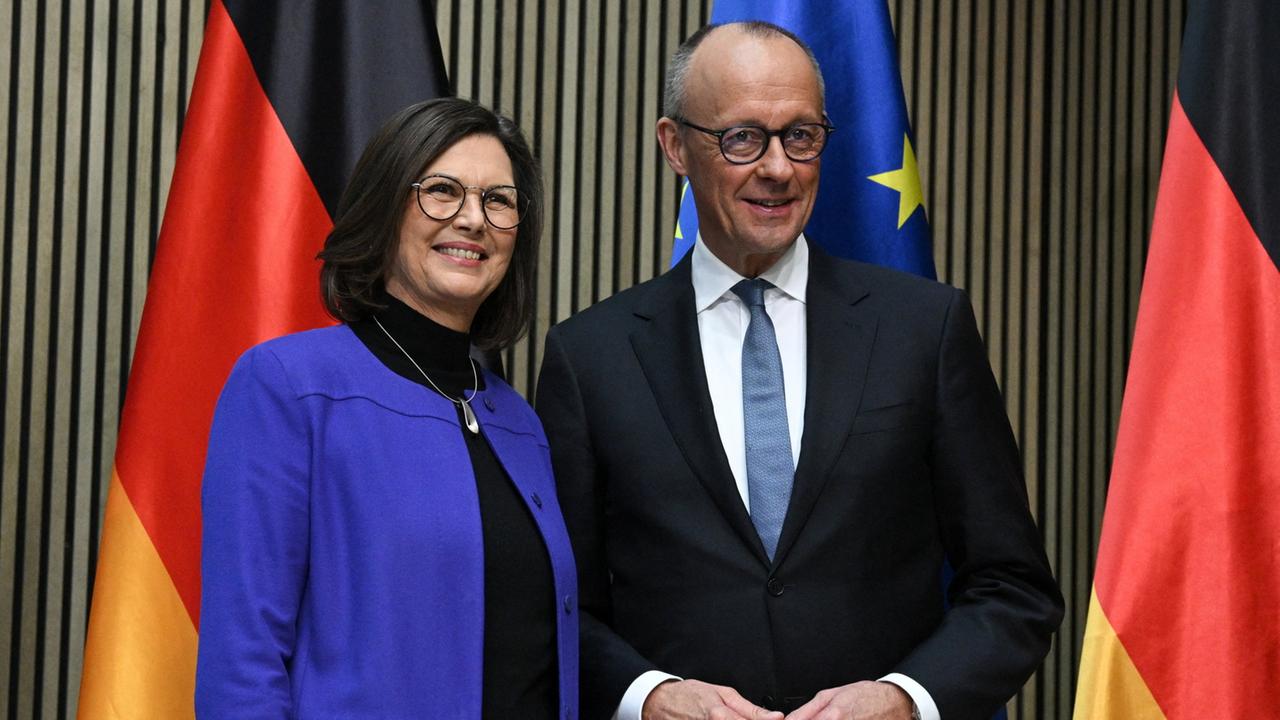
CDU: 'CDU party leader and Federal Chancellor Friedrich Merz, Member of the Bundestag, and Ilse Aigner, Member of the Bavarian State Parliament, are giving a joint press statement.'
Aigner herself, speaking alongside Merz, positioned herself as a unifying force. She described her intention to be a “candidate of the center,” aiming to bridge the widening societal divides and combat political polarization. “My language will be clear and understandable,” she pledged, positioning herself as a counterweight to the rising tide of extremist ideologies and attacks on human dignity. This emphasis on accessibility and moderation is a key element of her appeal.
“I don’t want to stand above the citizens,” Aigner stated, “but to be part of them.” This sentiment reflects a deliberate attempt to connect with everyday Germans, presenting herself as a relatable figure rather than an aloof political elite. She acknowledged the “political drama” surrounding her nomination, but expressed optimism that it would ultimately lead to broader support. “If this drama leads to a broad political center gathering behind my person, then I am very happy about that,” she said.
The nomination has already garnered support from opposition parties. Both the SPD and the Greens have signaled their willingness to consider Aigner as a viable candidate. This early backing suggests a potential for cross-party consensus, a crucial factor in securing the presidency. Merz and Aigner have known each other for 30 years, a long-standing relationship that likely contributed to the smooth, if initially delayed, nomination process. Merz confirmed that the party leadership had followed his proposal.

At 13:00, Friedrich Merz will hold a press conference with Ilse Aigner, who is set to be nominated by the CDU/CSU as its candidate for President of Germany. She also has the support of the SPD and the Greens, making her election virtually certain. When elected, she would become the first woman and the first CSU member to hold the office since the founding of the Federal Republic.
Ilse Aigner’s nomination marks a significant moment in German politics. Her emphasis on unity and moderation, coupled with the backing of both the CDU/CSU and initial support from opposition parties, positions her as a strong contender for the Federal Presidency. The coming months will be crucial as she campaigns to secure the necessary votes. The election promises to be a test of Germany’s ability to find common ground in a time of increasing political fragmentation. Aigner’s success will depend on her ability to maintain her image as a unifying figure, a “candidate of the center” capable of representing all Germans.