
On November 8, 2026, the rhythm of travel through Egypt’s Giza province was violently interrupted. Near the El Ayat area, the steady motion of two passenger trains, both bound for the southern city of Aswan, ended in a catastrophic collision. The impact was severe enough to force several carriages to overturn, transforming a routine journey into a scene of wreckage and chaos. For those traveling toward Aswan, the collision was not merely a delay, but a life-altering event that left the landscape littered with the remnants of the derailed cars.
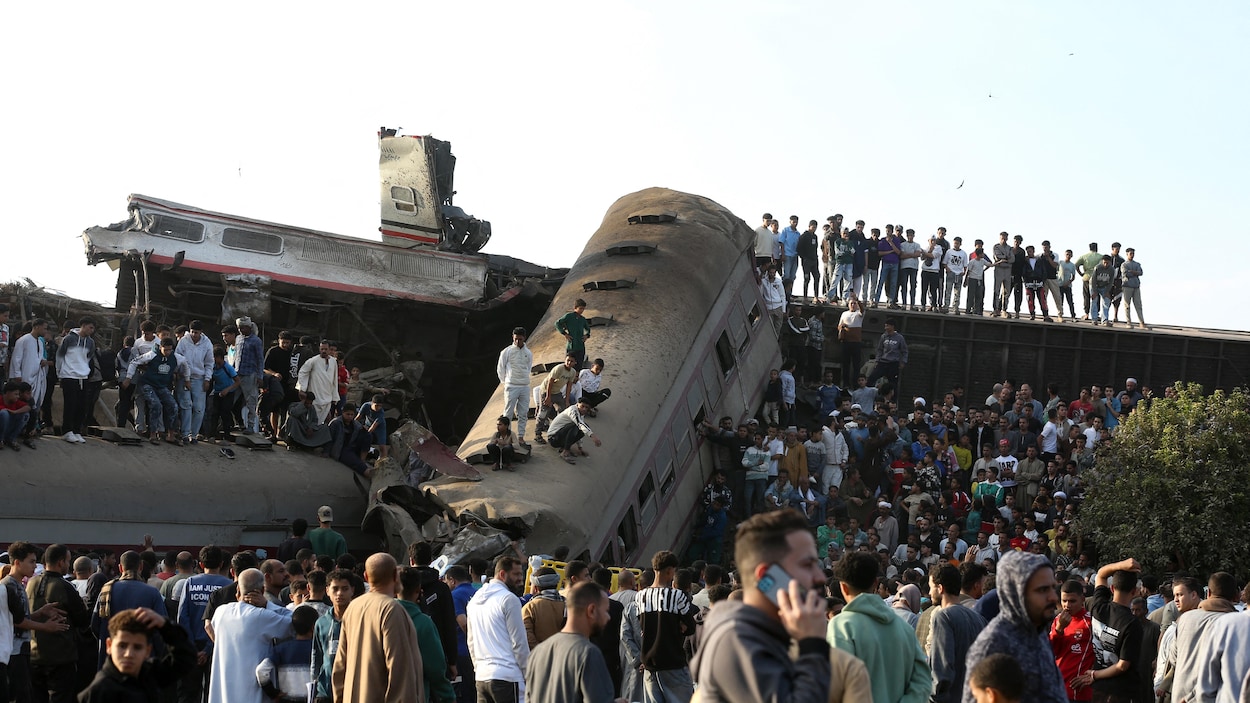
As the dust settled and emergency responders arrived, the scale of the human tragedy began to emerge. The Egyptian Ministry of Health confirmed that the death toll from the collision rose to seven people. Beyond the loss of life, the physical toll on the survivors was extensive. A total of 112 people sustained injuries in the accident, ranging from the immediate trauma of the crash to more complex medical emergencies. The injuries reported included crush injuries, broken limbs, and various cuts, reflecting the violent nature of the carriages overturning.
In the immediate aftermath, the scale of the medical mobilization was significant. To manage the influx of casualties, 70 ambulances were dispatched to the scene, racing to transport the wounded to medical facilities. The injured were distributed across three different hospitals to receive care for their various conditions. Amidst the rush to stabilize the victims, the Egyptian Ministry of Health noted the ongoing nature of the crisis, stating that the "remaining injured patients continue to receive medical treatment."
The injured were distributed across three different hospitals to receive care for their various conditions.
While medical teams worked to save lives, the focus of the state shifted toward understanding how such a disaster could occur. The cause of the collision remains unknown, leaving a void of information where answers are desperately needed. In response to the gravity of the event, President Abdulfettah el-Sisi took immediate action, ordering a formal inquiry into the circumstances surrounding the crash. "I have instructed officials to investigate the accident," the President stated, signaling that the government would seek to uncover the mechanics behind the failure of the rail system.
As news of the catastrophe spread internationally, concerns were raised regarding the nationality of those caught in the wreckage. The Russian Embassy in Egypt moved quickly to address potential concerns regarding its citizens. Following an assessment of the situation, the embassy issued a statement to clarify the presence of Russian nationals among the casualties. The diplomatic mission sought to provide certainty to those waiting for news from abroad, noting that the preliminary data suggested no Russian citizens were involved in the tragedy.
For the families of the victims and the travelers who escaped the overturned carriages, the days following November 8 are defined by uncertainty and recovery. While the investigation into the collision proceeds and the injured continue their treatment in Giza's hospitals, the nation remains focused on the findings of the official probe. The question of why two trains on a path to Aswan met in such a destructive manner remains the central mystery of the El Ayat accident.