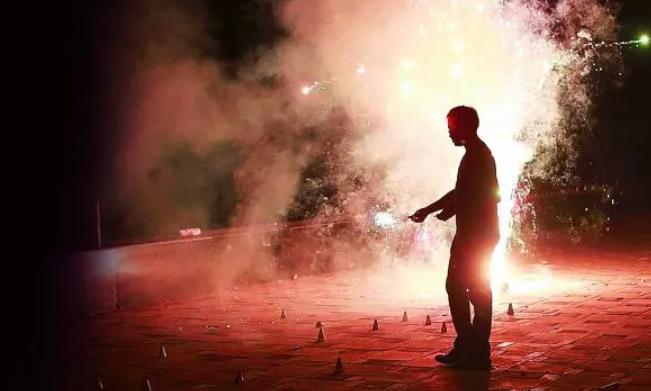
Diwali is traditionally a time of brilliance, a season where the darkness is pushed back by the rhythmic crackle of firecrackers and the glow of celebratory lights. But in Hyderabad, the brilliance of the festival took a sharp, painful turn. As the celebrations reached their peak, the sounds of festivities were increasingly punctuated by the urgent arrival of those seeking medical intervention for injuries sustained in the heat of the moment.

By the early hours of November 9, the reality of the celebration's physical toll began to manifest in the corridors of the city's medical facilities. What started as a night of communal joy transitioned into a period of medical emergency, as the very tools used to mark the occasion—firecrackers—became instruments of accidental harm.
As the sun began to rise on November 9, the scale of the incident became clear. By 6 a.m., medical professionals had already documented 48 individuals who had sought help for eye injuries directly related to bursting firecrackers. The sheer speed with which these cases arrived highlights the concentrated intensity of the celebrations and the suddenness with which an accident can occur.
This specific case highlights the vulnerability of the human eye when faced with the high-velocity, high-heat environment of modern firecrackers.
Among those seeking aid, the severity of the injuries varied, reflecting the unpredictable nature of pyrotechnics. Of the 48 people who approached the hospital, 38 were treated as outpatients, receiving care for injuries that did not require an overnight stay. However, the gravity of the situation was underscored by the 10 individuals who required more intensive care, necessitating admission to the hospital for further treatment.
While many injuries are treated and managed, the true weight of these accidents is felt in the individual lives altered by a single moment of error. In one of the most harrowing accounts from the morning's intake, a victim reportedly lost vision completely in his right eye. Such a loss serves as a stark reminder that behind the statistics of outpatient counts and bed allocations lie permanent, life-altering consequences that can stem from a single firecracker.
This specific case highlights the vulnerability of the human eye when faced with the high-velocity, high-heat environment of modern firecrackers. The transition from a festive atmosphere to a permanent disability can happen in a fraction of a second, leaving a void where there was once sight.
Recognizing the seasonal risks associated with Diwali, the Sarojini Devi Eye Hospital—a massive 550-bed facility—had moved into a state of heightened readiness. The hospital did not merely wait for the influx; it actively prepared for the specific type of trauma expected during this period.
To manage the anticipated surge, the hospital earmarked 20 beds specifically for firecracker injury cases. This dedicated capacity was part of a broader strategy that included keeping medical staff on standby, ensuring that when the injuries inevitably arrived, the infrastructure was in place to respond. This level of preparation is a critical component of urban medical management during major cultural festivals where high-risk activities are commonplace.
As the medical teams worked through the influx of patients, the message from the doctors was one of urgent caution. The injuries observed throughout the night served as a visceral warning to the public. Medical professionals have urged people to exercise extreme care while bursting firecrackers, emphasizing that the risks are particularly acute when children are involved in the festivities.
The surge of patients at Sarojini Devi Eye Hospital stands as a testament to the dual nature of Diwali: a time of profound cultural significance and a period of significant physical risk. As the city moves forward from the celebrations, the memory of the 48 injured remains a sobering lesson in the importance of vigilance amidst the light.