
In the high-stakes theater of the Bundesliga, momentum is often measured in minutes. Instead, the Friday night clash against Cologne on September 20, 2024, became a study in sudden, jarring interruption. What began as a standard pursuit of three points ended in a quiet, heavy realization that one of football's most prolific forces had been sidelined.

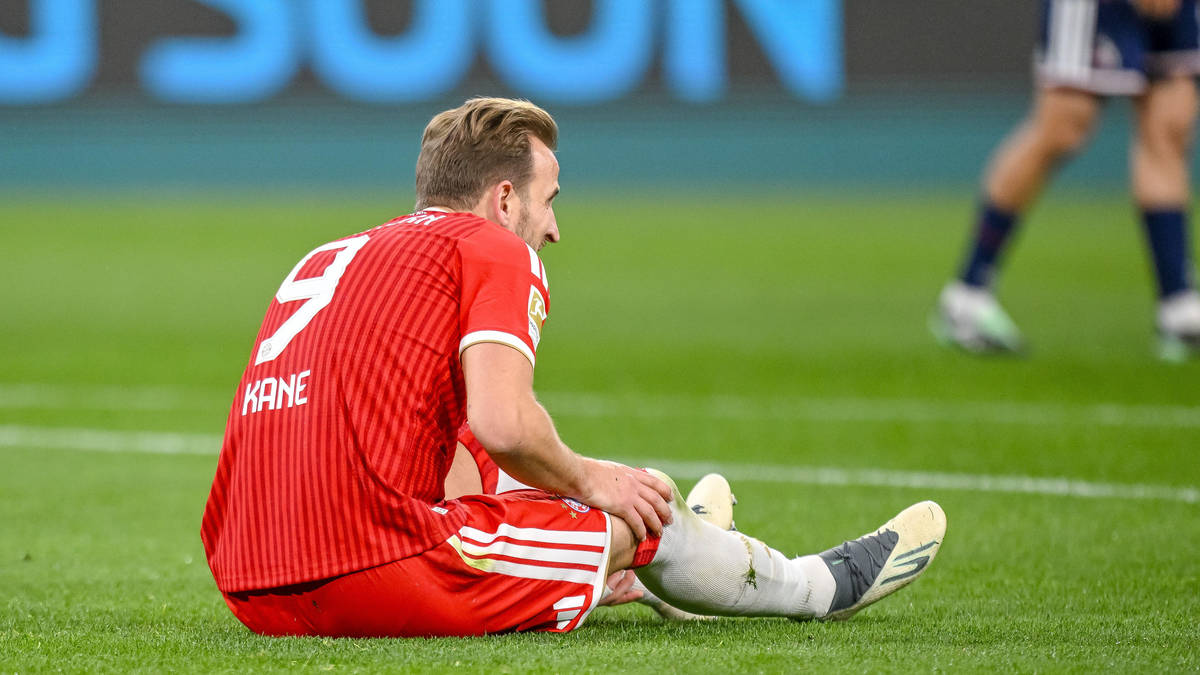
Just twenty minutes into the match, the rhythm of the game broke. The England captain, a player whose presence on the pitch dictates the very geometry of an attack, was forced from the field. The substitution was not a tactical choice, but a necessity born of physical failure. As the lights of the stadium continued to shine, the reality of the situation began to settle: the man who had been leading the charge was no longer able to run.
Following the match, which ultimately concluded in a 1-1 draw with Cologne, the gravity of the situation was made official. Bayern Munich confirmed the clinical reality of the injury: Kane had torn a ligament in his left ankle. In the lexicon of professional sports, a ligament tear is a significant disruption, a structural failure that requires time, patience, and a slow return to stability.
Recently, Kane earned his 126th cap for England, a milestone that saw him move clear of the legendary Peter Shilton in the annals of international football.
The club’s announcement was blunt in its assessment of the timeline. Harry Kane will be out of action "for the next few months." For a club like Bayern Munich, which relies on the clinical efficiency of their striker to navigate the rigors of the season, this is more than a temporary setback; it is a fundamental shift in their operational capacity. The next few months represent a vast, uncertain stretch in a season where every goal and every point is hard-won.
This injury does not occur in a vacuum; it arrives at a moment when Kane was operating at the absolute zenith of his powers. He had been navigating a period of remarkable individual success, both on the club level and within the international arena. The timing is particularly cruel given the recent surge in his scoring form.
During the recent international break, Kane had been a force of nature for England. He had found the back of the net against both Croatia and Spain, demonstrating the predatory instinct that has become his trademark. His ability to perform against elite opposition is what separates the great strikers from the legendary ones, and his recent exploits suggested he was in the midst of a masterclass in finishing.
To understand the magnitude of this loss, one must look at the numbers Kane has been accumulating. He is not merely a player; he is a record-breaker. Recently, Kane earned his 126th cap for England, a milestone that saw him move clear of the legendary Peter Shilton in the annals of international football. This achievement placed him in a rarefied air, marking him as a cornerstone of the national identity.
His statistical profile is equally daunting. With a goal tally of 91, Kane has proven himself to be one of the most consistent finishers in the modern era. His efficiency was on full display during the Nations League campaign, where he netted six goals, proving that even as he accumulates caps and history, his primary function—the act of scoring—remains undiminished. He was a player building a legacy in real-time, a momentum that has now been abruptly halted by a single, unlucky moment in Cologne.
As Bayern Munich moves forward from the 1-1 draw, the tactical landscape changes. A striker of Kane's caliber does more than just score; he draws defenders, creates space for teammates, and provides a psychological anchor for the entire squad. Without him, the offensive structure must be entirely reimagined. The "next few months" will serve as a test of the squad's depth and their ability to function without their primary focal point.
For England, the implications are equally profound. The captain's absence leaves a leadership and scoring vacuum that will be felt in every training session and every matchday squad. The man who had just surpassed Shilton now faces the grueling task of rehabilitation, trading the roar of the crowd for the quiet, repetitive work of recovery.
As of now, the focus shifts from the pitch to the medical room. The immediate future for Harry Kane is defined by the slow, methodical process of healing a torn ligament. While the club has provided a window of several months, the exact moment of his return remains unwritten. The footballing world now waits to see if the man who has rewritten the record books can return to reclaim his place at the summit of the game.