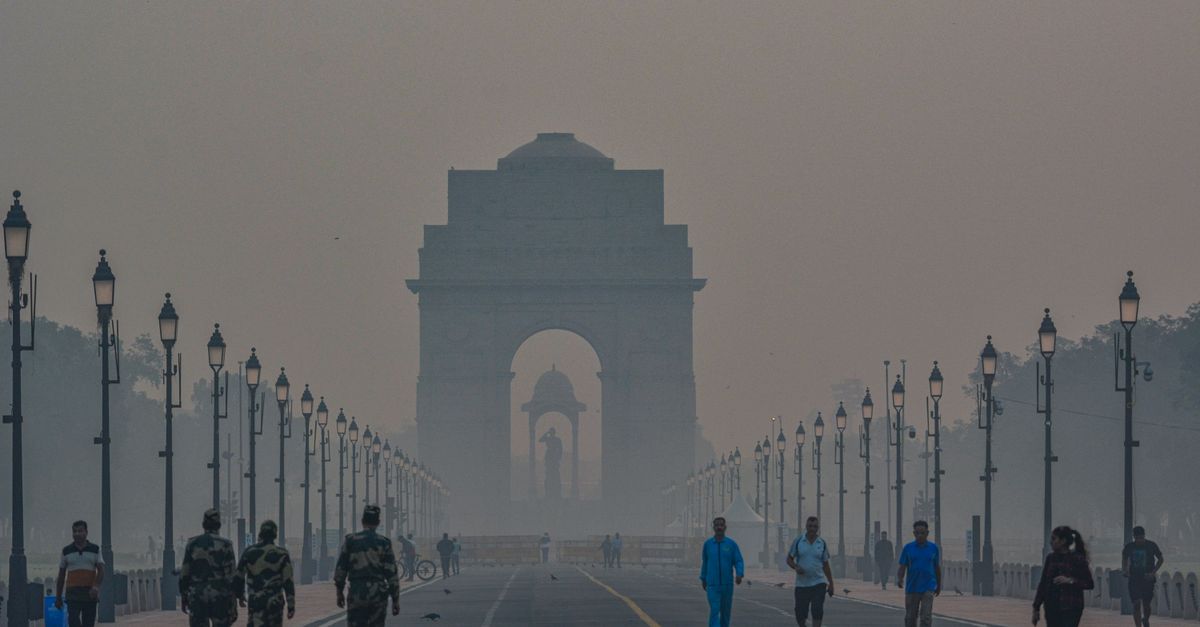
What began as a relatively normal autumn in Delhi-NCR quickly transformed into a public health concern as air quality plummeted in early November 2023. On October 31, the Air Quality Index (AQI) stood at 117, a level that, while concerning, had not yet triggered emergency protocols. By November 1, the situation had worsened considerably, with the AQI climbing to 261. The most dramatic shift occurred by November 2, when the average AQI in Delhi skyrocketed to 324, officially entering the 'very poor' category for the first time this season. This rapid deterioration left authorities with little choice but to act decisively.

The statistics paint a grim picture of Delhi's air quality crisis. The average AQI of 324 recorded on November 2 was alarming enough, but some areas fared even worse. At 4 PM that day, Jahangirpuri recorded an AQI of 436, Rohini reached 415, and Punjabi Bagh hit 413—all falling into the 'severe' category. Out of 58 monitoring stations across the region, 37 reported 'very poor' air quality, 17 reported 'poor' conditions, and three registered 'severe' levels. The primary pollutant across all these locations was PM2.5, fine particulate matter that poses significant health risks when inhaled.

BREAKING | Delhi Records 'Very Poor' AQI Grap 2 Measures Imposed In Capital
Faced with this deteriorating situation, the Air Quality Management Commission (CAQM) made the decision to implement the second phase of the Graded Response Action Plan (GRAP) with immediate effect on November 2, 2023. GRAP is a systematic approach to combat air pollution that escalates restrictions as conditions worsen. Stage-II represents a significant step up in measures, indicating that authorities view the current situation as serious enough to warrant more aggressive intervention.
GRAP is a systematic approach to combat air pollution that escalates restrictions as conditions worsen.
The implementation of GRAP Stage-II brings several new restrictions aimed at reducing pollution levels. These include increased parking fees for private vehicles to discourage unnecessary car usage, more frequent water spraying on roads to suppress dust, and a complete ban on coal and wood burning in hotels, restaurants, and roadside eateries. Additionally, authorities will enhance road cleaning efforts through mechanical sweeping and regular water sprinkling to curb dust and other pollutants that contribute to the poor air quality.

Delhi-NCR has moved to Stage 2 of the Graded Response Action Plan (GRAP) as the Air Quality Index (AQI) crossed the 300 mark, falling in the 'very poor' category. #DelhiNCR #GRAP2 #AirPollution #DelhiAQI #AirQuality #PollutionControl #DelhiPollution #Environment https://t.co/0W8InfPNyd
The sudden spike in pollution levels wasn't entirely unexpected, as Delhi typically faces air quality challenges during the autumn and winter months. However, the speed and severity of this particular deterioration caught many by surprise. The AQI had nearly tripled in just three days, jumping from 117 on October 31 to 324 on November 2. This rapid escalation underscores the complex and often unpredictable nature of air pollution in the region, which can be influenced by factors like agricultural burning, industrial emissions, vehicular traffic, and weather patterns.
As authorities implemented Stage-II measures, forecasts predicted that 'very poor' air quality would persist through November 3 to 5, suggesting that the crisis would continue for at least several more days. The implementation of GRAP Stage-II represents a critical juncture in Delhi's ongoing battle with air pollution, demonstrating the city's commitment to taking decisive action when conditions deteriorate. However, the long-term solution to Delhi's air quality crisis remains elusive, requiring sustained efforts across multiple sectors and continued public cooperation to reduce pollution at its source.

JUST IN | As the air quality of Delhi worsened to the "very poor" category, the Commission for Air Quality Management in NCR and adjoining areas (CAQM) on Monday announced Stage 2 of the Graded Response Action Plan (GRAP). "All actions as envisaged under Stage-II of the extant GRAP – ‘Very Poor’ Air Quality (DELHI AQI- 301-400), be implemented with immediate effect in right earnest by all the agencies concerned in NCR, in addition to all Stage-I actions of GRAP already in force," the CAQM said in an order on November 2. - @ikasnik reports