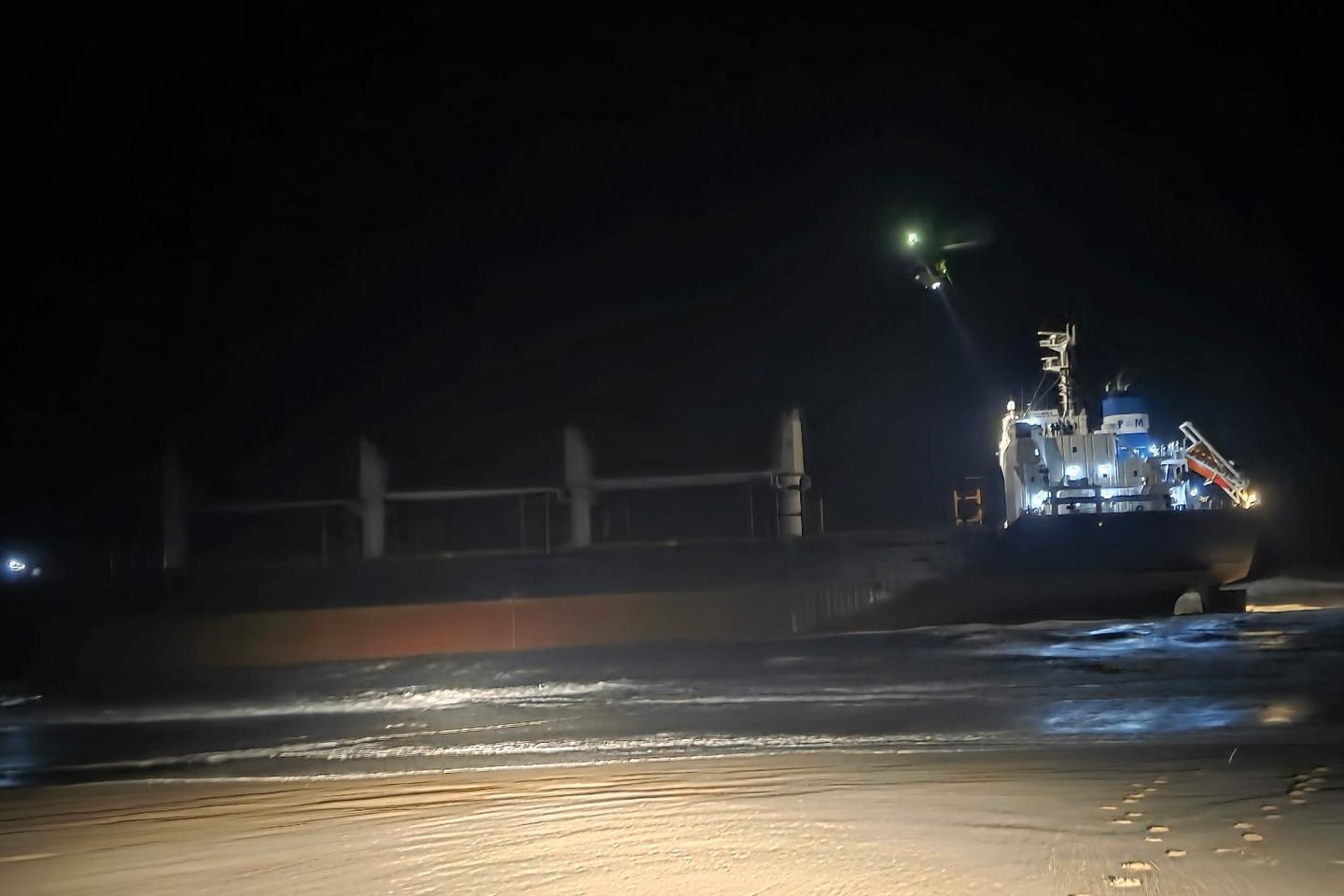
The Atlantic coast of France, particularly the stretch along the Landes department, is no stranger to the raw power of the ocean. Yet, even for those accustomed to the shifting moods of the sea, the events that unfolded between Thursday night and Friday morning were extraordinary. The Miro G, a bulk carrier registered in Malta and constructed in 2011, found itself locked in a losing battle against the elements. En route to the port of Rouen with a scheduled arrival date of November 23, 2026, the vessel was suddenly overwhelmed by a combination of heavy seas and relentless crosswinds. As the ship struggled to maintain its course, it became clear that the vessel’s sheer size was no match for the atmospheric pressure bearing down upon it.

By the time the Miro G reached a position 1.8 nautical miles off the coast of Lit-et-Mixe, the situation had deteriorated into a crisis. In a desperate attempt to stabilize the ship and wait out the storm, the crew dropped anchor. But the sea had other plans. Violent gusts, reaching speeds of 48 knots, hammered the hull with unforgiving force. The anchor, intended to be a lifeline, proved insufficient against the sheer momentum of the drifting vessel. The ship began to slip, caught in the grip of the waves, eventually running aground on the French coastline on November 15, 2026.
As the Miro G settled into the sand, the captain recognized that the safety of his crew was the immediate priority. He reached out to the Regional Operational Center for Surveillance and Rescue (CROSS-A) in Etel to request an emergency evacuation. The response was immediate and coordinated. Recognizing the gravity of the situation, the Maritime Prefect of the Atlantic activated Level 3 of the maritime ORSEC plan—a specialized emergency framework designed to manage major maritime incidents and coordinate the complex logistics of a rescue operation.
To reach the stranded crew, authorities deployed an Air Force Rafale SAR helicopter based in Cazaux, Gironde.
To reach the stranded crew, authorities deployed an Air Force Rafale SAR helicopter based in Cazaux, Gironde. The mission was a delicate operation, requiring precision flying in the face of the same gale-force winds that had driven the ship ashore. The helicopter successfully evacuated a portion of the crew, plucking them from the deck as the vessel remained firmly lodged in the sand. However, the operation was not a total abandonment of the ship. As the Maritime Prefecture of the Atlantic noted, "a portion of the crew will remain on board to facilitate future operations with the French authorities."
Managing a maritime incident of this scale requires more than just local resources; it demands international cooperation. In this instance, the Biscaye plan—a collaborative mechanism between France and Spain—was triggered. This agreement allows for the rapid sharing of assets and expertise across borders. As a direct result of this cooperation, a Spanish offshore rescue tugboat was dispatched from Bilbao, Spain, on Thursday evening, heading toward the site to provide the necessary heavy-duty support for potential salvage or recovery efforts.
As of now, the Miro G remains a stark fixture on the Landes coastline, a reminder of the fragility of even modern, industrial vessels when faced with the volatile Atlantic. The presence of the remaining crew members on board serves as a bridge between the ship’s owners and the French authorities, who are now tasked with the complex process of managing the aftermath. While the immediate danger of the storm has passed, the logistical challenge of securing the vessel and mitigating any further impact on the coast has only just begun. The incident stands as a testament to the effectiveness of the region's emergency response protocols and the enduring necessity of cross-border maritime cooperation.