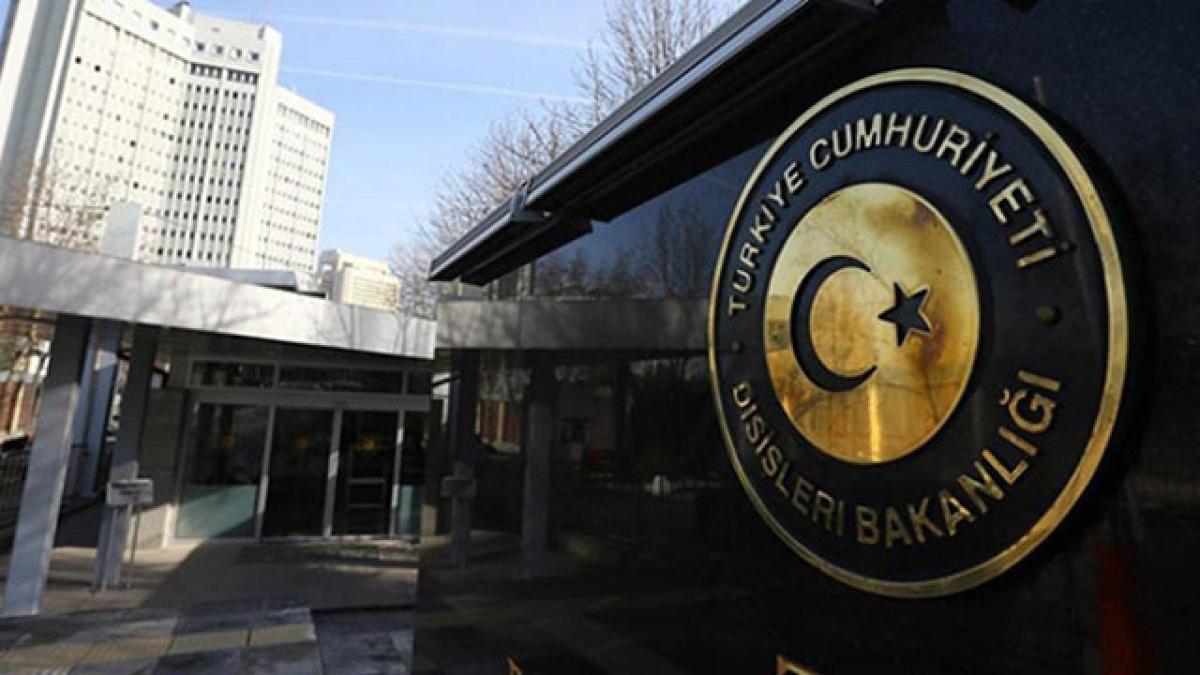
On November 15, 2026, the global diplomatic community observed a significant milestone: the 38th anniversary of the declaration of the State of Palestine. For Turkey, this date served as more than just a historical marker; it provided a platform for the Ministry of Foreign Affairs to articulate its long-standing foreign policy stance regarding the Middle East. Through an official statement released on its social media channels, the Ministry reached out to the Palestinian people, characterizing the relationship between the two nations as one of friendship and brotherhood.
At the heart of the Ministry’s message was a clear, unyielding vision for the future of the region. The Turkish government explicitly stated that the establishment of an independent, sovereign, and geographically integrated State of Palestine remains an "indispensable goal." This language reflects a consistent diplomatic framework that Turkey has championed for decades, emphasizing that a viable state must be more than just a political entity—it must possess the territorial integrity necessary to function as a modern, sovereign nation.
Central to this vision is the reference to the 1967 borders. By invoking this specific geographic baseline, the Ministry of Foreign Affairs is aligning itself with a widely recognized international framework for peace. The statement clarifies that the envisioned state should have East Jerusalem as its capital. This detail is critical, as it addresses one of the most complex and sensitive aspects of the regional discourse, signaling that Turkey views the status of Jerusalem as an essential component of any lasting, equitable resolution.
The official statement declared, "Turkey as a country will continue to stand against any and all injustices and oppression faced by the Palestinian people.
Beyond the technicalities of borders and capital cities, the Ministry’s communication carried a strong moral tone. The official statement declared, "Turkey as a country will continue to stand against any and all injustices and oppression faced by the Palestinian people." This commitment to standing against the hardships endured by the population serves as the emotional and ethical anchor of Turkey’s policy. It frames the diplomatic support not merely as a matter of statecraft, but as a principled response to the ongoing challenges faced by Palestinians.
While the anniversary itself is a singular event, the Ministry’s messaging highlights a policy of continuity. By using the occasion to reiterate these core tenets—sovereignty, the 1967 borders, and the capital of East Jerusalem—Turkey ensures that its position remains visible and consistent on the international stage. The statement functions as a reminder that, despite the shifting complexities of regional politics, the fundamental goals of the Turkish government regarding the Palestinian state remain unchanged.
As the 38th anniversary concludes, the message from the Turkish Ministry of Foreign Affairs stands as a definitive statement of intent. By publicly reaffirming its support for a sovereign Palestinian state, Turkey maintains its role as a vocal advocate in the international arena. The rhetoric used—emphasizing friendship, the rejection of oppression, and the necessity of a geographically integrated state—sets the tone for how the country intends to engage with this issue moving forward, keeping the prospect of a two-state solution at the forefront of its diplomatic agenda.