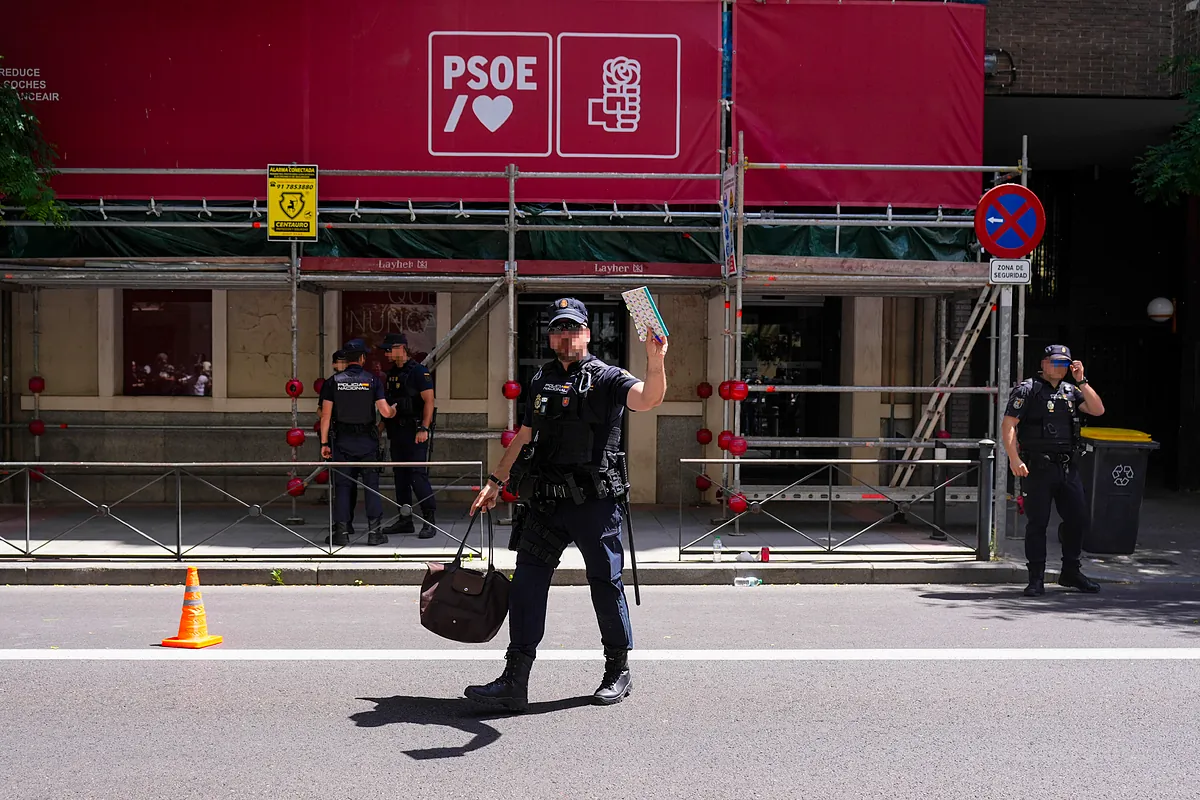
In the high-stakes world of Spanish politics, money is often the invisible hand that shapes policy. But when that money is funneled through a political party, the line between legitimate fundraising and illicit manipulation can become dangerously blurred. For years, the Socialist Workers’ Party (PSOE) has been the dominant force in Spanish politics, a party that has governed the nation for much of the last decade. Yet, even the most powerful political machines are not immune to the scrutiny of the law, especially when the law begins to suspect that the machine is being greased with funds that should never have entered the public sphere.

This suspicion has now moved from whispered rumors to a formal, aggressive investigation. The Central Operations Unit (UCO) of the Guardia Civil, Spain’s elite investigative police force, has not only entered the PSOE’s financial records but has also sought to pull the Audit Court into the fray. The result is a developing narrative that suggests irregularities in the party’s financial operations, which investigators suspect may have allowed public works contractors to mask payments for manipulations as simple donations.
The drama unfolded on a Thursday that would become a pivotal moment in this unfolding saga. The Central Operations Unit (UCO) arrived at the Audit Court (Tribunal de Cuentas) with a singular, urgent mission: to obtain information regarding suspected irregularities in donations to the PSOE. This was not a routine request for public records; it was a targeted strike into the heart of the party’s financial infrastructure. The UCO, known for its expertise in complex financial crimes, was acting on orders from Judge Ismael Moreno, the presiding judge in a secret case investigating the alleged irregular financing of the Socialist Party. The judge’s order was a clear signal that the investigation had moved beyond preliminary inquiries and was now demanding hard evidence.
The party informed the judge that it was busy with elections and could not send the requested information at that time.
The UCO’s visit was not a casual one. According to sources close to the investigation, the police force had already detected the disappearance of invoices in the PSOE’s accounting data. This finding is significant. Invoices are the backbone of any legitimate financial transaction. Their absence, alongside discrepancies in the accounting data provided by the PSOE, has prompted the UCO to dig deeper into the party's records. The UCO’s objective is clear: to cross-reference data on 'pitufeo,' a term used to describe the practice of splitting large transactions to avoid detection. This opaque financing channel, suspected to involve public works contractors, is the key to understanding how the PSOE might have been used as a vehicle for illicit payments.
Judge Ismael Moreno’s role in this unfolding drama cannot be overstated. He is the instructor of the secret case, the man who has been quietly building a case against the PSOE’s financial practices. His decision to order the UCO to the Audit Court was a masterstroke of investigative strategy. It brought together two powerful institutions: the police force and the judiciary, both tasked with upholding the rule of law. The Audit Court, in particular, is a crucial player. It is the institution responsible for auditing the accounts of the state and its public institutions. By seeking its help, Judge Moreno was signaling that he believed the PSOE’s financial irregularities were not just a party matter but a matter of state interest.
The PSOE’s response to the judge’s request was telling. The party informed the judge that it was busy with elections and could not send the requested information at that time. This response, while perhaps technically accurate, was a masterclass in deflection. It acknowledged the request but offered no substantive information, instead pointing to a busy election schedule as the reason for its delay. This move only served to heighten the suspicions of the investigators. It suggested that the PSOE was not merely struggling to keep up with paperwork but was actively trying to stall the investigation.
The investigation is not looking at a single, isolated incident but at a pattern of behavior that spans years. The UCO is analyzing contributions that the PSOE received between 2017 and 2024. This period is significant because it covers a time when the PSOE was in government and was making key decisions on public works. The suspicion is that through donations to the PSOE, payments made by various contractors were camouflaged. This is a classic example of how illicit financing can undermine the democratic process. By disguising payments as donations, contractors could influence political decisions without ever having to disclose their true intentions. The 2017 start date marks the beginning of a period of intense scrutiny, while the 2024 end date suggests that the investigation is looking at the most recent financial activities of the party.
The term 'pitufeo' is a crucial piece of the puzzle. It refers to the practice of splitting large transactions into smaller, less conspicuous amounts to stay under the radar. Investigators are analyzing this suspected opaque channel to determine if public works contractors used it to camouflage payments. The cross-referencing of data from the Audit Court and the UCO’s findings on missing invoices and discrepancies will be central to proving this link, solidifying the case against the alleged irregular financing of the Socialist Party during the period of 2017 to 2024.