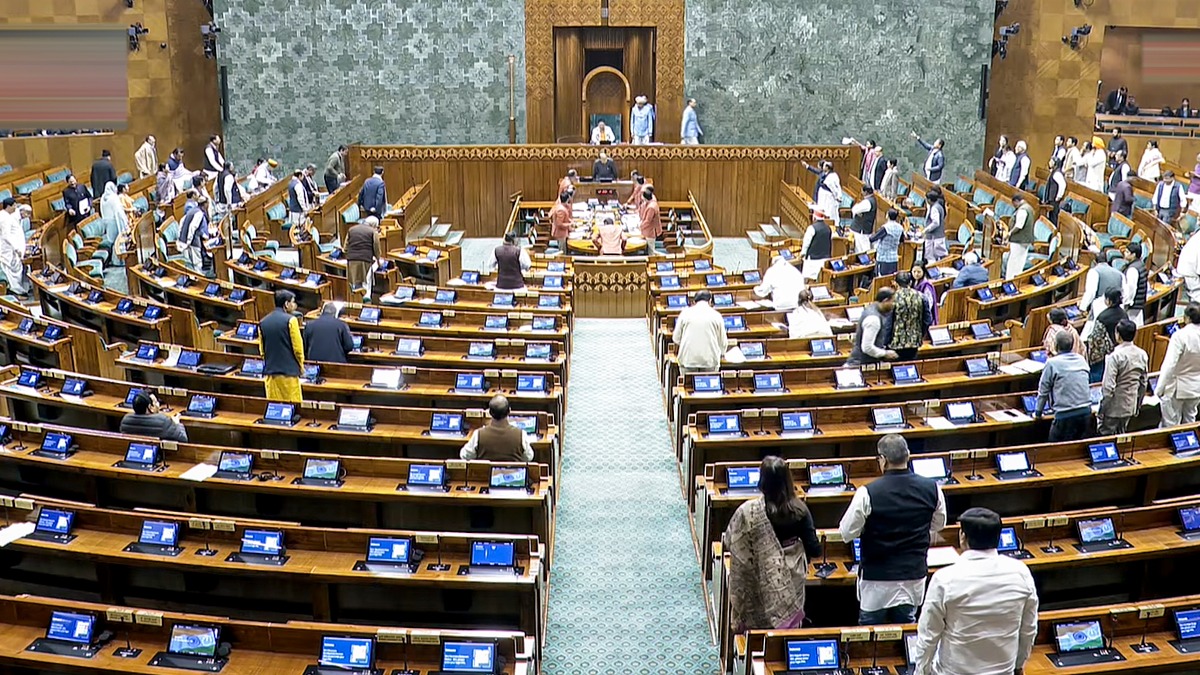
On November 27, 2026, the air in New Delhi was charged not with the usual legislative routine, but with the weight of a pending constitutional crisis. The Constitution amendment bill for delimitation had already failed on the floor, a setback that would haunt the ruling Bharatiya Janata Party (BJP) for weeks. Yet, as the date approached for the special parliamentary session scheduled to begin on November 30, the Modi cabinet convened for a critical pre-session meeting. The goal was clear: to present a modified delimitation bill that the government claimed it was now prepared to pass. For a newcomer to Indian politics, the stakes are difficult to overstate. This is not merely a procedural vote; it is a fundamental restructuring of the Lok Sabha, the lower house of India’s parliament. The government argued that the necessary numbers had been secured, transforming a failed amendment into a viable path forward just days before the session opened.

To understand why this maneuver was so difficult, one must look at the frozen arithmetic of the Lok Sabha. Currently, the house is composed of 540 members. In the Indian parliamentary system, passing a constitutional amendment requires a special majority: two-thirds of the total membership, regardless of whether all members are present. This threshold is fixed at 360 votes. If the government could not secure 360 'yes' votes, the bill would die instantly, just as the previous attempt had. The challenge for the National Democratic Alliance (NDA), the coalition led by the BJP, was that they did not command this majority alone. They needed to find forty additional MPs to bridge the gap between their base support and the constitutional requirement. This specific deficit—forty seats—became the central puzzle of the late 2026 political landscape.
The hunt for these forty MPs was where the drama unfolded. The government’s strategy relied on persuading members of the opposition INDIA bloc, a loose alliance that traditionally stands in stark contrast to the NDA. The INDIA block, which includes the Congress party, had initially taken a critical stance, viewing the delimitation push as an attempt to lock in demographic changes that would favor the ruling party long-term. However, the political winds shifted. The NDA managed to secure commitments from enough rebel or sympathetic opposition members to hit the magic number. This was not a blanket surrender by the opposition; it was a fragmented consensus. While the Congress party remained publicly critical of the broader implications, individual lawmakers calculated their own electoral interests, finding it more advantageous to support the bill’s passage than to see it stall in committee.
The government’s confidence in securing the 360 votes meant they could treat this session not as a battleground, but as a formality.
Not all opposition voices were unified. The Dravida Munnetra Kazhagam (DMK), a powerful regional party, maintained a neutral stance throughout the negotiations. Similarly, the party led by Sharad Pawar also held neutral ground. For these regional powerhouses, the delimitation bill did not align as neatly with their core electoral anxieties as it did with the national parties in the North and West. Their neutrality was crucial; it allowed the NDA to frame the vote not as a total defeat of the opposition, but as a division within it. The NDA needed these parties to stay out of the way, and by securing their neutrality, the government ensured that the 360-vote threshold remained achievable without alienating the entire anti-BJP spectrum. This subtle balance prevented the INDIA bloc from forming a solid wall of opposition, diluting their critical stance with pragmatic silence.
With the numbers locked in, the stage was set for the special session. The schedule was tight and procedural. The session was slated to run from November 30 to December 3. During this four-day window, the Lok Sabha would meet for four days, while the Rajya Sabha, the upper house, would meet for only two. This asymmetry was deliberate, signaling that the action—and the constitutional vote—lay exclusively with the lower house. The brevity of the session left no time for extensive debate or public pressure campaigns. It was a calculated move to pass the bill quickly before momentum could dissipate. The government’s confidence in securing the 360 votes meant they could treat this session not as a battleground, but as a formality.
It is important to note that the bill being presented was not the one that fell on November 27. It was a modified version. The specific changes were not detailed in the immediate political chatter, but the shift itself was the signal of success. By tweaking the legislation, the NDA likely addressed the specific objections that had caused the previous failure. This evolution from a failed constitutional amendment to a passable modified bill demonstrated the government’s ability to adapt its strategy in real-time. For the BJP-led alliance, this was proof of organizational strength. They had diagnosed the failure, identified the forty missing votes, and executed the plan within days. The narrative spun by the government was one of pragmatism and consensus-building, framing the victory not as authoritarian dominance, but as broad-based agreement on the need for electoral reform.
Despite the government’s confidence, the critical voices did not vanish. The Congress party continued to articulate the risks of the delimitation process, warning that it could entrench demographic shifts in ways that might disadvantage minority populations in the long run. The INDIA bloc, while unable to stop the vote, used the session to highlight their opposition to the bill’s underlying logic. This created a dual reality: on one hand, the mechanical success of securing 360 votes; on the other, the ideological defeat of the opposition’s ability to block it. The neutral stance of the DMK and Sharad Pawar’s party further complicated the narrative, leaving the public with a mixed signal about whether the opposition was defeated or merely split. The tension between these stances defined the political atmosphere of the special session.

As the Lok Sabha convened on November 30, the political landscape was set for a decisive moment. The government had the numbers; the opposition had the criticism but not the coalition. The modified delimitation bill, aiming to increase Lok Sabha seats beyond the current 540, was ready for a floor vote. The success of this bill would depend entirely on the 360-vote threshold holding firm. With the special session ending on December 3, the window for reversal was closing. The story of the last few weeks was less about the debate over delimitation itself, and more about the intricate game of chairs that determined whether the BJP could rewrite the constitutional framework of the country’s lower house. The math had been worked out; now, the only question was whether the votes would actually be cast as planned when the gavel fell.