
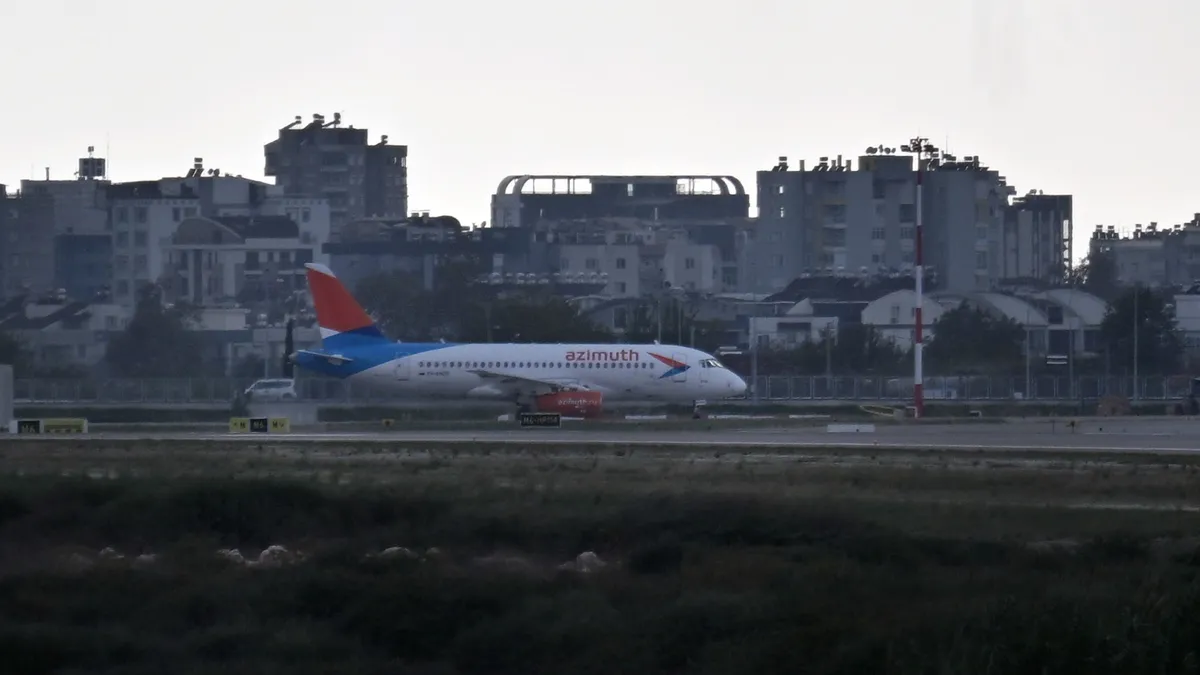
On November 18, 2026, what began as a routine flight from Mineralnye Vody in Russia to the sunny shores of Antalya, Turkey, took a dramatic turn. Aboard the Sukhoi Superjet 100 operated by Azimuth Airlines, the crew received a signal that would change the course of their journey: a bomb threat. The aircraft, carrying 65 passengers and 4 crew members, was suddenly thrust into an emergency situation, prompting a swift response from both the flight crew and Turkish authorities.
As the threat was reported, the crew of the Sukhoi Superjet 100 followed standard emergency protocols. They immediately notified air traffic control in Turkish airspace, declaring the threat and requesting an unscheduled landing at Antalya Airport. Turkish civil aviation authorities sprang into action, placing relevant security units on high alert. The plane was granted priority clearance to land on runway 2, and upon touchdown, it was swiftly directed to a secure area at apron 5, away from the main terminal and other aircraft.
Once the plane came to a stop, all 65 passengers and 4 crew members were safely evacuated. Security teams, already on standby, moved in to conduct a thorough inspection of the aircraft. The process was meticulous, with every inch of the plane scrutinized for any sign of a suspicious device. The aircraft was carrying 65 passengers at the time of the diversion. Meanwhile, the passengers were taken to a secure area, where they awaited further instructions and updates from the authorities.
Yet, the psychological impact of such an event cannot be understated, leaving many with a story they will likely recount for years to come.
As the inspection unfolded, media outlets began to report on the incident. SHOT, a prominent news source, provided crucial updates, confirming that no suspicious items had been found on the plane. In a statement, SHOT noted, 'Nothing suspicious was found. There were 65 passengers on board.' This news brought a collective sigh of relief, both for those directly involved and for the wider public following the story.
For the passengers, the experience was undoubtedly harrowing. What was supposed to be a leisurely flight to a popular holiday destination turned into a high-stakes emergency. The swift and professional response from the flight crew and Turkish security units undoubtedly played a crucial role in ensuring their safety. Yet, the psychological impact of such an event cannot be understated, leaving many with a story they will likely recount for years to come.
The incident raises questions about the nature of the threat and how it was communicated. While initial reports confirmed the bomb threat, no details were immediately released about what specifically triggered the alarm. Was it a note found on board, a suspicious package, or perhaps a message received by the crew? The lack of information left room for speculation, but one thing was clear: the response from all involved was prompt and effective.
By the end of the day, the situation had been resolved without incident. The aircraft, having been thoroughly inspected, was cleared of any threats. The passengers, though shaken, were safe and accounted for. Turkish authorities, having demonstrated their preparedness and efficiency, began the process of debriefing and investigation. The Sukhoi Superjet 100, now secure, awaited its next steps, whether that meant continuing its journey or undergoing further checks.
As of now, the incident remains under investigation, with authorities working to determine the source and credibility of the bomb threat. Azimuth Airlines has maintained a neutral stance, focusing on the safety and well-being of its passengers and crew. Turkish security units, likewise, have been commended for their swift and professional response. For those involved, the experience serves as a stark reminder of the unpredictable nature of air travel and the importance of preparedness in the face of potential threats.