
The morning began not with a siren, but with a quiet knock at doors in three different German states. In North Rhine-Westphalia, in Baden-Württemberg, and in Hesse, police officers moved in unison, executing warrants that would soon unravel a conspiracy to strike one of the most visible symbols of Jewish life in Europe. It was a scene that might have looked routine, a standard sweep for evidence, yet it was the culmination of an investigation into a threat that targeted not just a building, but the fragile sense of security that many Jewish communities in Germany have struggled to maintain in recent years. Two men were arrested on that day in March 2026, accused of planning an attack on a synagogue in Cologne. Their capture marked a significant intervention by the Federal Public Prosecutor, known as the Generalbundesanwalt, who suspected that these individuals were members of Harakat Ashab al-Yamin al-Islamia, a pro-Iranian terrorist organization that operates with a distinct ideological rigor and a global footprint.
To understand why this arrest mattered so much, one must understand the group at the center of the plot. Harakat Ashab al-Yamin al-Islamia, or Hayi for short, is not a new face in the landscape of international terrorism, though it is a subtle one. The organization is characterized by its allegiance to Iran and its propensity for recruiting individuals who are often embedded in Western societies. This recruitment model makes the threat particularly difficult to detect, as it often appears as isolated acts by individuals with no obvious connection to each other. German authorities alleged that these two suspects had been recruited for this purpose, specifically with the intent to use explosives. The group’s history is marred by previous incidents linked to violence in Belgium, the Netherlands, the United Kingdom, and Germany itself. It is described as being responsible for numerous arson attacks and explosions across both Europe and North America, a sprawling portfolio of violence that suggests a well-organized network rather than a lone wolf’s rant. By targeting a synagogue, the suspects were aligning themselves with a specific ideological goal, viewing Jewish institutions as symbolic targets for broader geopolitical grievances.
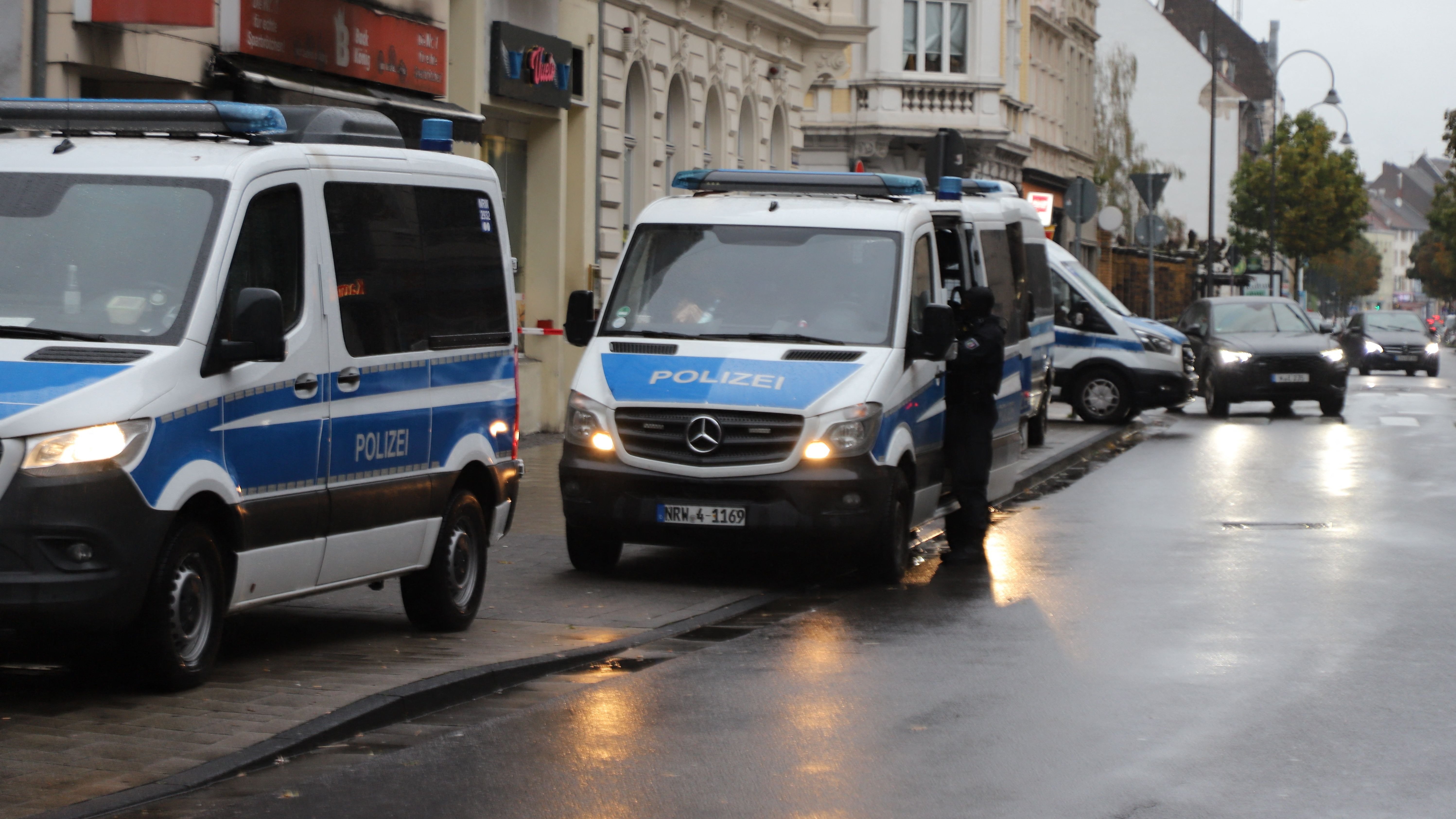
The scale of the police operation reflected the seriousness with which German counterterrorism agencies view this specific threat. Police did not simply knock on the two suspects' doors; they conducted raids across 17 locations in total. This wide net was cast across the three western and southwestern German states mentioned earlier, suggesting that the conspiracy involved more than just the two individuals who were arrested. The breadth of the search indicates that investigators were looking for digital records, financial trails, and perhaps logistical support that would have enabled an attack of significant magnitude. The involvement of the Federal Public Prosecutor is notable because it places this case at the highest level of German criminal jurisdiction, dealing with crimes that threaten the stability of the federal state. It signals that the authorities did not view this as a local incident, but as a node in a larger, transnational web of extremism.
This dual-target strategy is a common tactic among groups seeking to maximize chaos and media attention, spreading the security burden across multiple nations.
While the Cologne synagogue was the primary target identified in the arrest, authorities alleged that the suspects were planning an attack in another European city as well. This dual-target strategy is a common tactic among groups seeking to maximize chaos and media attention, spreading the security burden across multiple nations. It complicates the response, as intelligence sharing between countries must be precise and timely. The fact that the second location was not specified in the initial reports adds to the sense of urgency that likely drove the police to act. The potential for violence in a second, unidentified European capital highlights the reach of Harakat Ashab al-Yamin al-Islamia, suggesting that no single country is immune to their ambitions. This ambiguity is a source of ongoing concern for intelligence agencies across the continent, who must monitor for signs of movement or preparation in cities that may have no prior warning.
For the city of Cologne, this event was a reminder that the fight against anti-Semitic terrorism is a continuous endeavor. The city has a historic Jewish community, and the threat to its places of worship is a tangible, ongoing risk. The arrest of these two individuals is a victory, but it is a narrow one. It prevents a specific plot, but it does not dismantle the entire network. The group’s ability to recruit and radicalize individuals in Europe remains a significant challenge. As the legal process moves forward, the focus will shift from the police station to the courtroom, where the Federal Public Prosecutor will seek to prove the intent and the organization behind these actions. For now, the quiet morning raid has ended, but the work of monitoring the remnants of the network, and preventing the next recruit, continues. The security landscape has changed, with heightened vigilance around key sites, a reality that reflects the persistent shadow of global extremism falling on European soil.