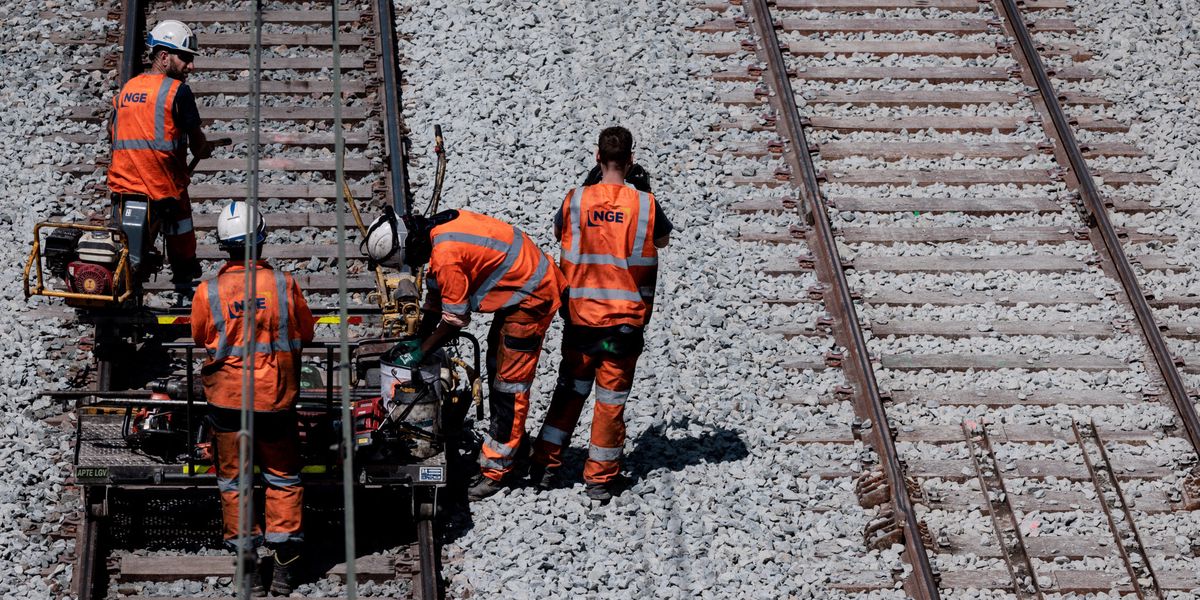
On the evening of September 11th, 2023, a train traveling through Normandy derailed between the stations of Tourville and Elbeuf-Saint-Aubin. The incident occurred at 7:45 PM, plunging 186 passengers into chaos. When the dust settled, 44 people had been injured, some seriously, raising urgent questions about how such a tragedy could have occurred on a normally busy rail line.

In the aftermath of the derailment, French authorities launched a comprehensive investigation to determine the cause. With multiple potential lines of inquiry, detectives worked methodically to piece together what had happened that evening. The focus soon shifted to human error or deliberate action as the most likely explanations for the catastrophic failure.
Nearly three years later, on November 27th, 2026, investigators announced a significant breakthrough in the case. A young man with a pronounced intellectual disability had been charged with involuntary injuries related to the derailment. His confession would reveal both the simplicity and the tragic complexity of what had transpired on those tracks.
A psychiatric evaluation conducted during his custody concluded that he had impaired judgment at the time of the incident.
According to Sébastien Gallois, the lead investigator on the case, the young man admitted to attempting to steal a rail coupon—a valuable piece of railway equipment. "He admitted wanting to steal a rail coupon and having acted alone," Gallois stated, "but he abandoned it on the tracks upon hearing a train approaching." This seemingly small act would have devastating consequences for everyone aboard the train.
The young man's intellectual disability played a crucial role in understanding his actions. A psychiatric evaluation conducted during his custody concluded that he had impaired judgment at the time of the incident. This assessment would become central to both the legal proceedings and public understanding of how the derailment occurred.
As the investigation progressed, three other individuals who had been held for questioning in connection with the derailment were cleared of any involvement. The evidence pointed consistently to the actions of the single young man, whose cognitive limitations appeared to have contributed to the catastrophic decision to leave the rail coupon on the tracks.
The incident drew political attention, with Eric Ciotti, a prominent French politician, describing the derailment as "the fruit of an attack." While the investigation found no evidence of terrorism, Ciotti's remark reflected the public's initial shock and the serious nature of the crime. The contrast between this characterization and the reality of a disabled young man's actions highlighted the complexity of the case.

With the young man formally charged, legal proceedings began to address the consequences of his actions. The charge of involuntary injuries carries significant weight in French law, particularly given the number of people harmed in the incident. The psychiatric findings would likely play a crucial role in determining both culpability and appropriate sentencing.
As of late 2026, the legal case against the young man continued to unfold. The derailment in Normandy had already become a case study in how intellectual disability intersects with criminal responsibility, raising broader questions about prevention and support for vulnerable individuals in society. The injured passengers, meanwhile, continued to recover from physical and psychological wounds, forever changed by a night when a simple mistake led to disaster on the rails.