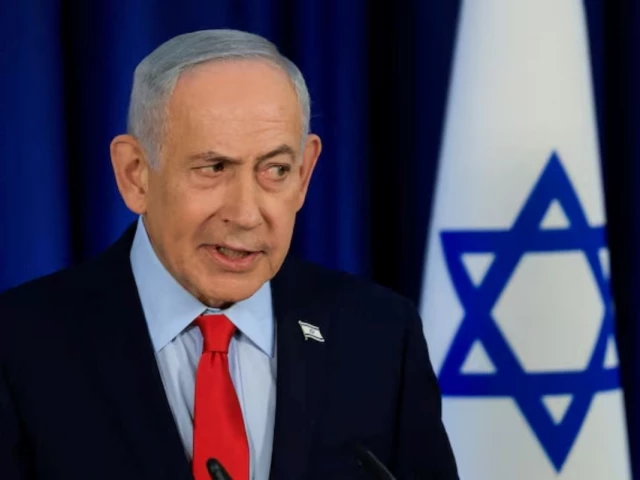
In the high-stakes theater of Israeli politics, certain rules are treated as sacrosanct. One of the most fundamental is the principle of the largest party: the group that secures the most seats in the Knesset typically takes the helm, and its leader becomes the Prime Minister. But on November 28, 2026, Benjamin Netanyahu signaled a willingness to break that tradition. In a move that has sent shockwaves through the political landscape, the leader of the Likud party proposed a rotation agreement with Gadi Eisenkot, the leader of the Yashar party. Under this proposed arrangement, Eisenkot would serve the first term as Prime Minister in a potential national unity government, before the leadership rotates.

This is not a move born of political convenience or a sudden affinity for his opposition. Instead, Netanyahu framed the proposal as a desperate necessity driven by the gravity of the moment. He characterized the current political climate as being defined by an "existential danger," suggesting that the stability of the state is at risk if the government lacks the capacity to address looming threats. For Netanyahu, the decision to step aside initially is presented as a sacrifice of personal and partisan principle for the sake of the nation.
"In light of the magnitude of the existential danger and the possibility that a government will be formed that does not have the ability to deal with this danger," Netanyahu said in a statement, "my responsibility as a leader requires me to put everything aside, including the principle of the largest party."
He raised the alarm regarding the decision-making processes of a government led by the left.
While the proposal offers a path toward unity, Netanyahu’s rationale for seeking such a coalition is deeply rooted in his fears regarding the composition of the parliament. He expressed profound concern over the potential influence of Arab parties within a governing coalition. For Netanyahu, the risk is not merely one of policy disagreement, but of fundamental shifts in the demographic and administrative makeup of the state. He suggested that a government lacking his specific oversight might be vulnerable to the agendas of these minority parties.
Specifically, Netanyahu alleged that Arab parties could leverage their influence in parliament to advance measures that would fundamentally alter the country's landscape. He warned of the possibility of policies advancing family reunification measures that could grant citizenship to hundreds of thousands of Palestinians. Furthermore, he voiced concerns that such a government might move to establish Arab autonomy in the Galilee and the Negev regions.
Beyond the demographic and administrative concerns, Netanyahu’s skepticism extends to the very mechanics of national security. He raised the alarm regarding the decision-making processes of a government led by the left. Central to his critique is the role of the Joint List, a coalition of Arab political parties. Netanyahu claimed that the leaders of the Joint List would act as a constraint on military decisions if a left-led government were to take power. In his view, the presence of these parties in a governing bloc could paralyze the state's ability to act decisively in matters of defense and security.
Despite the friction and the deep-seated ideological divides that define this proposal, Netanyahu has not closed the door on the possibility of a deal. The proposal, which he shared via a post on X, marks a pivot toward what he describes as the need for "immediate, genuine and intensive negotiations." The goal is to find a way to construct a government capable of managing the current crisis, even if that means sharing power with those he has long viewed as political adversaries.
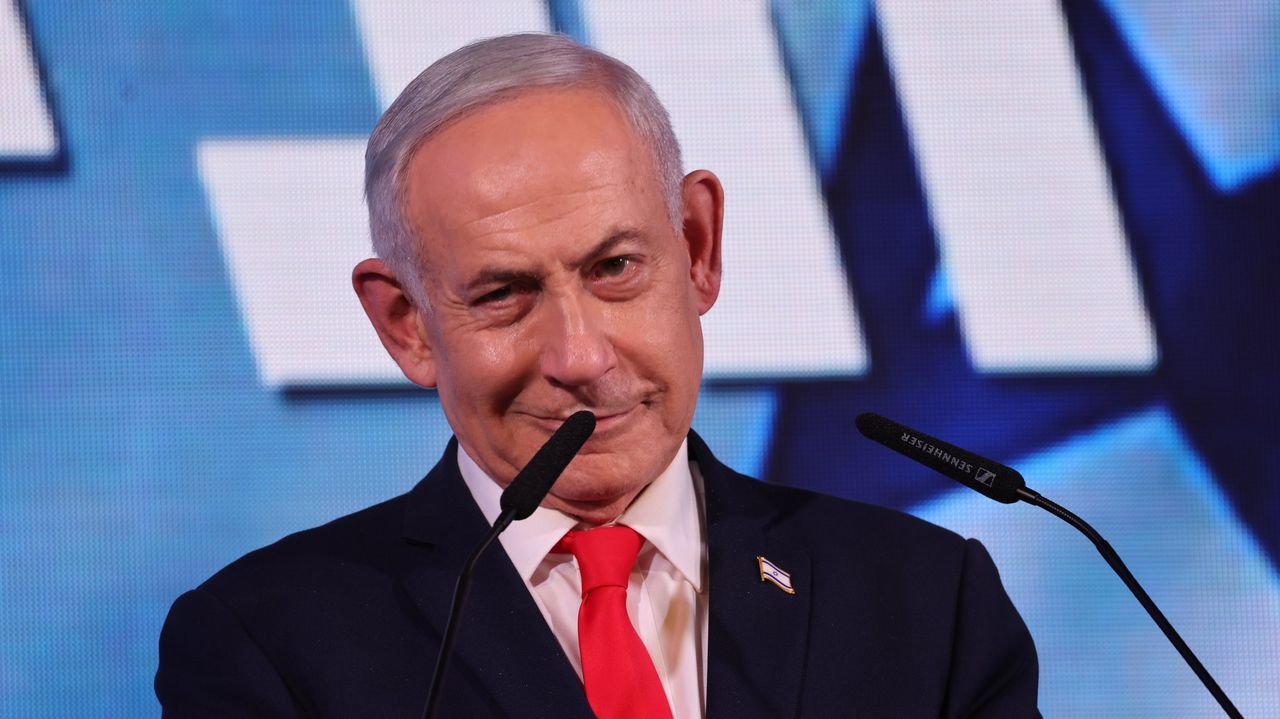
As of late November 2026, the proposal remains a theoretical framework rather than a settled reality. The political community is now left to grapple with the implications of such a radical departure from the norm. Whether Gadi Eisenkot and the Yashar party will accept a deal that requires them to lead a government under such heavy conditions—and whether the Likud party can truly stomach the abandonment of its traditional dominance—remains the central question. The nation now waits to see if this pivot can bridge the divide or if it will merely expose the depth of the fractures within the state.