
Every morning, millions of households across a major part of India wake up with the same ritual: checking the price of milk at their local vendor or pulling a carton from the refrigerator. For a while, that price was a fixed, almost invisible part of the household budget. But as of tomorrow, November 12, that invisibility will end. Two of the country's most prominent dairy cooperatives, Nandini and Mother Dairy, have officially announced a price revision. For the first time in a while, the simple act of buying a liter of milk is about to cost a little more.
To understand why a household staple is getting more expensive, we have to look at who makes it. India's dairy industry is built on a vast network of farmers who supply raw milk to large cooperatives. These cooperatives do not manufacture milk from scratch; they procure it, pasteurize it, and distribute it. Recently, the cost of procuring that raw milk has gone up. When a farmer sells their daily quota to a central collection point, the rate they are paid determines the baseline cost for the entire supply chain.
As those procurement rates have climbed, the financial cushion between what a farmer is paid and what a consumer pays has begun to thin out. Production costs haven't just been about the milk, either. The logistics of moving it from a collection point to a facility, the energy used to keep it cold, and the labor required to process and package it all carry their own tags. When the raw material gets more expensive, the final product usually follows, unless the company is willing to take a loss. Nandini and Mother Dairy, operating on tight margins like most retailers, found themselves in a position where they had to pass some of that pressure down the line.
A 2-rupee hike is a 4-rupee increase every day, or roughly 120 rupees a month.
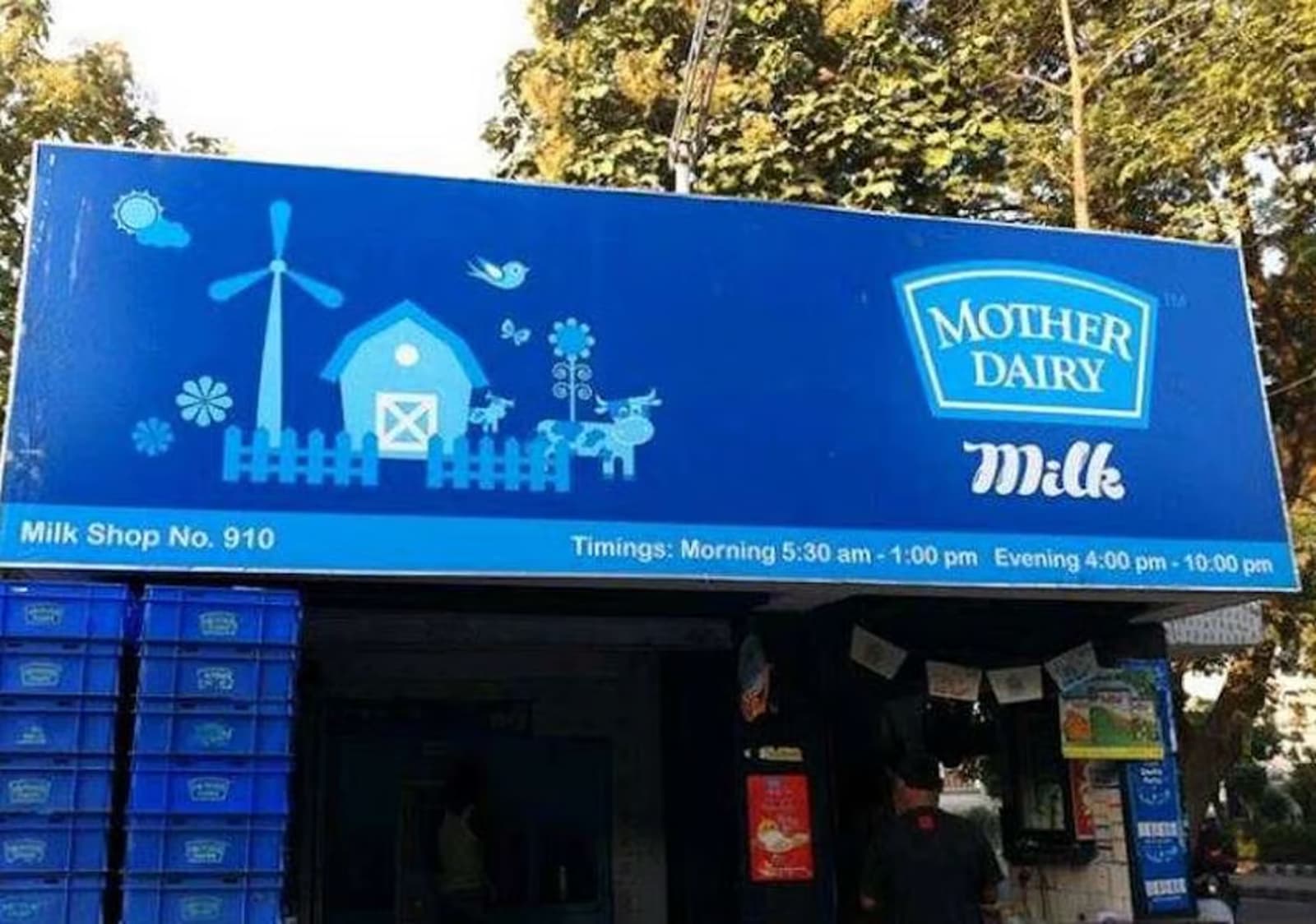
In the realm of Indian dairy, Nandini and Mother Dairy operate as heavyweights. Nandini, a brand deeply associated with the state of Karnataka and broader South India, has a massive presence in the region, particularly centered around the Bengaluru area. Mother Dairy, on the other hand, is a brand that carries the weight of the national narrative, having been instrumental in bringing organized milk supply to the masses. When one of them makes a move, it often sets a precedent.
When these two major players announce a price hike, it isn't just a corporate decision; it's a market signal. Because both entities have the infrastructure to dominate the shelf space in thousands of stores and retail points, their pricing sets the standard for the entire sector. If Nandini and Mother Dairy raise their prices, smaller, independent dairies that compete on price often find they have little choice but to follow suit, or risk losing the shelf space and customer base that the larger brands command. This is a common dynamic in retail, where a handful of 'anchor' products dictate the price umbrella for everything beneath them. By aligning their revisions on the same day, these two brands aren't just adjusting for their own costs; they are effectively coordinating the market's response to a higher baseline of production expenditure.

Amul Mother Dairy Milk Price Hike: मदर डेयरी और अमूल ने बढ़ाए दूध के दाम https://t.co/VcG3yk8hwy
The increase is not a single, uniform figure; it's a range. Consumers will see the price of a liter of milk go up by anywhere from 2 to 4 rupees. That two-rupee difference might sound like a trivial amount. Four rupees, in the grand scheme of a global economy, is a fraction of a cent. But when we zoom in on the individual bottle, the mathematics of retail become clearer.
Let's say a family drinks two liters of milk a day. A 2-rupee hike is a 4-rupee increase every day, or roughly 120 rupees a month. A 4-rupee hike doubles that impact. For a household that buys milk five or six times a week, that small percentage increase adds up quickly. And this is exactly where the 'production cost' justification comes into play. The companies are saying, in plain language, that the money they are receiving from the consumer is barely enough to cover the cost of buying the milk from the farmer, processing it, and putting it on the shelf. The range allows for flexibility; maybe the premium, higher-fat variety sees a 4-rupee bump, while the standard, everyday SKU gets a 2-rupee adjustment.
This price hike, while modest on paper, ripples outward into the broader economic fabric. For the millions of small-time vendors who sell milk at a fixed margin per bottle, a higher base price means they have to either reduce their own profit or pass the cost on to the consumer. This can make the price of milk feel higher at the point of sale than it does on the price tag at a retail store.
On the other side of the ledger is the farmer. The original trigger for this whole cascade was the higher procurement rate. If farmers are getting paid more, it's a positive shift for their income, which is vital for an agrarian economy. However, the sustainability of that increase depends on whether the consumer is willing to absorb the final cost. If milk becomes too expensive for the average household, people might shift their consumption to cheaper alternatives, like water or even artificial substitutes, which could eventually hurt the demand for dairy and, in turn, the farmer. It's a delicate balancing act between what a farmer needs to survive and what a consumer can afford to spend on a basic necessity.

#Amul, #MotherDairy hike milk prices by up to ₹4 per litre from November 12; Check new rates @R_Dhanrajani @ranimegha229 https://t.co/GfQjvu6CYL
As we move into November 12, the new price tags are becoming reality in stores across the region. For the consumer, this is a moment of re-evaluation: the cost of a morning cup of coffee or a glass of milk has just ticked up. For the dairy industry, it's a test of whether the consumer will accept a new, slightly higher baseline. The next time you pick up a bottle of Nandini or Mother Dairy, you're not just buying a beverage; you're buying into a complex web of farmer incomes, supply chain logistics, and retail economics. The 2 to 4 rupee hike is a small number, but it's a very telling one, reflecting the changing tides of production costs and market dynamics in the world of dairy.