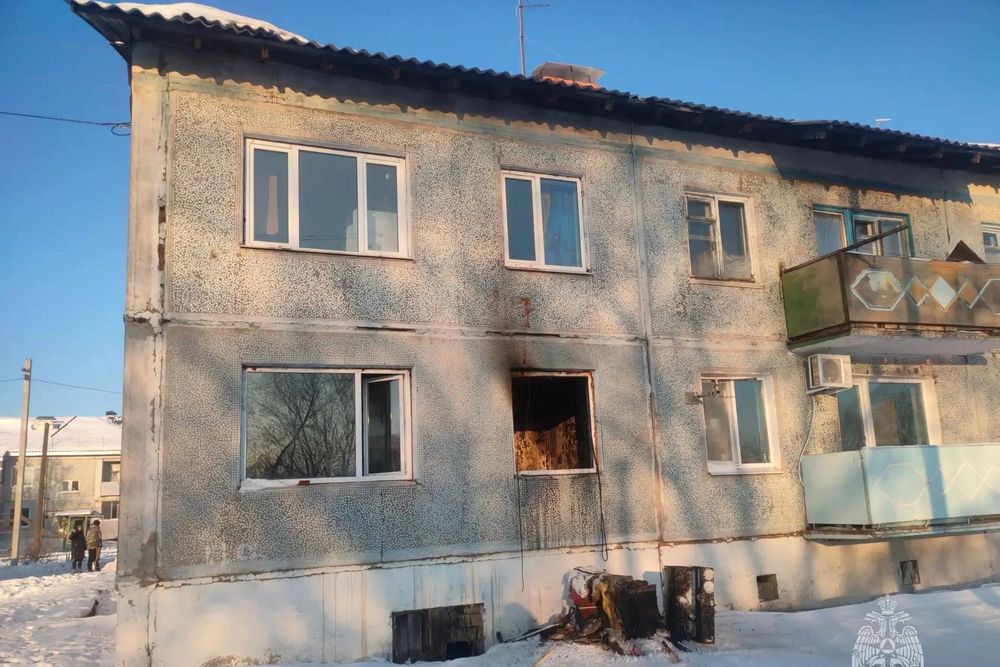
In the small settlement of Novostroika, nestled in the Khabarovsk Krai of the Russian Far East, a quiet morning routine was shattered by smoke and the silent threat of carbon monoxide. Six children, left home alone, were trapped in an apartment where a fire broke out, leading to a mass poisoning incident that shocked the local community and drew immediate attention from regional health officials. For a family used to the rhythm of suburban life, the event was a terrifying disruption, leaving the youngest of the group fighting for their life and the older siblings watching with growing fear as medical teams rushed to intervene.
The immediate aftermath was defined by a race against time. All six children suffered from carbon monoxide poisoning, a toxic gas produced by the incomplete combustion of carbon-containing materials. This invisible threat is particularly dangerous in residential fires because it is odorless and colorless, often incapacitating victims before they can escape. The medical teams in Novostroika stabilized the children on the scene, but the severity of their conditions required immediate hospitalization. The youngest victim, a child born in 2023, was in the most perilous state. This child was quickly transferred to the regional children's hospital in Khabarovsk, a facility better equipped to handle critical care, while the five older children were treated at the nearby Lazo hospital.
Inside the medical facilities, the next phase of the crisis unfolded with careful monitoring. Health officials provided a detailed update on the children's recovery, emphasizing that while the situation was serious, it was not uniformly dire. At the Lazo hospital, they were examined by doctors and administered oxygen therapy to help flush the toxin from their blood. These children were declared to be in satisfactory condition, with medical staff noting that they did not require further complex medical assistance and could remain in the hospital for observation and support.
This decision indicates that, in the eyes of the law, the incident is classified as a disaster rather than a crime.
While the children were healing, the legal and investigative machinery of the Russian state began to turn. The central question became one of accountability: was there a crime? The Investigative Committee of Russia, specifically the department responsible for the Khabarovsk Krai and the Jewish Autonomous Oblast, launched a review of the incident. Their inquiry focused on whether the fire was the result of criminal negligence or intentional misconduct. This is a standard procedural step, but its outcome carries significant weight for the families involved, as it determines whether the event is treated as a tragic accident or a punishable offense.
In a formal statement released on November 11, 2026, the Investigative Committee concluded that there were no signs warranting the opening of a criminal case. The authorities explicitly stated that the evidence did not support a finding of criminal negligence in the fire at the residential apartment. This decision indicates that, in the eyes of the law, the incident is classified as a disaster rather than a crime. For the families of the affected children, this conclusion is a complex mix of relief and frustration. Relief comes from the fact that no one will be prosecuted, but the emotional weight of the loss of home and health remains, and the lack of a criminal finding leaves little recourse for those who may feel that more could have been done to prevent the event.
The role of the regional prosecutor's office was crucial in the incident, as they confirmed the occurrence of the fire and the specific location within a residential building. Their confirmation helped coordinate the emergency response and established the factual baseline for the subsequent investigation. By working in tandem with the Investigative Committee, the prosecutor's office ensured that the legal and administrative responses were aligned, focusing on the immediate health of the children and the integrity of the investigative process.
The decision not to file charges has broader implications for how public safety is understood in similar residential contexts. It highlights the distinction between administrative failure and criminal intent. In cases where no crime is found, the burden of improving safety often shifts to civil authorities and community organizations rather than law enforcement. This can be a frustrating outcome for victims, as it suggests that the system failed to prevent the harm but did not fail through malicious action.
In the weeks following the fire, the focus has remained on the recovery of the children and the safety of the wider community in Novostroika. The hospital stays have extended for some of the children, ensuring they receive all necessary care before being released. The local community has rallied to support the affected families, and discussions about fire safety standards in residential apartments have intensified. It is a moment of collective reflection on how vulnerable young people are to environmental hazards when left unsupervised, and how much of a gap remains between the expectation of a safe home and the reality of an unexpected fire.
As the autumn sets in across the Khabarovsk Krai, the children are gradually returning to their normal lives.