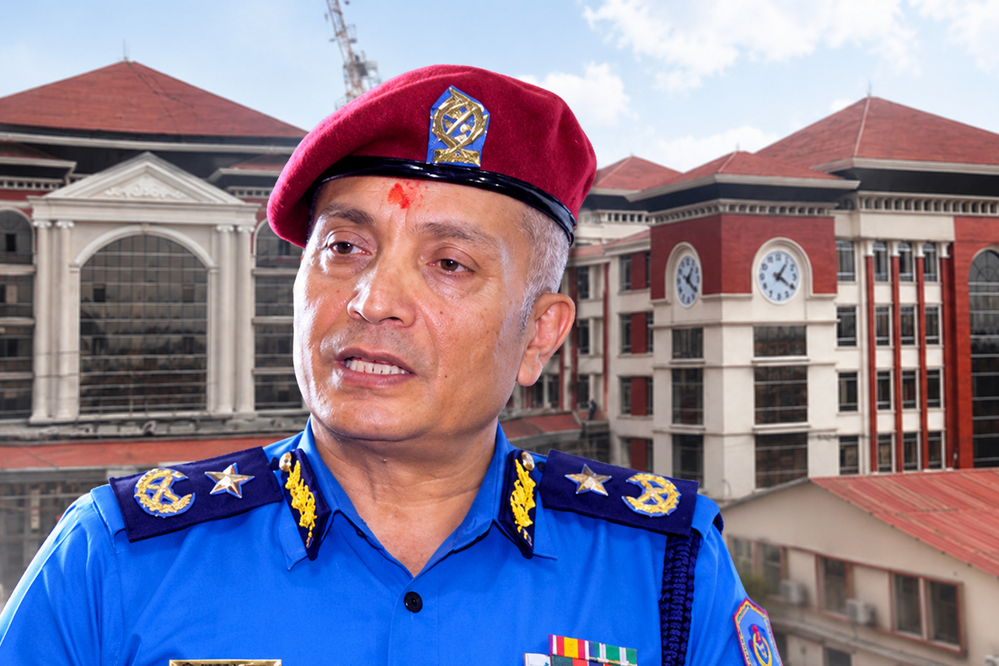
In the high-stakes world of national security, the transition of power is rarely a quiet affair, but in Nepal, the recent reshuffling of the police leadership has triggered a profound legal confrontation. Dan Bahadur Karki, the man who previously held the mantle of Inspector General of Police (IGP), finds himself at the center of a constitutional storm. The government moved to remove Karki from his position as the nation's top law enforcement officer, opting instead to reassign him to the role of security adviser to the Prime Minister. This shift, which effectively ended his tenure as police chief before its natural conclusion, has set the stage for a judicial showdown.

Karki’s response to this sudden displacement was not one of quiet acceptance, but of legal recourse. On Thursday, May 23, 2024, Karki filed a writ petition at the Supreme Court of Nepal. The core of his argument rests on a fundamental principle of governance: due process. The petition contends that the government's decision to strip him of his command violated the established procedures required for such a significant administrative change. By filing this writ, Karki is not merely seeking a return to his old office; he is challenging the legality of the mechanism used to displace him.
While the filing occurred on Thursday, the machinery of the judiciary moves with its own deliberate pace. Following an initial review by the court administration, the Supreme Court formally registered the petition on Friday, May 24, 2024. This registration marks a critical turning point, moving the dispute from a political disagreement between an official and the state into the formal arena of the judiciary. The registration confirms that the court has accepted the petition for consideration, signaling that the arguments regarding Karki's removal will be subjected to rigorous legal scrutiny.
One of the most striking elements of this dispute is the perceived lack of formal communication from the state.
One of the most striking elements of this dispute is the perceived lack of formal communication from the state. Despite the government's decision to reassign him, Karki has reported that he has not yet received a formal letter regarding the Cabinet's decision to remove him from his post as IGP. In the hierarchy of government, where every movement of power is typically documented through official decrees and signed orders, this absence of a formal notification adds a layer of procedural complexity to the case. It raises questions about how such a high-level transition was executed and whether the administrative steps taken by the Cabinet met the necessary legal standards.
The government has appointed Manoj Kumar KC as the new police chief. This appointment ensures that the day-to-day operations of the Nepal Police continue, but it also heightens the stakes of the Supreme Court's eventual decision. If the court finds that Karki's removal was indeed a violation of due process, the legitimacy of the current leadership structure could be thrown into question.
For now, the nation's highest court is in a period of anticipation. The legal arguments presented by Karki, which seek his reinstatement as the Inspector General of Police, will not be heard immediately. The Supreme Court is expected to begin hearing the case after the Tihar holidays. The coming weeks will determine whether the government's prerogative to reassign its top officers is absolute, or if it must yield to the procedural safeguards of the law.

Supreme Court registers petition challenging removal of Nepal Police chief Dan Bahadur Karki has asked the court to overturn the Cabinet decision appointing Manoj Kumar KC as police chief, arguing that his removal before the end of his tenure violated due process. https://t.co/UL5EVLbHOU — by @DulalDp