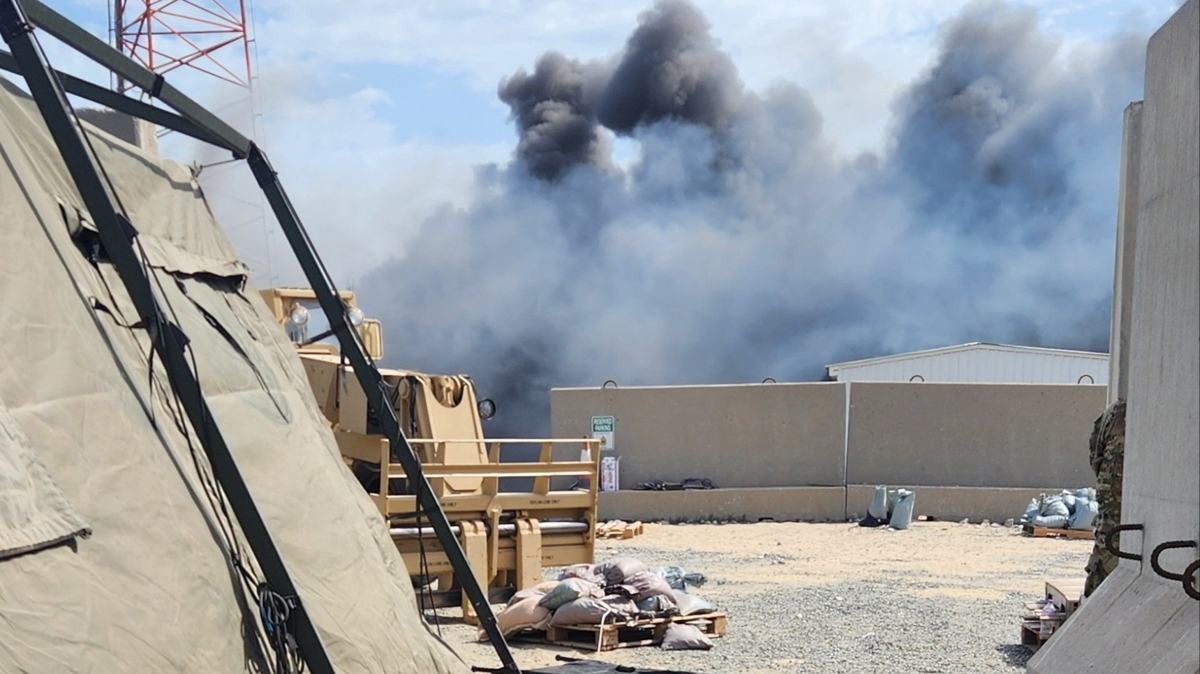
On November 26, 2026, the quiet stability of Kuwaiti airspace was shattered by the detection of multiple Iranian drones. The intrusion was not merely a technical anomaly but a direct violation of national sovereignty, triggering an immediate and high-stakes response from the state's military apparatus. For a nation positioned in a volatile geopolitical landscape, the sight of unauthorized unmanned aerial vehicles (UAVs) entering its territory represents more than a security breach; it is a direct challenge to the country's territorial integrity.

As the drones penetrated the country's borders, the Kuwaiti Army moved swiftly to neutralize the threat. Air defense systems—the sophisticated network of radar and missile technology designed to protect a nation from aerial incursions—were engaged to intercept the incoming Iranian craft. The military's primary objective was to prevent the drones from reaching their intended targets, a task that required precision and rapid-fire coordination. The engagement turned the sky into a theater of defensive maneuvers, as the military worked to ensure the drones could not complete their mission.
While the air defense systems successfully engaged the drones, the victory was not without a physical toll. The interception of the aircraft caused debris to fall from the sky, raining down upon the ground below. This falling wreckage struck a facility of vital importance, an area deemed critical to the nation's infrastructure. The impact of the falling debris was not just structural; it had a human cost. In the immediate aftermath of the interception, four individuals were injured by the falling remnants of the drones.
Among those injured were one Kuwaiti national, two Italian nationals, and one Pakistani national.
The casualties resulting from the debris reflect the international character of the workforce often found at critical industrial or strategic sites. Among those injured were one Kuwaiti national, two Italian nationals, and one Pakistani national. The diversity of the victims underscores how such security incidents can impact a globalized labor force. Following the impact, the injured were quickly transported to a hospital to receive medical treatment for their injuries.
Beyond the human injuries, the site of the interception suffered additional damage. The facility, which the military has characterized as being of vital importance, sustained hits that went beyond the immediate impact of the debris. While the specific nature of the facility's function remains a matter of national security, the fact that it was targeted suggests that the drones were directed toward a node of significant strategic or economic value. The damage at the site serves as a physical reminder of the vulnerability of critical infrastructure to modern aerial warfare.
In the wake of the attack, the Kuwaiti military has moved into a posture of heightened vigilance. The army issued a formal statement emphasizing its commitment to the nation's security. The military stated that it is continuing to take all necessary measures, working in close coordination with relevant institutions to protect the country's sovereignty, security, and stability. This coordinated response is designed to fortify the nation against future incursions and to stabilize the environment following the chaos of the drone strike.
As of now, the situation remains under intense military and institutional scrutiny. The interception on November 26 has left Kuwait grappling with both the physical damage to a critical facility and the broader implications of Iranian drone activity in its airspace. The recovery of the injured and the assessment of the damage at the site are ongoing, as the nation seeks to reinforce its defenses against a new and unpredictable form of aerial threat.
