
In a landmark decision that could reshape urban mobility across India, the Supreme Court has ruled in favor of bike taxi operators in Karnataka, dismissing the state government's appeal against a High Court order that had lifted a ban on these services. The verdict, delivered on November 20, 2026, by a bench comprising Justices Satish Chandra Sharma and N Kotiswar Singh, effectively clears the way for bike taxis to return to the streets of Karnataka, subject to appropriate regulation.
The legal battle began earlier this year when the Karnataka High Court, on January 23, 2026, issued a pivotal order lifting the ban on bike taxis. This decision recognized the growing demand for affordable transportation options in India's rapidly urbanizing landscape. The High Court had essentially established that prohibiting these services was not the most effective approach to addressing transportation challenges in the state.

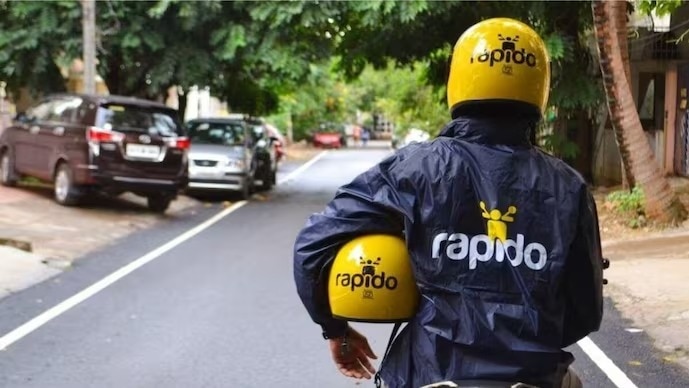
The Supreme Court agreed to hear on January 23 plea of #Rapido, the bike taxi and auto aggregator, challenging the Bombay High Court order https://t.co/YdspQCkndg
The Karnataka government had appealed the High Court's decision, citing significant concerns about traffic congestion in Bengaluru, India's traffic-choked technology capital. Government officials argued that the existing Motor Vehicles Act lacked specific provisions for regulating aggregators of bike taxi services, creating a legal gray area that could compromise public safety and traffic management. The state maintained that without proper regulatory frameworks, allowing bike taxis would exacerbate already severe urban congestion problems.
Justice Sharma shared revealing conversations with young women who rely on bike taxis for their daily transportation needs.
The Supreme Court's bench ultimately sided with the principle of regulation rather than prohibition. Justice Satish Chandra Sharma articulated the court's position clearly: "It is better to regulate it than ban it. Bike taxis are already there in 25 states of the country." This observation highlighted that Karnataka was becoming an outlier in restricting a service that had been widely accepted across most of India.
A crucial element in the court's decision was the consideration of affordability and accessibility, particularly for women and low-income commuters. Justice Sharma shared revealing conversations with young women who rely on bike taxis for their daily transportation needs. "I asked them, 'How do you come to my office?' They said on a motorbike because they do not have the money to hire a cab. I asked them, 'Why don't you take an auto?' They said, 'Sir, it is five times (the fare),'" the justice recounted, underscoring the economic reality that makes bike taxis an essential service for many urban residents.
Contrary to the government's safety concerns, the Supreme Court emphasized that modern bike taxi services actually enhance passenger safety through technological features. Justice Sharma specifically noted that "a bike taxi was safer for young girls as it had GPS" tracking capabilities. This technological safeguard addresses many traditional safety concerns associated with two-wheeler transportation, particularly for vulnerable populations.

Supreme Court of India put on hold the #DelhiHighCourt order staying a notice of city government to bike-taxi aggregators #Rapido & #Uber and allowing them to operate without aggregator licenses till the final policy has been notified. https://t.co/0Mg9JFwfC8
Beyond the legal and regulatory arguments, the Supreme Court's decision carries significant human impact. Bike taxi aggregators highlighted that nearly 4.5 lakh passengers in Karnataka had benefited from these services before the ban. These numbers represent not just statistics but real people who relied on affordable, accessible transportation for their daily commutes, work, and essential errands. The restoration of these services will directly improve the quality of life for hundreds of thousands of Karnataka residents.
With the Supreme Court's final verdict, Karnataka now faces the task of developing appropriate regulatory frameworks for bike taxi services. The state must balance legitimate concerns about traffic management with the recognized benefits of affordable transportation. As bike taxis continue to operate in 25 other states across India, Karnataka will need to craft regulations that ensure safety and order while not stifling a service that has demonstrably improved urban mobility for countless citizens.