
For months, the British public had grown accustomed to a strangely mild winter, one where snow was a rarity rather than a routine. But on Tuesday, that pattern broke. Across the United Kingdom, commuters stepped out of their homes to find a transformed landscape. More than an inch of snow had fallen in several areas, turning what was expected to be a routine commute into a complex logistical puzzle. The weather systems that had been brewing over the Atlantic finally delivered their payload, forcing drivers, rail passengers, and pedestrians to adjust their strategies in real-time.

The heart of the disruption was felt in the north. The Met Office recorded 3cm of snow at Spadeadam, a location near Carlisle in Cumbria. This depth, while perhaps modest to residents of the American Midwest, is significant for parts of the UK where roads are not routinely cleared for winter snow. Images circulating from the region showed Co Durham blanketed in white, the roads coated in a layer that made traction unpredictable. For drivers who had not prepared for winter conditions, this was an abrupt and unwelcome surprise. The visual shift was stark: familiar green hillsides and gray tarmac had become a monochrome, slippery terrain that demanded immediate caution.
While the snow dominated the headlines, the risk of water was equally pressing. Simultaneously, the Environment Agency issued two red flood warnings, the highest level of alert they provide. These warnings targeted the Barbourne Brook in Worcester and the Sandyford Brook in Stafford. Residents in these areas were urged to act on their pre-planned flood strategies, a stark contrast to the simple caution required for the snowy roads in the north. The duality of the weather event—snow and severe flooding occurring at the same time—highlighted the complexity of the current atmospheric patterns. While some parts of the country were freezing, others were being inundated, forcing local authorities and emergency services to manage two very different crises simultaneously.
The cold weather is not merely a matter of discomfort; it poses genuine health risks, particularly for vulnerable populations such as the elderly.
The impact on travel extended beyond the roads. In North Wales, a tree blocked the railway line between Llandudno Junction and Holyhead. This single obstacle created a bottleneck that affected multiple routes, disrupting services for Avanti West Coast and Transport for Wales passengers. For commuters relying on the train to reach their jobs, the blockage meant delays and uncertainty, a familiar frustration that the winter weather only exacerbated. The combination of rail disruptions and road closures created a web of travel trouble that caught many off guard.
The conditions were not just an isolated Tuesday event; they were the culmination of a cooling trend that had been building throughout the week. On Sunday, the UK recorded the coldest night of the season so far. The temperature dropped to minus 7.7C at Tulloch Bridge in the Scottish Highlands. This freeze prompted the UK Health Security Agency to issue a yellow cold health alert for the North West, North East, and Yorkshire and the Humber regions. The cold weather is not merely a matter of discomfort; it poses genuine health risks, particularly for vulnerable populations such as the elderly. The alert served as a formal warning that the low temperatures were a health hazard, urging people to take extra precautions to stay warm and monitor those at risk.
In response to the chaos, the Royal Automobile Club (RAC) issued specific advice for motorists navigating the wintry conditions. Harriet Hernando, a spokesperson for the RAC, emphasized the importance of route selection. She advised that in snowy and icy conditions, it is best to stick to major roads rather than rural areas, where surfaces may not have been gritted. "It’s best to stick to major roads rather than rural areas where surfaces may not be gritted, reduce speeds and leave plenty of space behind the vehicle in front to ensure you have more time to stop," Hernando stated. This guidance shifted the commuter’s mindset from mere travel to survival, highlighting the need for extended stopping distances and heightened awareness.
Hernando also stressed the importance of preparation for the worst-case scenario: being stranded. "Everyone should travel prepared in case they find themselves broken down at the side of the road: a blanket, warm waterproof coat and gloves, sturdy footwear and a charging cable and mobile power bank with a phone to be able to call for assistance," she advised. This list of essentials transformed the car from a simple transport device into a temporary shelter. The recommendation to carry a power bank was particularly modern in its urgency; in the cold, losing phone battery meant losing the ability to call for help, turning a minor breakdown into a potential emergency.
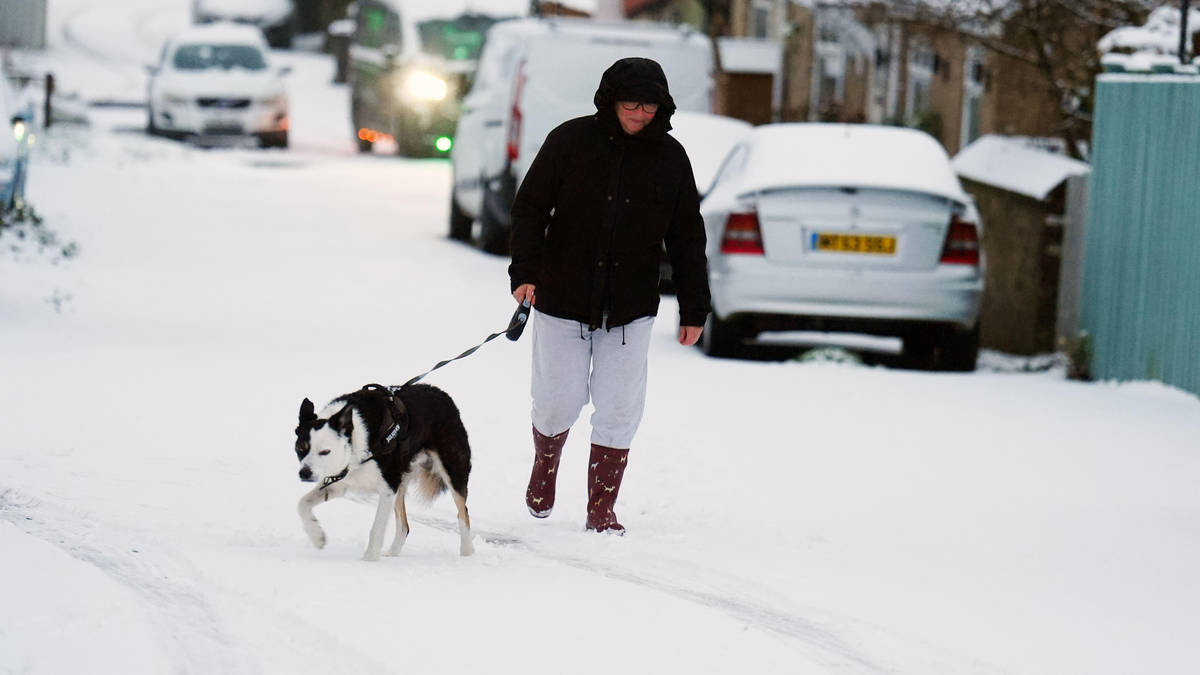
The weather systems did not limit their impact to the south and west. A seasonal snow warning remained in effect from Staffordshire to south-west Scotland until 11am on Tuesday. This meant that as the morning commuted rush hour began, conditions were still active and evolving in the north. Wet and wintry conditions were expected to persist across northern England, Scotland, and Northern Ireland. For those in these regions, the snow of Tuesday was not an anomaly but part of a broader, persistent pattern. The coldest night of the season on Sunday had set the stage for a week of challenging weather, and Tuesday was its most visible manifestation.
As the day wore on, the focus shifted from immediate reaction to assessment. The flooding warnings in the Midlands and the snow in the north represented different facets of the same atmospheric story. For the UK, this period marked a decisive shift away from the milder winter conditions that had characterized the season up to that point. The combination of record low temperatures, widespread snow, and severe flooding warnings meant that the remainder of the week would be defined by caution and preparedness. The commuters who navigated the tricky journeys of Tuesday did so not just as individuals, but as part of a national response to a weather system that had caught the country in its grip, reminding everyone that winter, when it finally arrives, does so with full force.