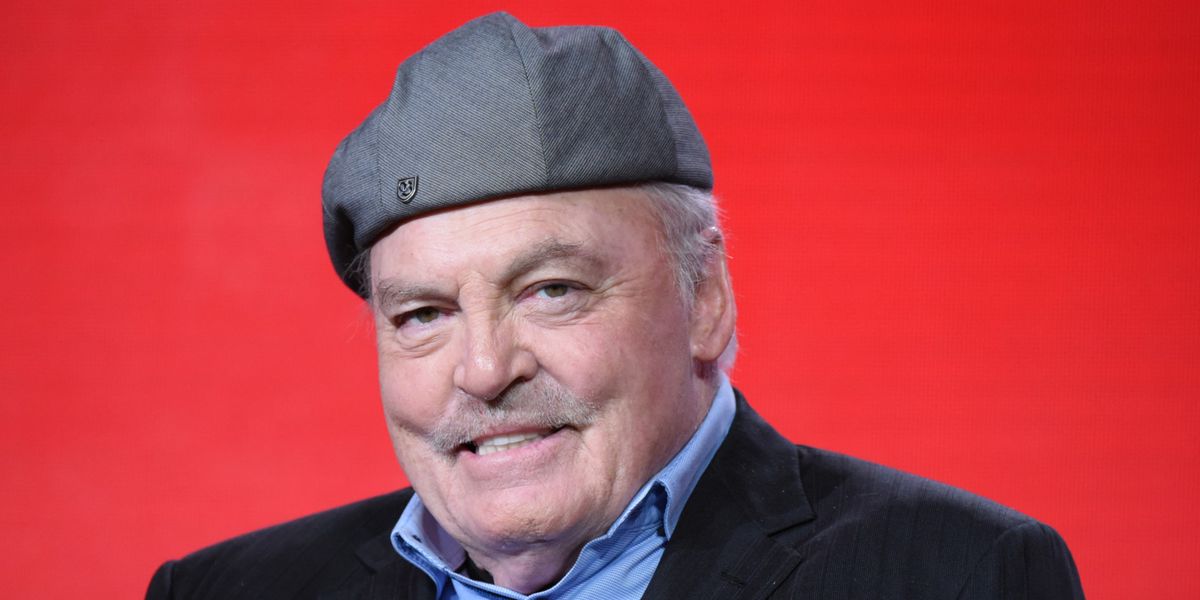
Stacy Keach was never a man content to be defined by a single silhouette. To the television audience of the 1980s, he was the definitive Mike Hammer, the hard-boiled private investigator whose gravelly voice and relentless pursuit of justice became a staple of the era. Yet, to reduce Keach to a single archetype was to misunderstand the very engine of his career. He was a performer who treated the stage and the screen as a laboratory for the human condition, moving with ease between the pulp fiction of detective dramas and the towering, tragic figures of the Elizabethan canon. His death at his home in Magdalenka, Poland, at the age of 85, marks the end of a career that spanned decades and defied the rigid gravity of Hollywood typecasting.
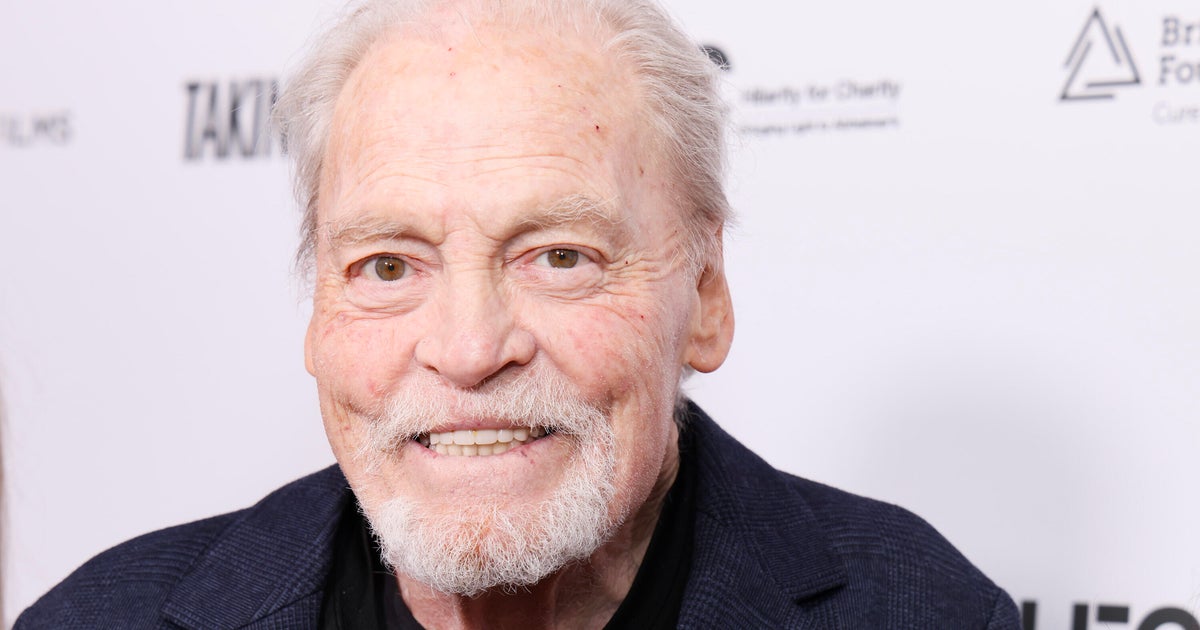
Keach’s professional philosophy was rooted in a deliberate, often difficult, pursuit of variety. He understood that in an industry built on the comfort of familiarity, choosing to be a chameleon was a risky gamble. "My objective was to have as varied a selection of roles as possible," he once reflected. "It probably did hurt my career." This was not a lament, but a statement of principle. He prioritized the integrity of his craft over the safety of a recurring persona, a choice that allowed him to inhabit characters as disparate as the complex protagonist in 'The Ninth Configuration' and the nuanced figures in 'Titus', 'Nebraska', and 'Blue Bloods'.
Perhaps nowhere was his commitment to transformation more evident than in his portrayal of Ernest Hemingway. For a six-hour miniseries that earned him a Golden Globe, Keach gained 35 pounds to embody the legendary author. It was this level of immersion that defined his approach. He was not interested in playing versions of himself; he was interested in the total surrender to the character’s reality, regardless of the physical or professional toll.
Yet, Keach returned to his work with a renewed focus, continuing to build a body of work that remained prolific and respected.
Life, however, often intruded upon the stage. In 1984, Keach faced a profound personal crisis when he was imprisoned for attempting to smuggle cocaine. It was a moment of public reckoning that could have derailed a lesser talent. Yet, Keach returned to his work with a renewed focus, continuing to build a body of work that remained prolific and respected. He viewed his career as a series of trade‑offs, a ledger of artistic gains and personal losses. "My choices have had a cost attached to it," he admitted. "But I've gotten to play Hamlet, and Richard III, and King Lear, and I would not give that up for anything."
In his later years, Keach’s health became a recurring challenge, a physical manifestation of the intensity he brought to his work. In June 2017, he suffered a heart attack while performing onstage—a dramatic, if harrowing, reminder of his lifelong dedication to the theater. He continued to manage a serious heart condition for years, a battle that eventually concluded on June 4, 2024, at his home in Poland. His wife, Malgosia Tomassi Keach, confirmed his passing, noting the long and difficult struggle he had endured.
Beyond the accolades and the iconic roles, those who worked alongside Keach remember a man of unexpected warmth. Lou Diamond Phillips, a colleague who shared the screen with him, described Keach as a "consummate actor, gracious, giving and incredibly kind even while he had the presence of a smoldering volcano." It is a fitting epitaph for a man who could command the screen with a volatile, gritty intensity while maintaining the quiet, intellectual humility of a Shakespearean scholar. As the industry reflects on his passing, it is clear that Stacy Keach’s legacy is not found in any single performance, but in the sheer breadth of a life lived in pursuit of the next great character.