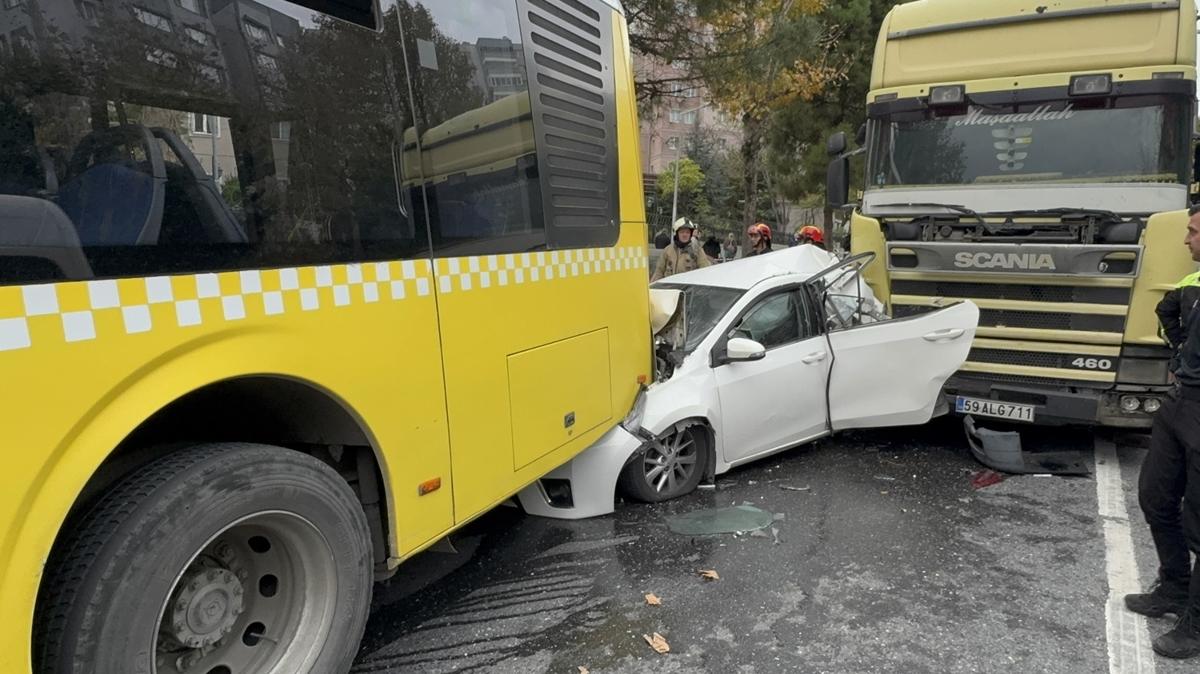
The late afternoon calm on Yavuz Sultan Selim Boulevard in Beylikdüzü was shattered on Saturday at approximately 16:00 when a violent collision sent shockwaves through the Adnan Kahveci neighborhood. What began as an ordinary Saturday evening quickly turned into a scene of emergency response as a car found itself tragically trapped between a massive truck and an İETT city bus stopped at a bus stop. The impact was severe, leaving the vehicle with heavy damage that would later require specialized equipment to remove from the scene.
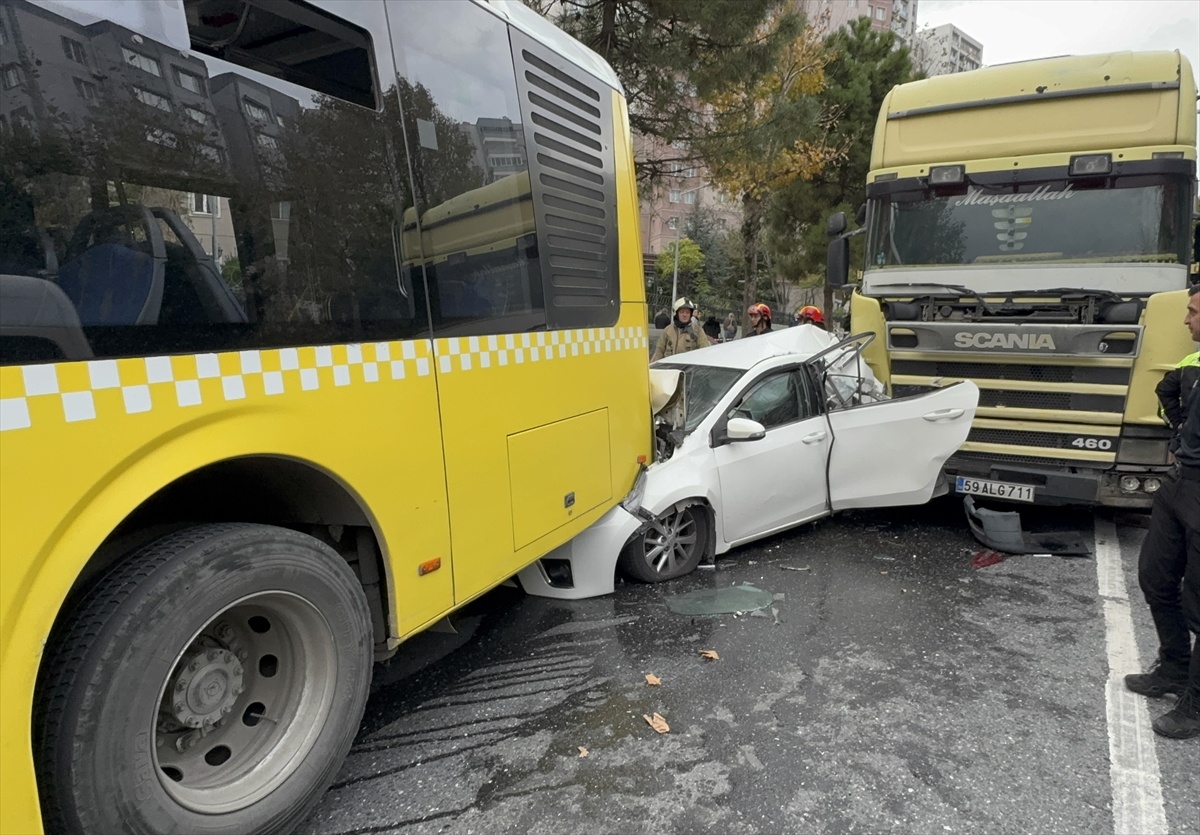
Fire crews arrived swiftly to assess the situation and begin the delicate process of extracting the individuals trapped inside the crushed vehicle. Working with precision and urgency, the emergency teams managed to successfully free two people from the wreckage. Both were injured, but their lives were not in immediate danger, a crucial detail that would later be confirmed at the hospital. The rescue operation itself was a testament to the training and coordination of Istanbul's first responders, who worked efficiently to minimize additional trauma to the victims while ensuring the safety of everyone at the scene.
Once freed from the wreckage, the two injured individuals received immediate on-site first aid from emergency medical personnel. This initial care was critical in stabilizing their condition before they were transported to a nearby hospital for further evaluation and treatment. Medical professionals at the hospital would later determine that while both victims had sustained injuries, they were not in life-threatening danger—a piece of good news that emerged from an otherwise grim situation. This assessment allowed medical staff to prioritize treatment while providing some relief to concerned family members and witnesses.
This initial care was critical in stabilizing their condition before they were transported to a nearby hospital for further evaluation and treatment.
The accident had an immediate impact on traffic flow along Yavuz Sultan Selim Boulevard, which was closed to traffic for a period as emergency crews worked at the scene and later as the damaged vehicle was carefully removed from the roadway. This closure created significant congestion in the Beylikdüzü area, a bustling district on the European side of Istanbul where traffic is typically heavy, especially during evening hours. Once the wreckage was cleared and the scene deemed safe by authorities, the boulevard was reopened to traffic, allowing normalcy to gradually return to the affected area.
With the immediate emergency response concluded and the victims receiving medical care, attention turned to understanding what led to this dangerous collision. An investigation into the causes of the accident is currently underway, with authorities working to piece together the sequence of events that resulted in the car being squeezed between the truck and the bus. This investigation will likely examine factors such as vehicle speeds, road conditions, and whether any traffic violations contributed to the crash. The findings of this investigation could have implications for traffic safety measures in the Beylikdüzü area and potentially influence similar intersections throughout Istanbul.
The accident serves as a stark reminder of the inherent risks of urban traffic, particularly in a sprawling metropolis like Istanbul where millions of vehicles navigate complex road networks daily. The specific circumstances of this collision—where a stationary bus became part of a dangerous sandwich between a moving truck and a car—highlight the unique challenges faced by drivers and pedestrians in dense urban environments. As Istanbul continues to grow and traffic volumes increase, such incidents underscore the importance of ongoing efforts to improve road safety, from better infrastructure to enhanced driver education and enforcement of traffic regulations.