
In the often opaque world of Nepali local politics, the announcement of a major candidate rarely comes with fanfare. It is usually a quiet slip into the public record, a digital post that ripples outward into the physical world. For Sumana Shrestha, a former minister who had effectively disappeared from the political scene, the return was exactly that: sudden, self-directed, and devoid of party machinery. On Wednesday, November 18, 2026, Shrestha announced her candidacy for the mayor of Kathmandu Metropolitan City not through a grand press conference, but via a post on Facebook. It was a digital declaration of war against the status quo, one that immediately raised the question of how a figure who had resigned from a party leadership role just weeks prior would navigate the complex terrain of the upcoming local-level elections without a clear tribal banner.
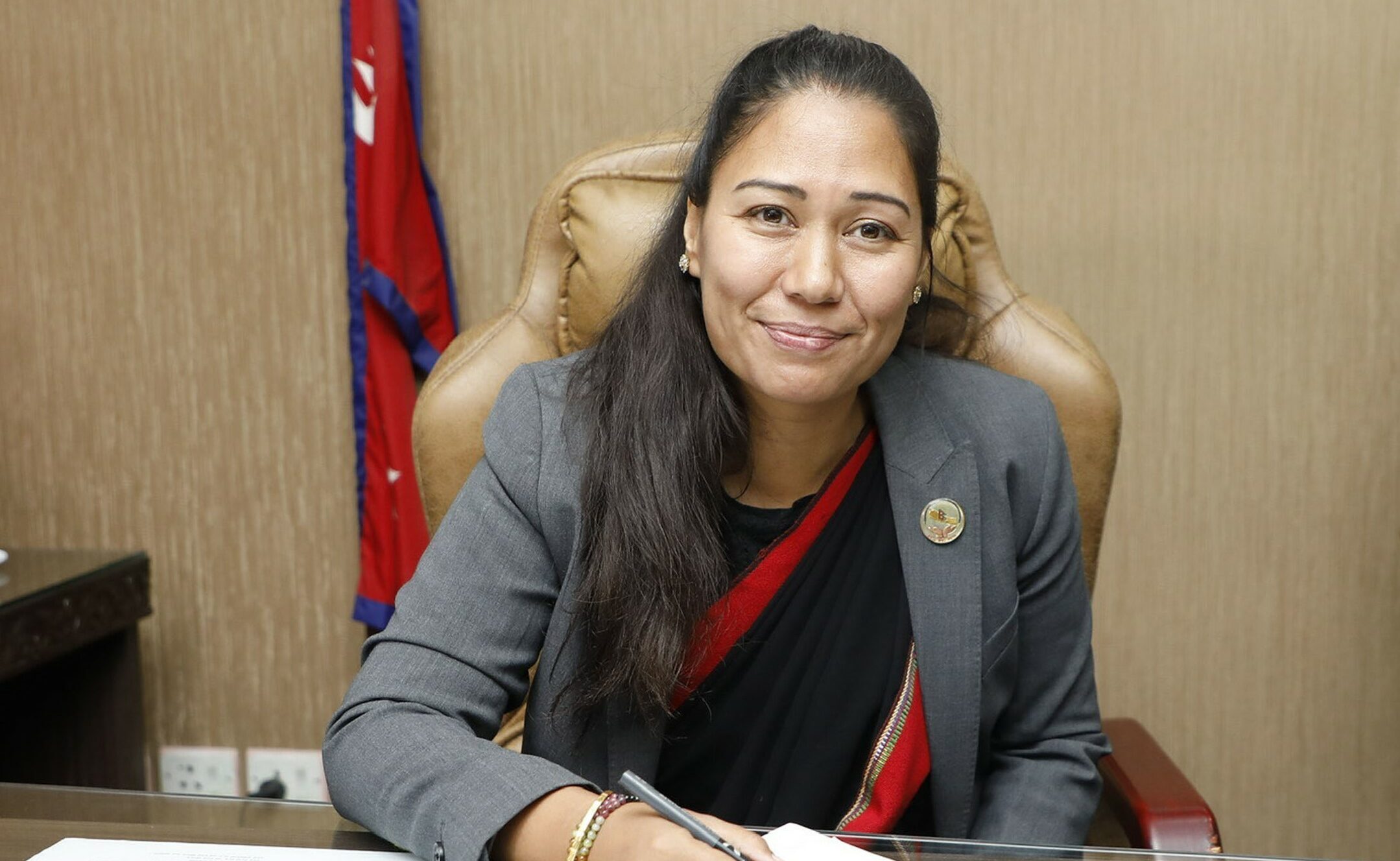
To understand the weight of this announcement, one must look at who Shrestha is. She is not a newcomer to the public eye. As former Education Minister, she occupied one of the most visible portfolios in the central government, a role that demanded not just administrative competence but the ability to manage one of the nation’s most sensitive social sectors. Yet, her tenure did not end in a sustained career in central politics. Instead, she found herself in a peculiar limbo: technically part of the Rastriya Swatantra Party (RSP) apparatus, yet inactive in the actual machinery of party politics. This distance is key. She had stepped back from the daily grind of campaigning and internal party warfare, creating a space that allowed her to rebuild her public persona as a figure of expertise rather than factional loyalty. By 2026, that quiet retirement had made her a candidate whose brand was defined by her absence from the usual partisan bickering.
The timeline of her political re-emergence is marked by a specific, decisive break. Recently, Shrestha resigned from her position as joint general secretary of the RSP. This was not a minor clerical change; it was a severance of her formal ties to the party that had previously provided her political home. In the landscape of Nepali politics, where loyalty to a party ticket is often the price of entry, this resignation placed her in a state of unaffiliation. She was now a free agent. The move was strategic, allowing her to cast a wide net for support without the immediate constraint of a party whip. It signaled to voters that she was no longer beholden to the RSP hierarchy, but it also left her vulnerable, stripped of the institutional backing that most candidates rely on to survive the grueling campaign cycle.
However, the announcement left one critical variable unsolved: the banner under which she would run.

Former minister Sumana Shrestha has announced her candidacy for the mayoral position of Kathmandu Metropolitan City for the upcoming local level elections. https://t.co/Vi8kovDZDU #nepalnews #nepalinews #NepaliNewsToday #NNPlus
It was in this unaffiliated state that Shrestha chose her medium. The Facebook post was a calculated choice. Social media allows for a direct, unfiltered line to the voter, bypassing the traditional gatekeepers of local political units and party headquarters. In the post, she issued a stark, formal notice: "I hereby announce my candidacy for the post of mayor of Kathmandu Metropolitan City in the upcoming local-level elections." The language was precise, leaving no room for ambiguity. She was not exploring the possibility; she was committing to it. By using her personal digital platform, she reinforced the narrative of independence, framing herself as a direct representative of the Kathmandu citizenry rather than a proxy for a political elite. The announcement was a line in the sand, drawn in the digital realm, but with physical implications for the street-level politics that would follow.
At the heart of Shrestha’s pitch was a rejection of traditional political rhetoric in favor of professional competence. She did not promise ideological revolutions or partisan loyalty. Instead, she promised expertise. Her central argument was simple: her career had accumulated a specific type of capital—knowledge, skills, and experience—that was now dedicated solely to the city. "All the knowledge, skills, experience and expertise I have gained throughout my life and professional career are now dedicated to the prosperity, good governance and transformation of Kathmandu," she stated. This framing was crucial. In a city like Kathmandu, which often suffers from bureaucratic gridlock, the promise of "good governance" is a powerful magnet. It suggests a city that works, not just one that is represented.
However, the announcement left one critical variable unsolved: the banner under which she would run. Despite her resignation and self-proclaimed independence, the political math of Nepal still favors the organized. It remained unclear whether she would run as a true independent or if she would ultimately secure a place on a party ticket. Aides and political observers noted that an RSP ticket was still a possibility, suggesting that her resignation might have been a bargaining chip rather than a final exit. The tension between her public persona of an independent expert and the private reality of needing a party machine to survive the election process created a fascinating paradox. Voters were being sold a product of expertise, but the delivery vehicle might still be a conventional party bus. This ambiguity adds a layer of complexity to her campaign, forcing her to constantly navigate between the two identities: the minister who knows how to build things, and the politician who knows how to win.
Shrestha’s focus on "transformation" speaks to the specific malaise of Kathmandu. It is a city of contradictions, where ancient heritage meets modern congestion, and where governance often lags far behind urban expansion. By framing her candidacy around the city's "prosperity," she is positioning herself not just as a local administrator, but as a developmental leader. This is a high bar. It implies that the current local governance is insufficient, a claim that is risky but necessary to motivate a vote. For a former minister, the shift from national policy to municipal management is a significant one. It requires a different set of skills: less about national symbolism, more about the daily grind of waste management, road maintenance, and zoning disputes. Shrestha’s experience in education offers a specific lens here, suggesting a candidate who understands institutions, curricula, and long-term planning, which she hopes to apply to the urban landscape.

As the November 18 announcement reverberates, the political landscape of Kathmandu has shifted. Shrestha has forced the issue of competence into the debate. Whether she runs on an RSP ticket or as an independent, her entry has reset the terms of the local election. She is no longer just another candidate in a field of local party loyalists; she is a former central minister who has explicitly broken from her party structure to claim the city’s future for herself. The coming weeks will test her ability to translate her digital declaration into street-level support. The question for Kathmandu voters is no longer just who is available, but whether the promise of expertise can overcome the inertia of the established political order. For now, the ball is in her court, and the transformation she promises begins with the next step in a race that has only just started.