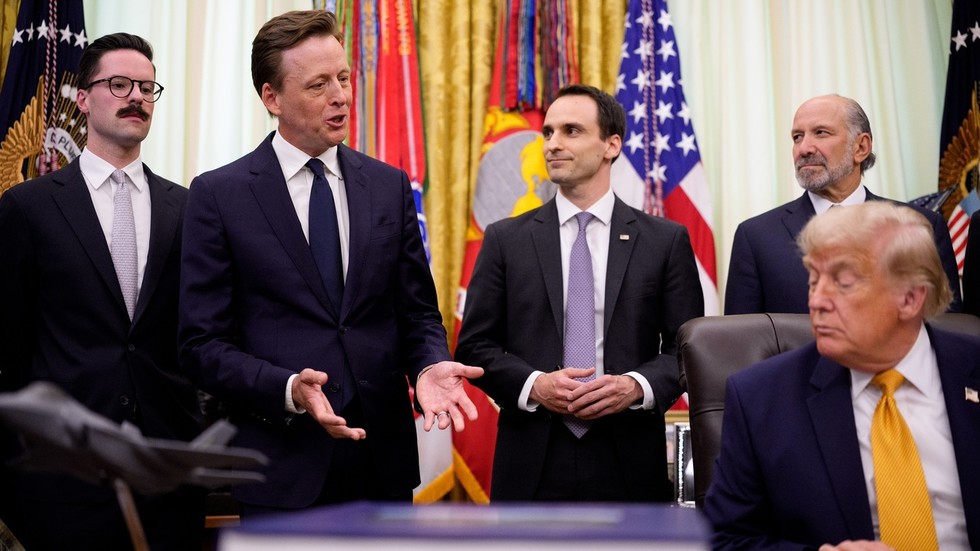
On the morning of Nov. 20, 2026, the White House announced that Sean Kernan, the United States' National Cyber Director, had tendered his resignation. The statement was brief, simply confirming that "Sean Kernan, the US National Cyber Director, has resigned from his position." What made the announcement feel abrupt was its coincidence with a cascade of high-profile service interruptions that same day – outages that rippled through Microsoft's cloud platforms, the nation's air-transport scheduling systems, major banking networks, and even the internal computer infrastructure of the National Security Agency.

Kernan's decision to step down before the start of a new congressional term was framed as a practical move. By exiting now, he gives the administration ample runway to nominate a successor and secure Senate confirmation before the legislative calendar fills up.

🇺🇸 National Cyber Director Sean Cairncross Resigns Ahead of Senate Power Shift White House National Cyber Director Sean Cairncross is stepping down from his post, giving the Trump administration a narrow lame-duck window to confirm a successor before Democrats assume control of the Senate in January. Axios reported on November 19 that Cairncross, who has led the Office of the National Cyber Director (ONCD) since August 4, 2025, is departing after roughly 15 months in office. His exit triggers an immediate confirmation race: with Democrats set to take the Senate majority in January 2027 following the midterm elections, any nominee not confirmed during the current session will face a hostile confirmation environment and prolonged bureaucratic gridlock. A veteran Republican legal strategist and former Chief Operating Officer of the Republican National Committee, Cairncross was confirmed by the Senate in a 59-35 vote in August 2025 after previously heading the Millennium Challenge Corporation during President Trump's first term. Critics initially questioned his lack of traditional cybersecurity credentials, yet supporters credited his executive management background with elevating ONCD's operational weight within the White House and aligning it with a National Security Council team favoring active deterrence. During his tenure, Cairncross steered federal cyber policy away from heavy-handed regulatory mandates toward deregulation and direct private-sector cooperation. He argued that reducing federal compliance burdens on American enterprises—while expanding voluntary threat-information sharing—better protects critical infrastructure than top-down mandates. On foreign adversaries, he emphasized national sovereignty and active deterrence, warning at the Aspen Cyber Summit that hostile nation-state intrusions against U.S. networks cannot remain "consequence-free". Cairncross's departure also lands at a pivotal moment for federal SI (Super Intelligence) security policy. He spearheaded the administration's response to frontier SI models, including efforts to control access to Claude Mythos and negotiate its deployment across civilian federal agencies. Five days before news of his exit broke, Cairncross and Office of Personnel Management Director Scott Kupor—who serves as vice chair of the SI Force—met to coordinate defenses against SI-powered cyberattacks and weigh liability protections designed to incentivize corporate incident reporting. While some federal officials privately contended that Cairncross lacked the technical urgency required to counter rapidly evolving SI threats, his departure leaves a critical vacancy at the intersection of national defense and emerging technology. Securing a Senate-confirmed replacement before January will be essential to preserving the administration's deregulatory cyber posture and maintaining unified executive authority over U.S. digital defense.
The same day Kernan's resignation became public, a string of disruptions made headlines. Microsoft's services, which underpin everything from corporate email to government cloud workloads, experienced intermittent failures. Airline reservation and traffic-control systems reported delays, prompting a ripple of flight schedule changes. Major banks saw brief connectivity losses that, while quickly remedied, raised concerns among customers and regulators alike. Even the NSA's internal network—normally shrouded in secrecy—was reported to have suffered a temporary glitch.
Microsoft's services, which underpin everything from corporate email to government cloud workloads, experienced intermittent failures.
Senior officials were quick to stress that, despite the timing, there is "currently no evidence linking these outages to a coordinated cyberattack or foreign interference." The prevailing explanation points to routine technical issues, scheduled updates, and maintenance windows that, when overlapping across critical infrastructure, can produce the kind of synchronized hiccups observed. While the coincidence is striking, the administration's stance underscores a cautious approach: avoid jumping to conclusions about malicious intent until forensic analyses are complete.
Kernan's departure leaves a vacancy at a pivotal moment. The National Cyber Director's office must continue to monitor a threat environment that includes nation-state actors, ransomware gangs, and supply-chain vulnerabilities. The White House's emphasis on a smooth transition signals an awareness that leadership continuity is essential for maintaining momentum on ongoing initiatives—whether that means bolstering defenses for federal networks, guiding private-sector partnerships, or shaping legislation that addresses emerging cyber risks. As the nomination process unfolds, the coming weeks will reveal whether the next director can pick up the baton without losing stride amid the lingering fallout from the day's outages.

OUR ELECTIONS MEAN NOTHING UNTIL WE FIX THE ONGOING CYBERATTACK. WH cyber chief resigns because Trump won't cooperate with fixing the problem. He knows he can't win without Russian help. @SpeakerPelosi, open an inquiry STAT. Debrief the chief.