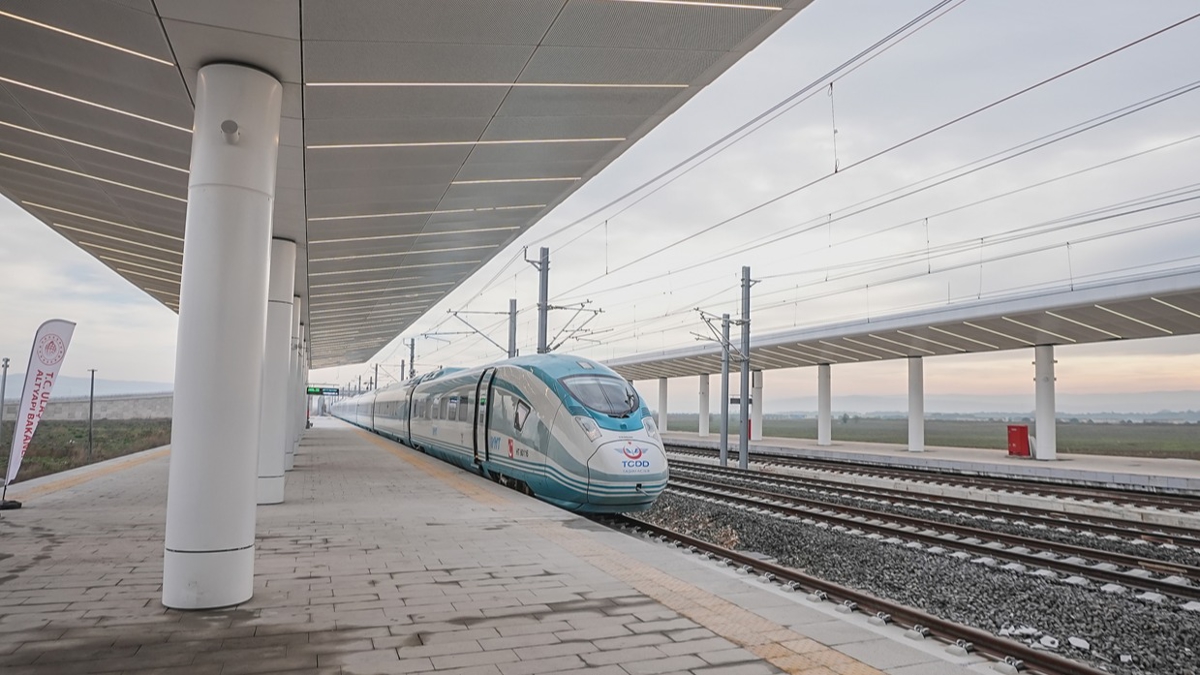
In the sprawling urban landscape of western Turkey, the promise of speed is no longer just a slogan; it is a concrete infrastructure project taking shape in real time. For residents of Bursa, the dream of zipping to the country's two major economic hubs has just moved from blueprints to test tracks. The announcement by the Minister of Transport and Infrastructure, Abdulkadir Uraloğlu, marks a pivotal moment in the nation's connectivity push. He officially declared that test drives for two significant projects have been completed: the Osmaneli-Bursa High-Speed Train Line and the Emek-YHT Gar-Şehir Hastanesi Metro Line. These are not merely engineering feats; they are about how ordinary people move through their days, connecting cities that have historically felt distant.
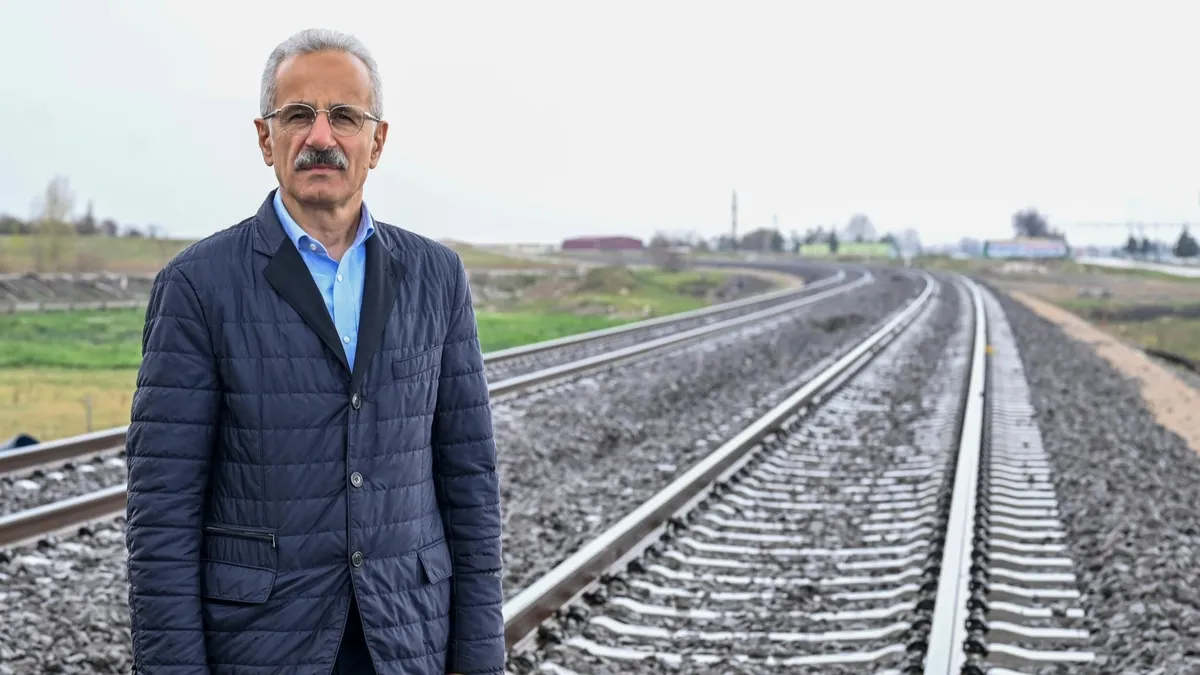
The centerpiece of this announcement is the Osmaneli-Bursa High-Speed Train Line. This new corridor is designed to plug directly into the existing Ankara-Istanbul High-Speed Train Line, creating a seamless high-speed network that spans the country. The goal is clear: drastically reduce the travel time between Bursa and both Ankara and Istanbul. Uraloğlu stated that with this new line, the travel time between Bursa and the two major cities will drop to roughly two hours and fifteen minutes. For a commuter or a business traveler, this is not just a convenience; it is a fundamental shift in how the western region of Turkey is experienced. The line is slated for launch in the first half of 2027, a timeline that places it firmly in the near future for those waiting for the next major upgrade in their daily commute.
To understand the scale of this addition, one must look at the physical footprint of the new infrastructure. The Osmaneli-Bursa line includes the construction of eight new stations. These stations act as the on-ramps and off-ramps for the high-speed journey, bringing the benefits of the train to communities that previously relied on slower, conventional rail or long-haul buses. By connecting these eight stops to the main highway of the national rail network, the project ensures that the speed of the trains is matched by the accessibility of the stops. It is a design choice that prioritizes integration, ensuring that the new high-speed capability is not just available at two terminal points, but woven into the local transit fabric.
The minister highlighted that the high-speed train network, built from scratch, has reached a length of 2,604 kilometers.
Uraloğlu did not just highlight the new line; he placed it within the broader context of a decade-long transformation of Turkey’s rail network. He pointed to the numbers that define this transformation, noting that the country’s total railway network has expanded significantly since 2002. In 2002, the total length of the railway network was 10,948 kilometers. Today, that figure stands at 14,272 kilometers. This growth is not just about laying more tracks; it is about modernizing the entire system to handle more freight, more passengers, and, increasingly, more high-speed traffic.
A specific focus of this expansion has been on high-speed capabilities. The minister highlighted that the high-speed train network, built from scratch, has reached a length of 2,604 kilometers. This dedicated high-speed infrastructure is what allows for the two-hour, fifteen-minute travel times that were previously impossible. It is a specialized network, designed for speed and efficiency, distinct from the older, slower conventional lines that make up the rest of the network. The 2,604 kilometers of high-speed rail represents a massive engineering investment, one that now serves as the backbone for the new Osmaneli-Bursa extension.
The announcement also touched on a second, equally vital project: the Emek-YHT Gar-Şehir Hastanesi Metro Line. While the high-speed train is the long-distance connector, this metro line is the local shuttle that will feed passengers into the system. The test drives for this line were held in Bursa in late November 2026. This metro line is not just a generic urban transit project; it is a dedicated link connecting key local neighborhoods to the High-Speed Train Station and the City Hospital. This integration is crucial. It means that once the high-speed train arrives, passengers are not stranded; they can immediately transfer to a metro line that takes them to the city's largest hospital or back to their residential areas. It is the 'last mile' of the high-speed journey, made efficient and connected.
The timing of these announcements is also noteworthy. The minister noted that the Çerkezköy-Kapıkule Line opened on October 9, 2026. This border line, which connects Turkey to Bulgaria, is a different beast from the domestic high-speed network, but it signals the same trend: rapid rail expansion across the country. By opening a major international border crossing just a few weeks before the test drives for the Bursa line, the government has demonstrated a coordinated, multi-front approach to rail development. It is a message that the expansion is not isolated to one region; it is a nationwide strategy.
As the test drives conclude, the focus now shifts to the launch. With the Osmaneli-Bursa line targeted for the first half of 2027, the next two years will see the physical completion of the track, the activation of the eight new stations, and the integration of the new line into the national high-speed timetable. For the 15th province that will now be directly accessible by high-speed train—a figure Uraloğlu emphasized, moving the count from 14 to 15—the promise of speed is no longer abstract. It is a date on the calendar, a number of kilometers built, and a new reality for daily life in western Turkey.