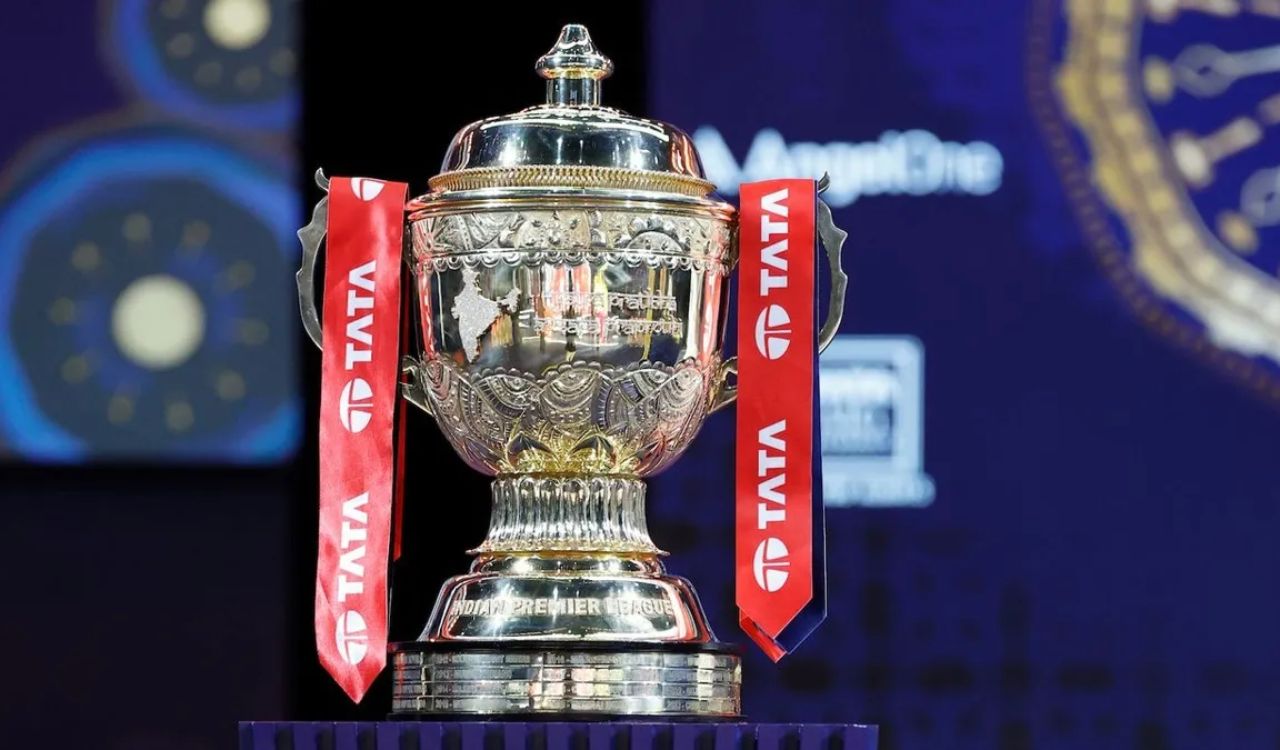
For years, the Indian Premier League (IPL) has functioned as a masterclass in controlled expansion. It is a league that grows not by impulse, but by calculated increments, carefully managing its footprint to ensure the spectacle remains concentrated and the commercial value remains high. But recently, the air around the league has been thick with speculation, suggesting that the current ten-team model might soon be pushed to its breaking point.

Rumors began to circulate following a report by the business newspaper The Mint, which suggested that the Board of Control for Cricket in India (BCCI) was already looking toward the horizon. The report posited that the board was exploring the possibility of adding two new franchises to the league for the 2028-2032 media rights cycle. In this speculative vision, the league would grow from its current ten teams to twelve, with Vadodara and Pune potentially serving as the new homes for these incoming squads.
This wasn't just a suggestion of more teams, but a suggestion of much larger stakes. The reports hinted at a significant escalation in the financial landscape of the league, specifically suggesting that auction prices could be pushed as high as 150 crore rupees. For a league that has already redefined the economics of global cricket, such a move would represent a massive leap in the cost of talent and the scale of competition.
The league has not arrived at its current size through a single, massive leap, but through a measured progression.
However, the reality on the ground appears to be much more conservative than the headlines suggested. Devajit Sarker, the BCCI secretary, has moved to officially dismantle these claims, offering a firm rebuttal to the idea that the league is on the verge of a sudden metamorphosis. The board's stance is clear: the expansion talk is not merely unconfirmed; it is non-existent within their current strategic framework.
Sarker was explicit in his denial, addressing both the structural changes and the financial rumors. He clarified that there has been no discussion—neither formal nor informal—regarding increasing the number of teams in the league. By addressing the 'informal' aspect of the rumors, Sarker sought to close the door on the idea that these plans are being whispered about in boardrooms behind closed doors. He also specifically denied the reports concerning the rise of auction prices to the 150 crore mark, effectively cooling the feverish speculation regarding the league's next financial milestone.

🚨 BANGLADESH PLAYERS REGISTERED FOR IPL 2027 AUCTION. [Sports Today] Mustafizur Rahman, Nahid Rana, Rishad Hossain, Hasan Mahmud, Towhid Hridoy, Taskin Ahmed & Shoriful Islam. https://t.co/2pWMtiyO0W
To understand why the BCCI might be hesitant to jump into a twelve-team model, one must look at how they have handled growth in the past. The league has not arrived at its current size through a single, massive leap, but through a measured progression. Prior to 2022, the IPL operated with a stable core of eight teams.
That stability was broken in 2022, when the league underwent its most recent expansion. During that cycle, the league grew from eight to ten teams, welcoming new franchises based in Ahmedabad and Lucknow. That expansion was a significant milestone, but it was a controlled one, designed to integrate new markets without diluting the existing competitive balance or the logistical precision that the league has come to rely upon.
Rather than looking toward the 2028-2032 cycle and the complexities of new cities and higher price tags, the BCCI is keeping its focus much closer to home. The board's current priority is not the architecture of the next decade, but the successful execution of the upcoming season. Specifically, the organization is concentrating its resources and attention on the 2027 IPL season.
In the world of high-stakes sports administration, the temptation to plan for the distant future is often high, but the BCCI is choosing a path of operational stability. By prioritizing the immediate success of the 2027 season, the board is signaling that it prefers to perfect its current model before attempting to expand the boundaries of the league once again. For now, the ten-team structure remains the definitive shape of the IPL, and the dream of a twelve-team league remains, at least officially, a distant possibility.