On November 3, a low-intensity explosion tore through the Anupgarh-Suratgarh railway line in the Sri Ganganagar district of Rajasthan. It was a sudden, violent disruption of the landscape, but the blast itself was only the visible tip of a much deeper, more calculated operation. For investigators, the smoke from that day signaled the start of a hunt that would lead them away from the tracks and toward the border.

The explosion on the railway track was not a spontaneous act of chaos, but rather the culmination of a series of attempts that had repeatedly missed their mark. According to investigators, the perpetrators did not succeed on their first try. They had traveled to Rajasthan multiple times, struggling to coordinate their efforts. On their first trip, they failed to acquire the necessary materials; on their second, they attempted to trigger an explosion but failed to achieve their goal. It was only on their third attempt that the Anupgarh-Suratgarh line was struck.
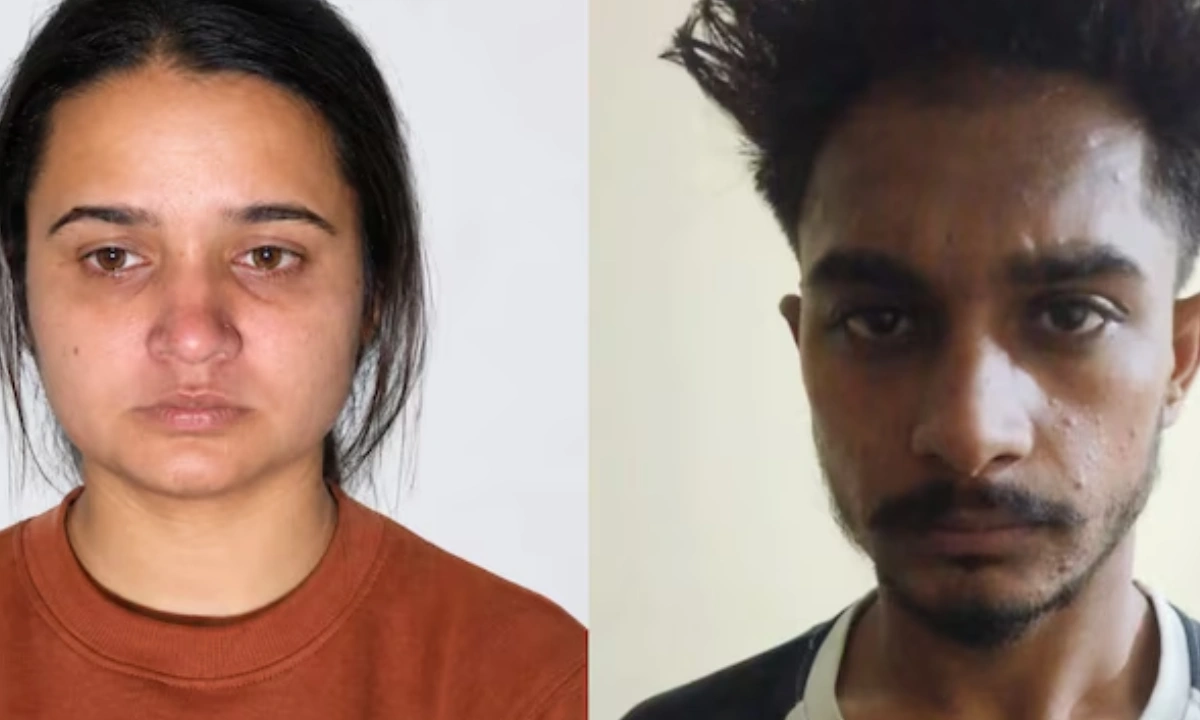
This persistence suggests a level of training or direction that goes beyond mere local unrest. When the Rajasthan Anti-Terrorism Squad (ATS), working alongside the Sri Ganganagar Police and Punjab Police, finally moved in on November 15, they found more than just evidence of a blast. They found a duo from Gurdaspur, Punjab: 21-year-old Mahakdeep Kaur and her 23-year-old associate, Devendra Singh.
During the joint operation, authorities recovered two pistols and approximately 40 cartridges.
As the investigation deepened, the profile of the primary accused, Mahakdeep Kaur, began to emerge, revealing a tactic as old as warfare but updated for the digital age. Security agencies suspect that the recruitment process was not conducted through traditional militant channels, but through the manipulation of human emotion. Investigators believe that operatives from Pakistan's Inter-Services Intelligence (ISI) targeted Kaur by establishing a romantic relationship with her.
Using the code names 'Shah' and 'Chacha,' these handlers allegedly groomed the young woman, turning a personal connection into a conduit for terror. This method of recruitment—leveraging intimacy to bypass security and instill loyalty—is a tactic that investigators say they have seen before, noting similar patterns in a previous case involving a woman named Babita in Gangapur City. In this instance, the digital connection translated into hard currency; police report that Kaur received one lakh rupees from 'Shah' in Pakistan, of which 30,000 rupees have since been seized.

Two alleged accused in the November 3 railway track blast in Ramsinghpur were arrested in Punjab’s Gurdaspur, with preliminary investigation indicating their links with Pakistani handlers, police said on Sunday, November 15. https://t.co/2TDn2Wpm4w
The arrest of Kaur and Singh provided a physical inventory of the threat they posed. During the joint operation, authorities recovered two pistols and approximately 40 cartridges. The presence of these firearms indicates a preparedness for more than just the low-intensity sabotage seen on the tracks.
The reach of the operation appears to have extended beyond the two primary suspects. In addition to Kaur and Singh, three additional local individuals have been detained by authorities for their alleged role in facilitating the activities. This suggests that the duo did not operate in a vacuum, but relied on a localized support structure to move through the region and execute their mission.

The connection to Pakistan remains the central pillar of the investigation. The Rajasthan ATS has expressed strong suspicion that the accused were operating directly under the instructions of a Pakistani agent known as 'Shah.' This link between domestic actors and cross-border handlers transforms a local criminal act into a matter of national security.
However, the attribution of such incidents to Pakistan is a complex and recurring theme in Indian security discourse. While officials and media outlets have moved quickly to link the railway explosion to Pakistani involvement, some analysts suggest that this framing serves a dual purpose. They argue that such attributions can sometimes be used to deflect attention from internal security vulnerabilities or domestic unrest, placing the focus on an external adversary rather than systemic domestic failures.
As it stands, the investigation remains active, with security agencies probing whether Kaur and Singh are part of a much wider network. The arrest of the Gurdaspur pair has left authorities looking closely at the intersection of digital manipulation and physical sabotage. While the blast on the Anupgarh-Suratgarh line was described as low-intensity, the presence of firearms and the calculated nature of the three attempts suggest a group that was willing to persist until they found a way to strike. The question now remains how many other digital threads are being spun by handlers like 'Shah' across the border.