In the Dhari Gir East division of Amreli district, Gujarat, the sprawling grounds of the Ambari Safari Park cover more than 300 hectares of natural terrain. Designed as a controlled haven for wildlife and public viewing, the reserve relies on strict daily routines to maintain order between human visitors and big cats. Lions within the facility are fed daily at 5 pm, entering enclosures that span 100 meters. But during the recent Diwali holidays, that routine gave way to an extraordinary scene that quickly reached far beyond the park boundaries.
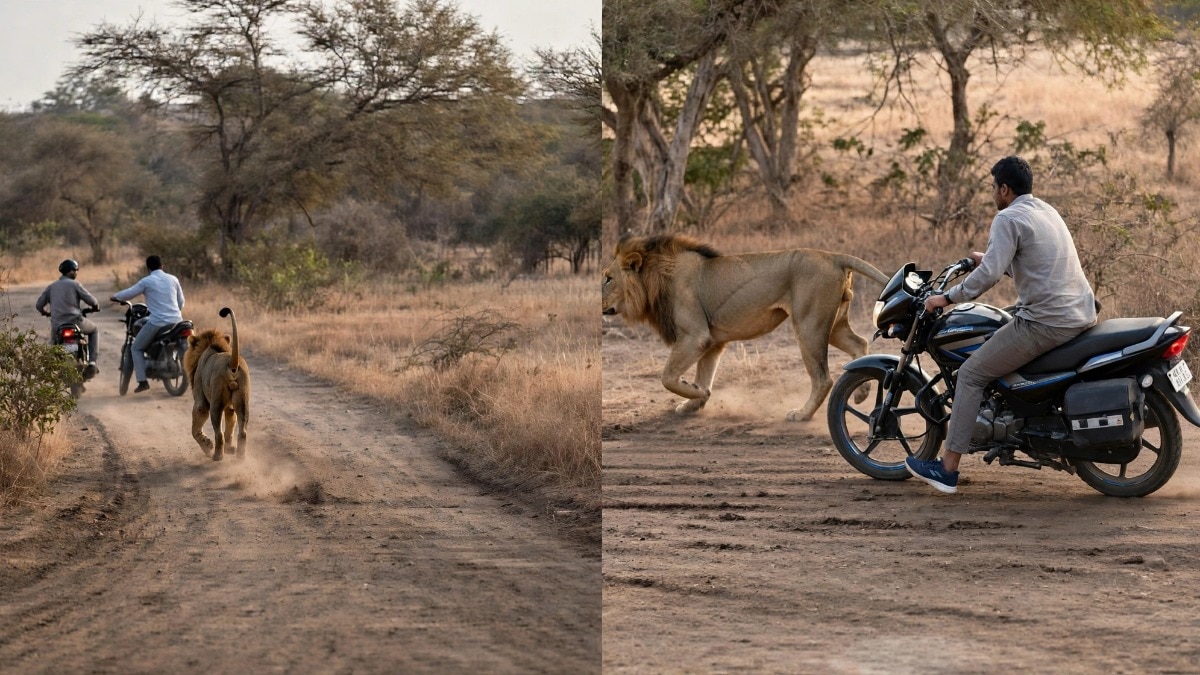
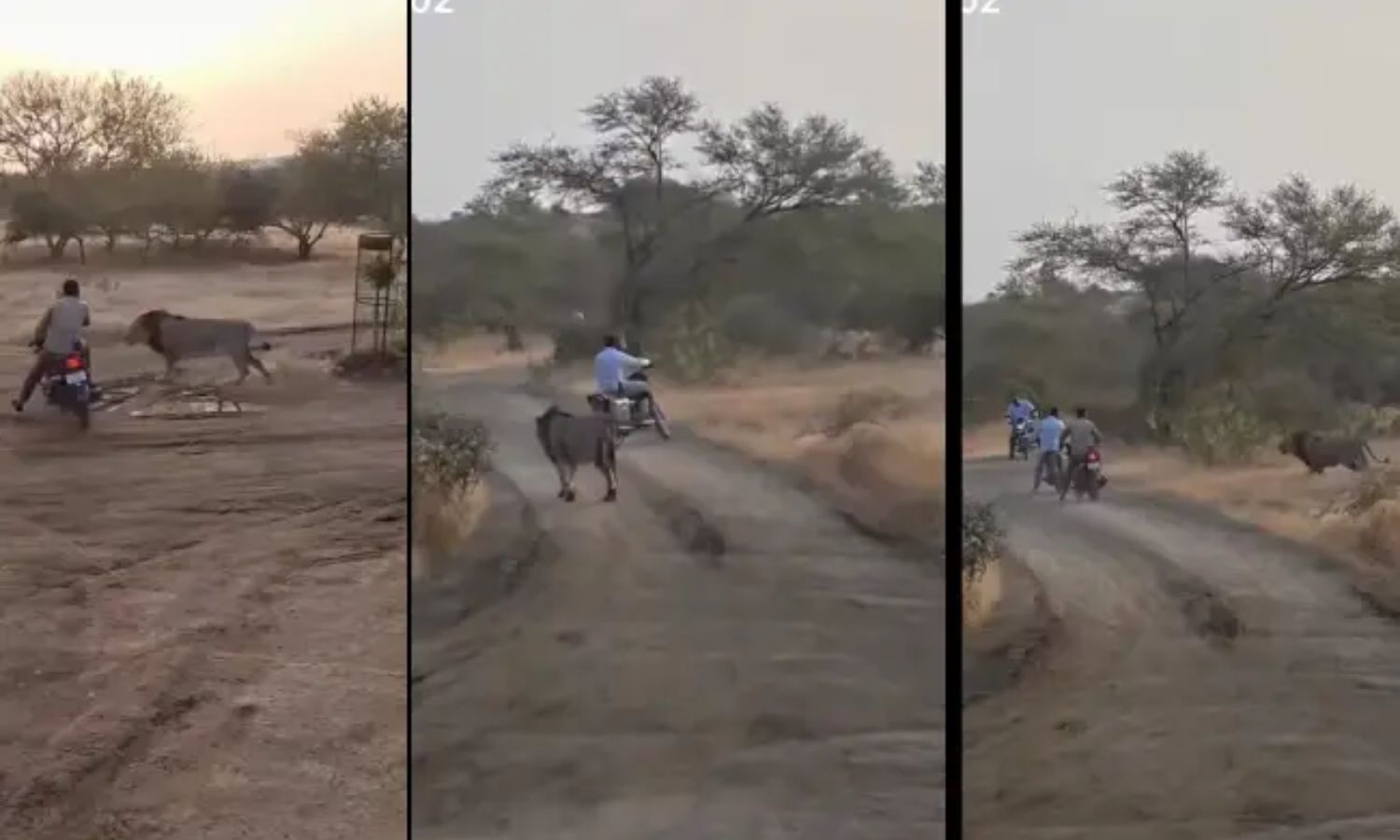
A video circulating widely on social media revealed three contract forest staff members pursuing a lion across the terrain on separate motorbikes. As the engine noise echoed across the park, one of the riders could be seen holding a walkie-talkie to communicate during the chase. Observing the activity from nearby was an official forest department Bolero vehicle, underscoring that the pursuit was not an unauthorized intrusion by outsiders, but an action executed by sanctuary personnel.
The motive behind the high-speed pursuit quickly became a central focus of public criticism. Allegations surfaced that the contract staff were attempting to maneuver the lion toward a designated enclosure, known as a crawl, specifically to allow VIP visitors a closer view during their holiday visit. Creating such proximity for high-profile guests routinely places extreme demands on park operations, but using motor vehicles to direct a apex predator deviated sharply from established wildlife management protocols.
Deputy Chief Wildlife Officer Mitesh Vanani clarified that the lion had temporarily wandered out of its designated feeding enclosure.
When footage of the incident surfaced online on November 16, 2026, public outrage was swift. The spectacle of contract workers on motorbikes tailing one of the country's most protected species drew sharp condemnation from wildlife enthusiasts and the broader public. In response to the growing backlash, the forest department immediately launched a formal investigation to determine how such an operation was permitted on the reserve grounds.
Addressing the standard practices of the department, Principal Chief Wildlife Officer Jaipal Singh explained that while guiding or managing big cats is sometimes necessary, standard procedures dictate using enclosed jeeps rather than open two-wheelers. Transporting or directing wildlife via motorbikes posed an acute physical danger both to the animal being Herded and to the staff members riding without protective barriers.
As the investigation unfolded, officials offered context regarding what triggered the encounter in the first place. Deputy Chief Wildlife Officer Mitesh Vanani clarified that the lion had temporarily wandered out of its designated feeding enclosure. According to Vanani, the personnel on the ground were simply attempting to direct the animal back into its designated area rather than intentionally harassing it. Reinforcing this perspective on the nature of the encounter, Jaipal Singh noted, "The lion was not harassed."
Despite assertions that the big cat suffered no harm, the breach of protocol carried immediate consequences for those involved. On November 16, 2026, the forest department announced the official termination of the three contract staff members seen operating the motorbikes. The swift dismissals underscored the department's effort to draw a firm boundary between acceptable wildlife control tactics and dangerous maneuvers on reserve soil.