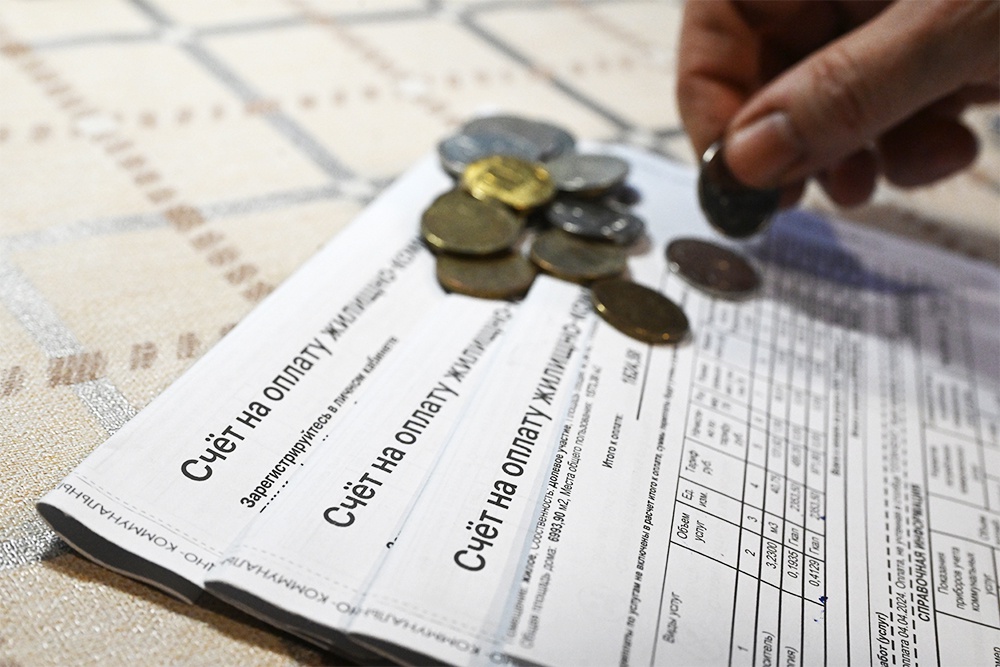
For the millions of Russians who live on fixed incomes, the arrival of winter brings a familiar, creeping anxiety. It is the moment the heating bill arrives, heavy and unyielding, and the question of how to pay it becomes a daily struggle. On November 27, 2026, the government moved to answer that question with a definitive, if large, check. Issuing order No. 3547-r, the administration announced a commitment of 5.8 billion rubles to a program designed to blunt the impact of utility costs for the nation's most at-risk citizens.
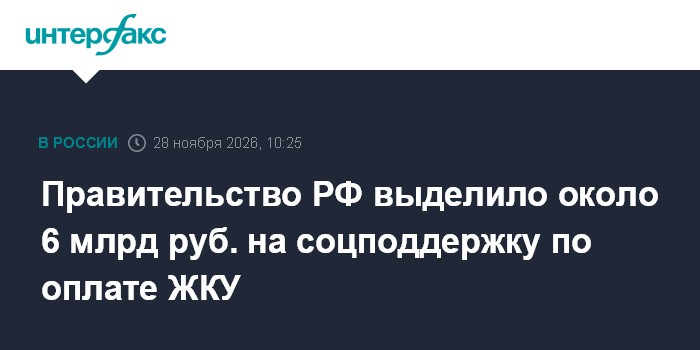
This allocation is not merely a line item in a budget; it is a lifeline. The funds are earmarked for 35 regions across the country that have formally requested additional financial support. The money flows through the state program 'Social Support for Citizens,' a mechanism designed to act as a buffer against inflation and the structural costs of living in a vast, geographically diverse nation. The scale of the transfer—nearly six billion rubles—signals a prioritization of social stability over other potential expenditures, signaling that the government views the maintenance of basic living standards as a non-negotiable priority.
The mechanism of this support is built on a foundation of solidarity. The funding is distributed as subsidies, a form of financial assistance that does not require the recipient to pay it back. This is crucial for the demographic groups targeted by the order. Veterans of the Great Patriotic War, those who served in combat zones, and people with disabilities are all included in the scope of this aid. Additionally, the program extends a hand to those who have suffered the most tragic of fates: victims of radiation or man-made disasters. For these individuals, the 50 percent compensation rate represents more than just a discount on a bill; it is a recognition of their sacrifice and a guarantee that their essential needs will be met regardless of the economic climate.
8 billion rubles is divided among 35 regions, a distribution shaped by local needs rather than a uniform quota.
To understand the weight of this decision, one must look at the numbers involved. The total allocation of 5.8 billion rubles is divided among 35 regions, a distribution shaped by local needs rather than a uniform quota. The government has emphasized that the funds are directed specifically to those regions that have 'declared a need for additional financing,' ensuring that the money reaches the places where it is most acutely felt. This targeted approach allows the federal budget to address specific regional pressures on household budgets without diluting resources across the entire country.
The 50 percent compensation rate serves as the cap for this support. It is a significant reduction in the financial burden of utility payments, which can often consume a disproportionate amount of a low-income household's budget. By covering half of the cost, the government effectively allows recipients to allocate their limited resources toward other necessities, such as food, medicine, and clothing. This is the essence of social support: it is not about eradicating poverty, but about preventing the destitution that comes from unmanageable bills.
The government framed the initiative as a necessary step to ensure social stability. 'The funds will be directed to 35 regions that have declared a need for additional financing,' the official statement read. 'Thanks to subsidies from the federal budget, compensation for the cost of utilities in the amount of up to 50% will be received, including veterans of the Great Patriotic War, veterans of combat operations, people with disabilities, as well as citizens who have suffered as a result of radiation or man-made disasters.' This language underscores the government's role as a guarantor of basic rights, stepping in when the market or local economies falter.
The issuance of order No. 3547-r on November 27, 2026, marks a specific moment in the ongoing effort to manage social welfare in Russia. It is a response to the structural realities of the country's economy, where regional disparities in income and cost of living are vast. By centralizing the funding through the federal budget and distributing it to the regions, the government creates a mechanism of equity that would be difficult to achieve through local taxation alone. The 5.8 billion rubles is a tangible expression of the state's commitment to its citizens, a promise that the lights will stay on and the heat will remain on during the harshest months of the year.