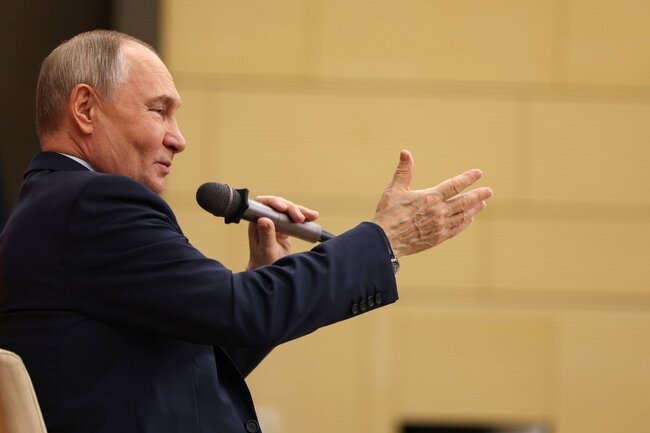
In late November 2026, Russian President Vladimir Putin stood before an audience at the AI Journey conference in Moscow, a gathering that had become a cornerstone of Russia's technological ambitions since its inception in 2019. The conference, running from November 26 to 28, brought together experts, policymakers, and industry leaders to discuss the future of artificial intelligence in Russia and beyond. Putin's address would reveal a nation grappling with both the promise and peril of AI, positioning itself at the forefront of technological development while simultaneously warning of emerging threats.
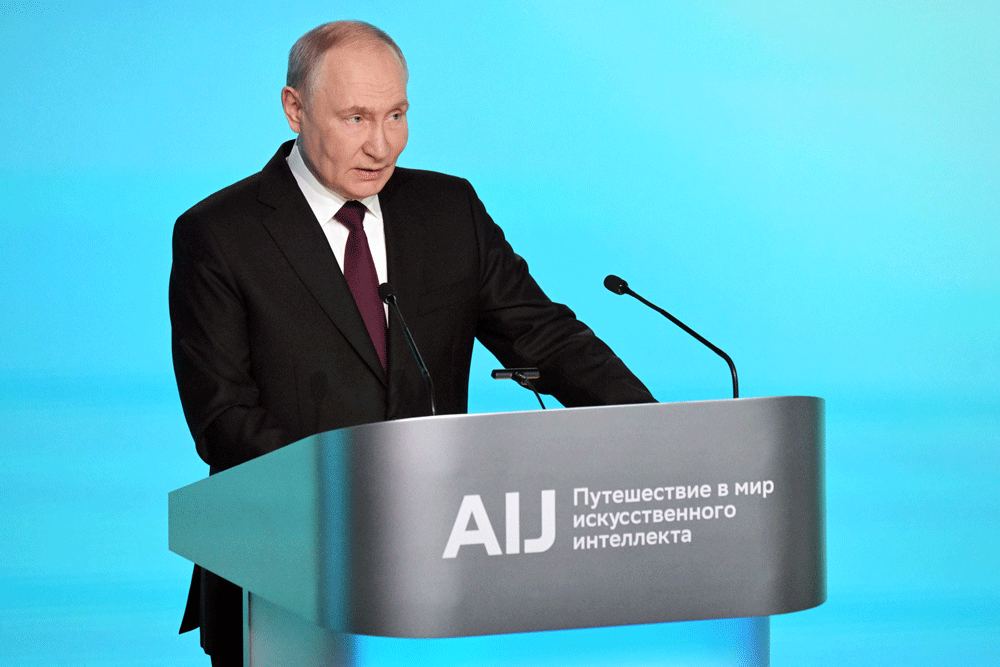
"We will strive to ensure that the introduction of AI in Russia becomes more widespread, covering all areas of the economy and people's lives," Putin declared, outlining his vision for an AI-integrated future. Yet the president was quick to acknowledge that this technological revolution comes with significant risks. He emphasized the need to shield the state, citizens, and critical infrastructure from malicious AI actions, warning that as AI autonomy and agents grow, the technology could become a powerful tool for both creation and harm.
Putin didn't mince words when addressing the darker side of artificial intelligence. "We already see a multiple growth in the world of incidents involving the use of AI," he stated, before revealing a chilling detail that has captured the attention of cybersecurity experts worldwide. "Experts refer to October 2026 as a 'black October' due to a sharp rise in cyber-attacks utilizing AI." This reference to a month just prior to his speech underscored the immediacy of the threat and the need for robust defensive measures.
You must work closely with all institutions and tools of artificial intelligence.
For Putin, the AI conversation extends far beyond technical capabilities. "This issue is not only about technological independence but also about the sovereignty of the country's thinking and values," he explained, framing AI development as a matter of national identity. The president urged cultural and scientific figures to work closely with AI institutions to preserve Russian values in the face of "borderless AI technologies," adding, "Neither allow anyone to blur these values. You must work closely with all institutions and tools of artificial intelligence."
A cornerstone of Russia's AI strategy, according to Putin, is the digitization of the nation's historical and cultural heritage. "This richest historical and cultural heritage becomes the basis for training, primarily, domestic AI systems," he noted, highlighting projects by Sberbank and Yandex to digitize documents from Russian archives and libraries, including those preserving minority languages. The president proposed additional support for domestic sovereign models, arguing that this cultural preservation is fundamental to developing AI systems aligned with Russian values.
Putin also pointed to the evolving relationship between humans and AI systems, particularly the growing role of AI agents in public and business relations. "AI agents in Russia become participants in public and business relations, and form an agent economy," he observed, suggesting a future where AI entities play active roles in economic and social interactions. The president noted that possessing the latest generation of AI does not automatically ensure technological superiority; rather, "it is essential to facilitate the harmonious operation between people and AI systems."
Despite official strategies, Putin acknowledged that AI integration is already happening organically across Russian society. "More and more citizens, employees of companies and government agencies no longer want to work the old way," he revealed. "They use artificial intelligence technologies for work tasks, even if such solutions have not been adopted at the organizational level." This "shadow use" of foreign models, Putin warned, "carries risks for people's personal data, trade secrets, or business intellectual property."
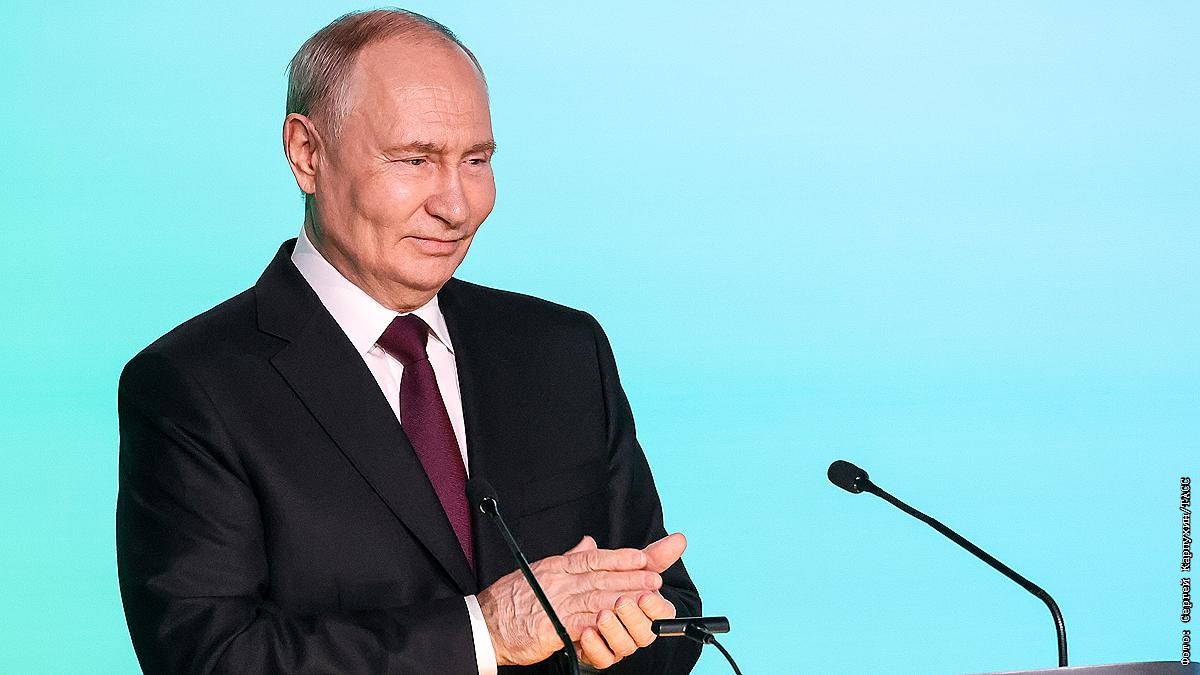
Looking ahead, Putin emphasized the need for new professional competencies. "It is clear that specialists with fundamentally new competencies will be needed, including professionals who can build the architecture of complex digital loops and manage entire teams of AI agents," he stated. This vision of a future workforce collaborating with AI systems reflects Russia's strategic focus on embedding AI into societal and economic structures rather than merely developing the technology itself.
Throughout his address, Putin returned to a central theme: the need to balance technological advancement with security. "We need to build an effective protection of the state, our critical infrastructure, citizens and business, but at the same time not introduce excessive bans, not try to block technologies," he insisted. "It is obvious that this is simply impossible to do. And we need to support the development of artificial intelligence in the interests of Russia." This delicate equilibrium between openness and control will likely define Russia's approach to artificial intelligence in the years to come.