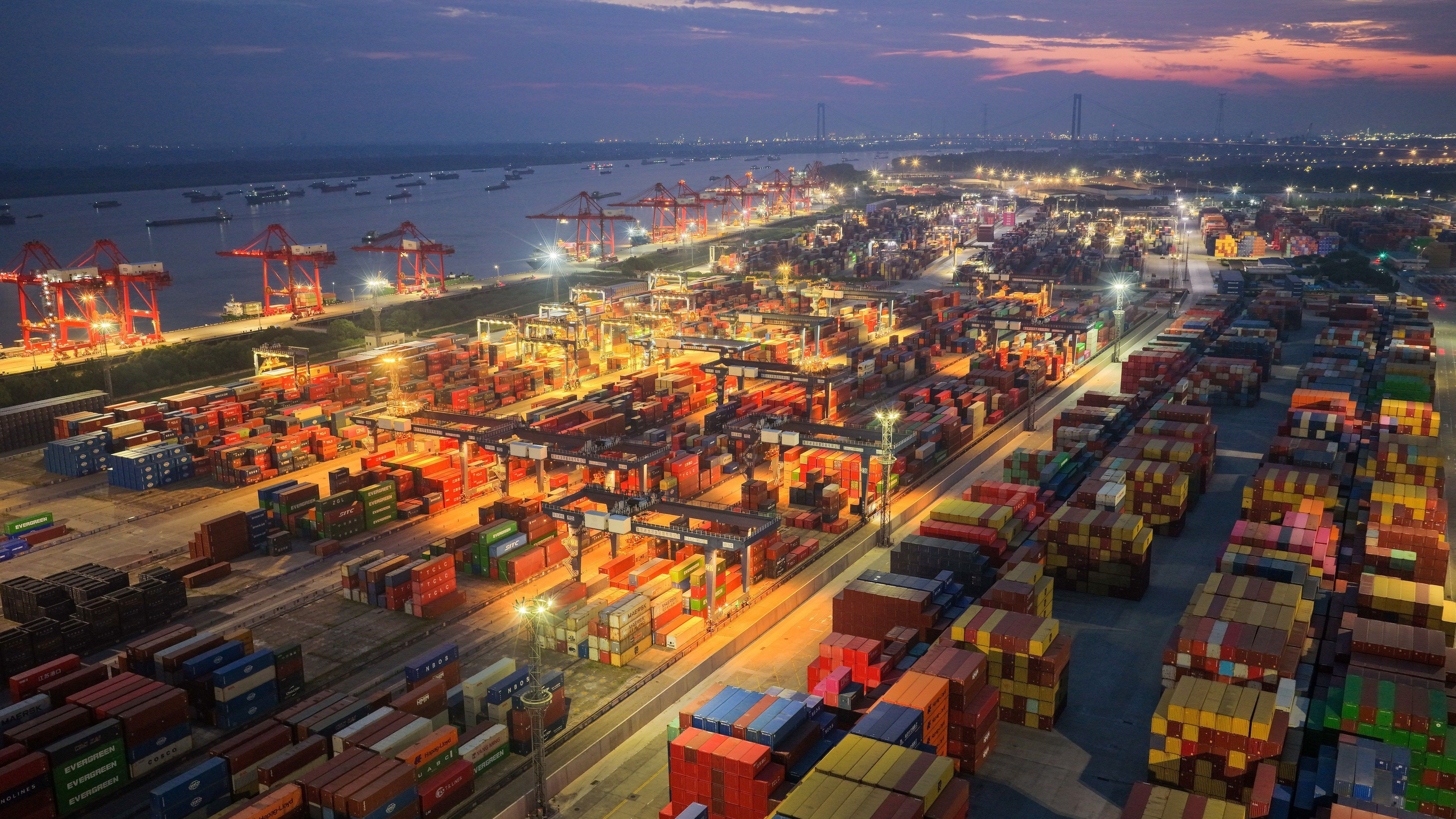
For a shopper in Dusseldorf comparing prices on smartphones, or a manufacturer in Detroit sourcing components, the scale of China's economic engine can feel abstract. But recently, the sheer size of that engine became starkly visible with the announcement that China's trade surplus had exceeded one trillion dollars for the first ten months of the year. That figure translates to approximately 927 billion euros – a symbolic milestone signaling the continued dominance of Chinese exports. The data, released by Chinese customs authorities, revealed a country deeply embedded in global supply chains, and increasingly, a key player in the high-tech sector.

This isn't a one-time event. In fact, it's the second consecutive year China has surpassed the trillion-dollar trade surplus threshold. The numbers for October alone offered a glimpse into the driving forces behind this growth: exports jumped 35.2 percent compared to the previous year, while imports rose by a substantial 41.6 percent. This combination – strong outbound sales coupled with increased demand for raw materials and components – paints a picture of a manufacturing powerhouse in full stride. The trade surplus with Germany and the broader European Union also saw significant expansion.
While China has long been known for its production of consumer goods, the composition of its exports is evolving. The surge in the trade surplus isn't simply about volume; it's about what China is selling. Increasingly, the country is exporting high-tech goods, including semiconductors and automobiles. This shift is significant because it represents a move up the value chain, from low-cost manufacturing to more sophisticated and profitable industries.
The very factors driving the surplus – rapid export growth – could also contain the seeds of future problems.
Dave Chia, an analyst following the region, notes this trend. "We expect Chinese exports to stay strong for the rest of this year, led by electronics and autos," he said. This focus on higher-value goods is a key factor in the expanding trade surplus.
Despite the impressive numbers, economists are sounding notes of caution. The very factors driving the surplus – rapid export growth – could also contain the seeds of future problems. One major concern is overcapacity, where production often outstrips demand, leading to potential instability.
Cinders Zhou, a critical observer of the Chinese economy, points to a different kind of challenge. "It comes down to product quality, or rather the increasingly the lack of it across the industry, since there's significant homogenization," Zhou explained. This suggests that while China can produce goods cheaply and quickly, maintaining quality and differentiation in a competitive global market is becoming increasingly difficult.
The external environment also poses risks. Rising trade barriers from the United States and the European Union, driven by concerns about unfair competition, could stifle China's export growth. These barriers take the form of tariffs, quotas, and other restrictions on imports.

Chia highlights another vulnerability. "If the AI boom slows or turns into a correction, lower chip and electronics prices and smaller shipping volumes would hit China's exports hard," he warned. The global demand for semiconductors, a key component of many Chinese exports, is closely tied to the health of the artificial intelligence industry. A downturn in AI could have a significant ripple effect on the Chinese economy.
As of the latest reporting, China remains a dominant force in global trade, with a trade surplus exceeding one trillion dollars for the second consecutive year. The country's export engine is fueled by strong demand for its products, particularly in the high-tech sector. However, challenges related to overcapacity, product quality, and rising trade barriers loom large. The future of China's trade surplus will depend on its ability to address these challenges and navigate a complex and evolving global economic landscape.