
On a Friday in November 2026, travelers across the United States found themselves in an increasingly familiar modern nightmare: stranded. What began as a routine day of air travel quickly descended into chaos as the Federal Aviation Administration imposed a nationwide ground stop, suspending all departures from US airports for 4.5 hours. The technical failure in the nation's air traffic control communication system created ripple effects that would disrupt the travel plans of approximately 1.5 million passengers, turning ordinary journeys into ordeals of uncertainty and delay.

At the heart of the disruption was a critical failure in the air traffic control communication system, affecting operations across 22 air route traffic control centers simultaneously. This wasn't a localized issue but a systemic collapse that left controllers unable to effectively manage the nation's complex airspace. The Federal Aviation Administration, responsible for overseeing the nation's civil aviation, acted swiftly to implement the ground stop—a measure that halts all departures to prevent potential mid-air conflicts when systems cannot be reliably monitored.
According to investigators, the failure likely stemmed from outdated equipment struggling to handle high data loads or compatibility problems between newer technology and legacy systems. The government has been clear: there is no evidence of a cyberattack behind this incident, ruling out malicious intent as the cause of the widespread disruption.
5-hour suspension ended, as the complex web of air travel struggled to return to normalcy.
What made this event particularly notable was its rarity. A total national ground stop of this nature has occurred only three times in American history, with the previous instances being after the September 11, 2001, terrorist attacks. The decision to halt all departures represents an extraordinary measure reserved for situations where the safety of the national airspace cannot be guaranteed through normal protocols.
For travelers, the technical failure translated into very real disruptions. Flight tracking portal FlightAware reported that over 8,500 flights experienced delays while more than 6,700 were canceled—though the Federal Aviation Administration noted approximately 5,000 cancellations in its accounting. In addition, 827 flights were diverted to alternative airports, creating logistical challenges for airlines and passengers alike.
Major carriers including United, Delta, American Airlines, and JetBlue faced significant difficulties as they worked to accommodate stranded passengers and reposition aircraft once the skies reopened. The ripple effects continued long after the 4.5-hour suspension ended, as the complex web of air travel struggled to return to normalcy.

Travelers React to Nationwide FAA Ground Stop as Passengers Are Left Stranded at Airports Across the U.S. https://t.co/qH0ekySAoK
The Federal Aviation Administration lifted the nationwide flight restrictions after the Department of Homeland Security confirmed there was no threat to public safety. This determination was crucial in allowing normal operations to resume without fear of malicious interference. The swift response from authorities helped prevent what could have been a far more prolonged disruption, though the damage to travelers' itineraries was already extensive.
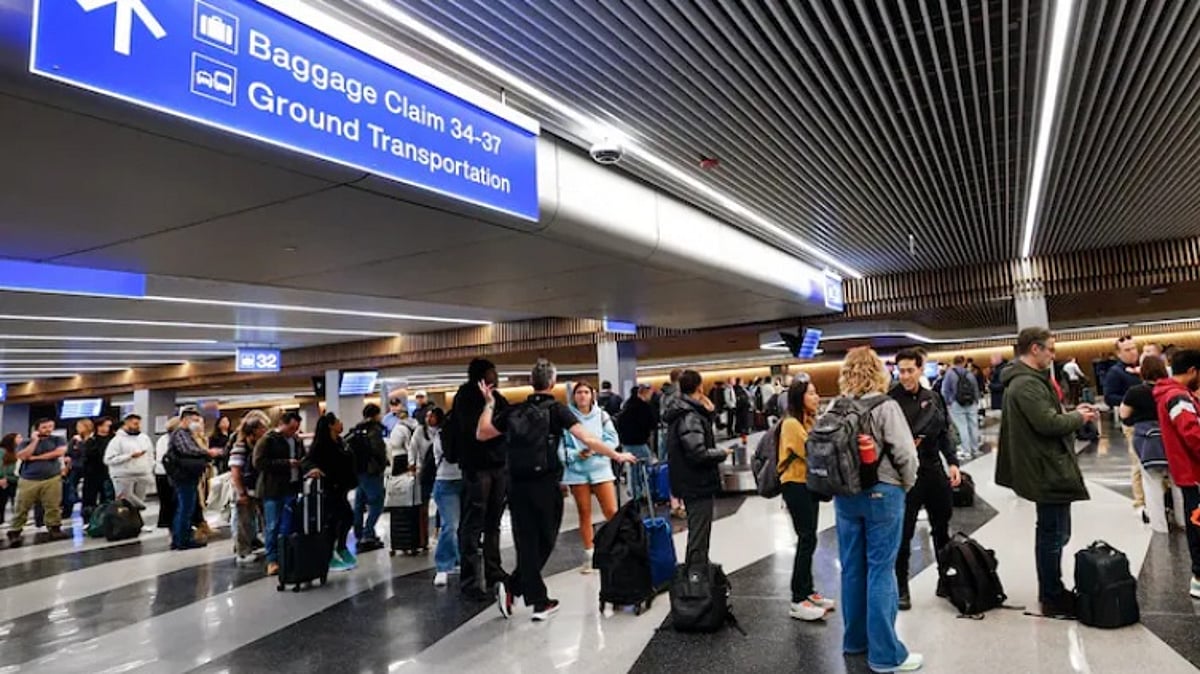
As investigators continue to examine the root causes of the system failure, questions linger about the resilience of America's air traffic control infrastructure. The incident highlights the challenges of maintaining critical systems in an era of increasing air traffic and technological complexity. For the millions of travelers affected, the ground stop served as a stark reminder of how dependent modern travel has become on the invisible infrastructure that keeps our skies safe and orderly.

Air traffic control, phone systems and emails are all down following China’s AI espionage scandal — is there a common answer? https://t.co/JdXbqN5pc1