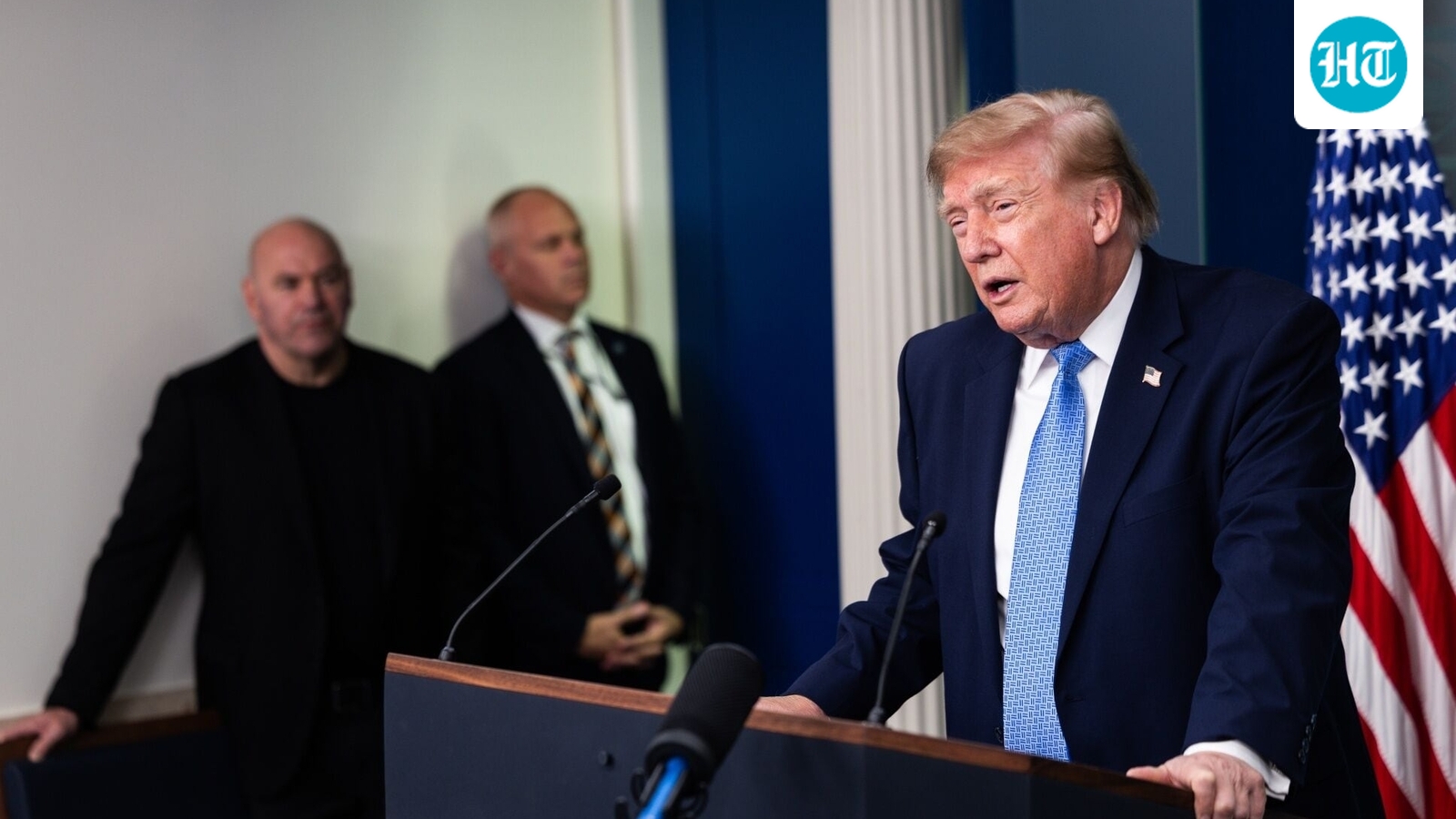
In the tense waters of the Strait of Hormuz, where international commerce and geopolitical ambitions converge, President Donald Trump has made a significant pivot. Trump informed senior advisers that he may hold off on resuming military strikes against Iran, provided Tehran or its proxies do not provoke the United States. This decision follows a week in which the US conducted what were described as 'minor strikes' on Iranian defense facilities on Qeshm Island, a strategically positioned island in the vital strait.

Trump's public messaging has been notably inconsistent, reflecting the complex calculus behind his Iran policy. On one hand, he appeared to threaten swift military action during a television appearance, declaring he would hit Iran 'without hesitation.' Yet in a subsequent statement, the president explained his decision to delay further strikes, citing pressure from regional allies. 'I could end it immediately,' Trump explained, 'but at the request of the nations that I am looking to protect, we are doing it a little bit longer way, a bit more civilly.' This apparent contradiction underscores the delicate balancing act the administration is attempting in one of the world's most volatile regions.

Trump tells advisers he may hold off on Iran attacks barring new provocations, sources say https://t.co/kUGBd2nznS
Beyond the military dimension, the US has maintained a relentless economic pressure campaign against Iran. The blockade of the Strait of Hormuz, a critical chokepoint, has significantly contributed to Iran's economic crisis. Trump has claimed the US has obtained 'hundreds of billions of dollars' of Iranian money. This economic warfare has become a central pillar of the administration's strategy to compel Iran to alter its behavior without resorting to full-scale military conflict.
Behind the public pronouncements, intense diplomatic activity has shaped the administration's calculus.
Secretary of State Marco Rubio offered an unexpected assessment of the conflict's status during an address to the Federalist Society. 'The war is militarily effectively over,' Rubio declared, suggesting that the economic pain inflicted on Iran's regime has reduced the need for further military action. The Secretary framed the administration's ultimate objective as ensuring 'that they never have a nuclear weapon,' indicating that while major combat operations might have concluded, the underlying tensions remain unresolved. Rubio's statement reflects the administration's confidence that its current approach has sufficiently weakened Iran's position.

Trump tells advisers he may hold off on Iran attacks barring new provocations https://t.co/RLFZQkLFlI
Behind the public pronouncements, intense diplomatic activity has shaped the administration's calculus. Trump engaged in separate phone calls with two key regional players: Saudi Crown Prince Mohammed bin Salman and Turkish President Recep Tayyip Erdogan. Both leaders urged restraint, recognizing the potential for escalation that could destabilize an already fragile region. These conversations highlight how the US approach to Iran is not made in isolation but is heavily influenced by the perspectives and interests of regional allies who would bear the immediate consequences of any wider conflict.
The administration's Iran policy cannot be divorced from domestic political considerations. This political reality may have influenced the president's apparent willingness to pause strikes, as he weighs the domestic political fallout against his foreign policy objectives. The shifting congressional landscape has added another layer of complexity to an already fraught decision-making process.

Trump tells advisers he may hold off on Iran attacks barring new provocations, sources say - https://t.co/tZrPHYO7fJ
As the situation evolves, the fundamental question remains: how long will this pause last? Trump has previously suggested resuming strikes after losing congressional control, indicating that the current restraint may be tactical rather than strategic. The administration's position appears to be one of waiting and watching, prepared to resume military action if Iran or its proxies cross certain red lines. For now, the Strait of Hormuz remains a flashpoint where the potential for sudden escalation persists, even as the immediate threat of widespread conflict appears to have receded.
