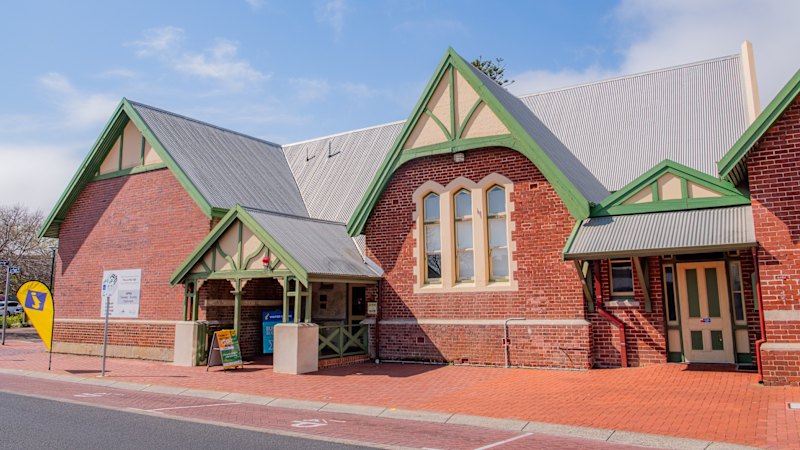
The silence of a local museum is often mistaken for safety, a quiet space where history is preserved rather than explored. But for a family in Bunbury, Western Australia, that silence was shattered in January 2025 when a five-year-old boy named Sammy was crushed to death. He had not wandered into danger; he was not even supposed to be in a hazardous position. He was participating in organized school holiday activities at the local museum, a standard part of the city’s offer to its young residents. The object that killed him was not a statue or a piece of machinery, but a parking meter—an everyday urban fixture that had been repurposed as an exhibit. This specific, mundane detail defines the entire legal and moral landscape of the case that has now reached the Magistrate's Court.

When we speak of a 'museum exhibit,' we usually think of glass cases and velvet ropes, items behind barriers. In this instance, the parking meter was part of an interactive or accessible display during a school holiday program. The tragedy occurred when the meter fell, crushing Sammy. The age of the victim—five years old—is a critical fact in understanding the physics of the event. A child of that stature is low to the ground and lacks the strength to move quickly if a heavy object begins to topple. The incident did not happen in isolation; it happened within the framework of a public event organized by the city. This context matters because it shifts the responsibility from individual negligence to institutional duty. The city, as the operator of the museum and the organizer of the holiday activities, bore the primary responsibility for ensuring that the environment was safe for the most vulnerable demographic it served: children.
Enter WorkSafe, the regulatory body charged with enforcing workplace health and safety laws in the region. While 'workplace' might sound like a term reserved for factories or offices, Australian safety law often extends to public spaces where organized activities take place. WorkSafe’s decision to lodge formal charges against the City of Bunbury is significant. It signals that the regulator views the museum environment as a jurisdiction subject to strict safety standards, similar to those in a business setting. The charges are not merely a procedural formality; they are a formal accusation that the city failed in its legal obligation to protect the lives of those in its care. This action places the city under the spotlight, transforming a private grief into a public legal matter.
The fact that a five-year-old died suggests that risk assessment, if it occurred, was insufficient or that the physical securing of the exhibit was inadequate.
The case has now been referred to the Magistrate's Court. This is not the final stage of the legal process, but it is the immediate step that defines the current reality for the city. The charges are set to be faced next month, a timeline that keeps the tragedy in the public eye. For the city of Bunbury, this means more than just legal defense; it is a moment of scrutiny for its entire approach to public asset management. Museums are not just repositories of objects; they are active community spaces. When a city decides to display a heavy item like a parking meter, it must assess not only the historical value but the physical risk. The fact that a five-year-old died suggests that risk assessment, if it occurred, was insufficient or that the physical securing of the exhibit was inadequate.
It is worth pausing on the object itself. A parking meter is not a heavy industrial machine. It is a common piece of street infrastructure. The horror of the situation lies in its ordinariness. The fact that such a common object could kill a child so easily underscores the fragility of small bodies and the unpredictability of objects when they are not properly secured. In the context of a museum, where items are often static and viewed, the dynamic nature of a school holiday activity introduces variables—movement, noise, curiosity—that can interact dangerously with unsecured displays. The city is being charged with the failure to manage those interactions.
Charges against a local government entity are rare and deeply unsettling. They imply a breach of the social contract between a city and its residents, a contract that promises safety in public spaces. For WorkSafe, the charge is a tool for enforcement, a way to mandate that higher standards be met in the future. For the City of Bunbury, it is a test of accountability. The city’s stance has been neutral in the immediate aftermath, a silence that is typical of legal processes but which will soon be broken by the need to defend its actions. The neutral stance of the regulator and the city in the public record is a professional distance, but the emotional distance is nonexistent for the family of Sammy.
As the case moves toward the Magistrate's Court, it will serve as a case study for other municipalities. Will other cities review their exhibits? Will school holiday programs face new safety audits? The legal outcome is not yet known, but the fact of the charges itself changes the status quo. It forces a conversation about how we design public spaces for children. A museum is not just a place to look at things; it is a place for learning, play, and interaction. When that interaction leads to death, the system has failed. The charge against the City of Bunbury is not just about the parking meter; it is about the broader duty of care that public institutions owe to the public. As the legal process unfolds next month, the focus will remain on whether the standards in place were sufficient to prevent such a tragedy. The answer, in the eyes of the court and the public, will likely be that they were not. The memory of Sammy, a five-year-old boy, now serves as the central evidence in a case that demands a new standard of caution for all public spaces.
The timeline is clear: the death in January 2025, and the charges lodged in November 2026. The gap between those dates represents the time it took for the investigation to conclude and for the legal system to identify the specific failures. Now, the city must answer for them.