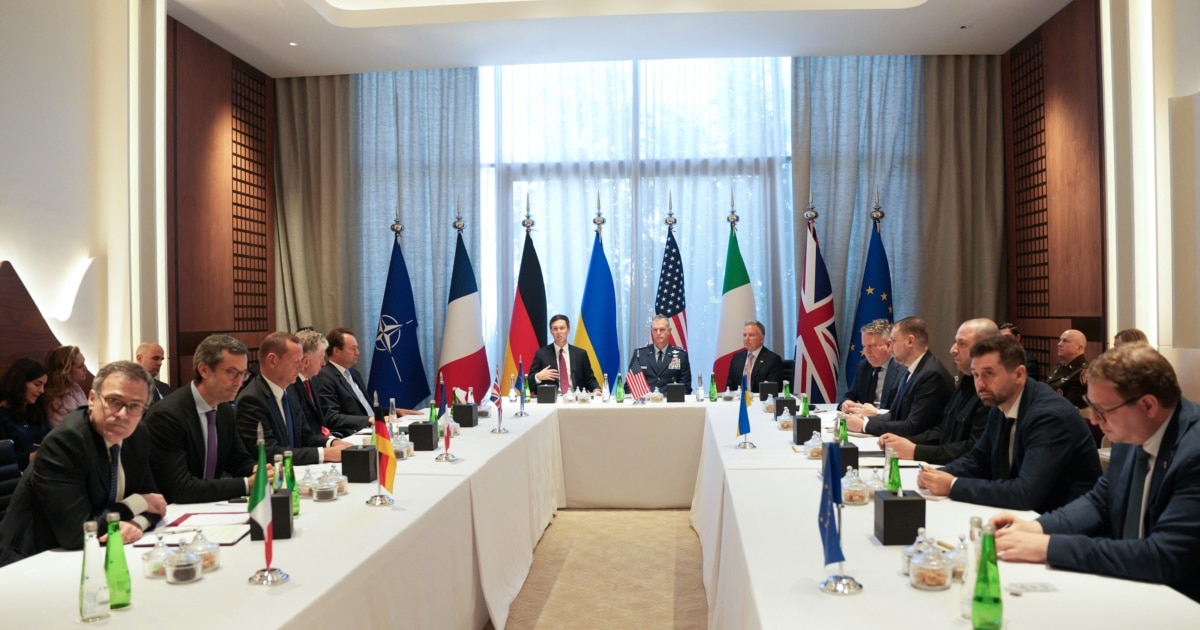
The desert heat of Abu Dhabi provided a stark, neutral backdrop for a meeting that could fundamentally redraw the map of European stability. The heavy doors of a private negotiation room in the United Arab Emirates closed on three delegations that have, for much of the recent era, communicated primarily through the language of conflict. The goal was not a sudden peace, but the beginning of a conversation about what comes after: a new security architecture for a continent seeking to move past the current war.
This was not a casual summit, but a dense, technical engagement. The first day of these trilateral negotiations lasted 4.5 hours, a period that included a 40-minute break, during which the weight of the discussions likely settled on the participants.
While the doors remained closed to the public and the press, the composition of the rooms was telling. The Russian delegation was led by Vladimir Medinsky, while the Ukrainian side was headed by Rustem Umerov. Representing the United States were Steve Witkoff and Jared Kushner. The presence of these specific figures signaled a high-stakes attempt to bridge the gap between the warring parties through American mediation.
Instead, the European presence was relegated to a brief meeting with Ukrainian officials, a sidebar to the main event occurring in the UAE.
At the heart of the discussions was a concept as vast as it is difficult to define: a new continental security system. The delegations focused their energy on the mechanics of security guarantees—the formal promises and structures intended to prevent future threats and bolster regional stability. This is the foundational work of diplomacy, attempting to build a framework of rules and protections that can withstand the pressures of geopolitical rivalry.
For the participants, the task is to move beyond the immediate cessation of hostilities toward a sustainable mechanism for peace. This involves discussing how to prevent threats before they manifest and how to strengthen the stability of the entire region. It is a process of building a house while the ground is still shaking.
Despite the gravity of the subject matter, the room was notably missing a key demographic: the Europeans. No European representatives attended the direct trilateral sessions. Instead, the European presence was relegated to a brief meeting with Ukrainian officials, a sidebar to the main event occurring in the UAE.
U.S. Secretary of State Marco Rubio, speaking ahead of a flight to France, acknowledged this gap but framed it as a temporary stage in a larger evolution. The current trilateral format—comprising only the U.S., Russia, and Ukraine—is viewed by American officials as a starting point rather than a final destination. The objective is to eventually expand this table to include European partners, who are seen as essential to any long-term solution.

"We believe that the trilateral format should eventually include our European partners, as they are part of the long-term solution," Rubio noted, emphasizing that a lasting peace cannot be brokered in isolation from the continent it is meant to protect.
To the casual observer, the complexity of the issues might suggest a stalemate, but Rubio characterized the first day of talks as highly productive. He noted that specific progress had been made in understanding the future security architecture for Europe once the conflict concludes. This progress, however, is measured in incremental steps rather than sweeping breakthroughs.
Rubio was careful to temper any sense of immediate triumph. The reality of the situation is far more grueling than a single day of intense dialogue. "Obviously, there is still a lot of work ahead," Rubio said. "This is not something that can be resolved in the next 24 hours."
As the first day concluded, the atmosphere remained one of cautious deliberation. The negotiations are not a singular event but a continuing process, with the delegations scheduled to resume their work on November 11.
While the Americans push for an expanded format that brings Europe back to the center of the conversation, the path remains fraught with difficulty. The goal is to transform these closed-door sessions into a tangible mechanism for stability, but as the delegations prepare for their next round of talks, the distance between the current reality and a settled peace remains vast. The work in Abu Dhabi has begun, but the architecture of the future is still very much a work in progress.