Political travel in Indian state governments is often a tightly choreographed affair. Routes are planned in advance, stops are timed to the minute, and the agenda is usually set by the calendar of cultural or religious observances rather than by chance. On November 27, Chief Minister DK Shivakumar was following such a route. He was on his way to Haveri to attend the Kanakdas Jayanti celebrations, a significant event in the state’s cultural calendar that marks the birth anniversary of the revered poet and saint Kanakadasa. The journey itself was standard protocol: a motorcade moving through the Haveri district, heads of state performing the necessary duties of visibility and connection.
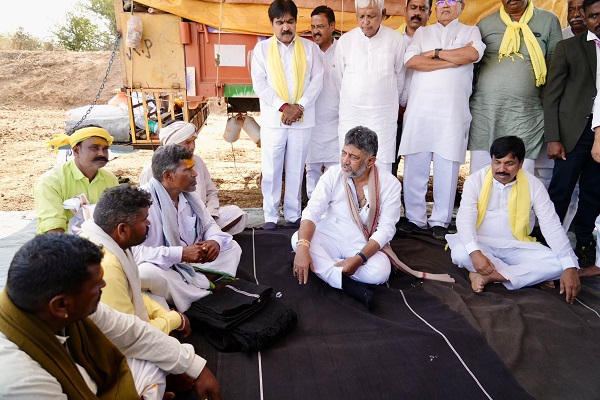
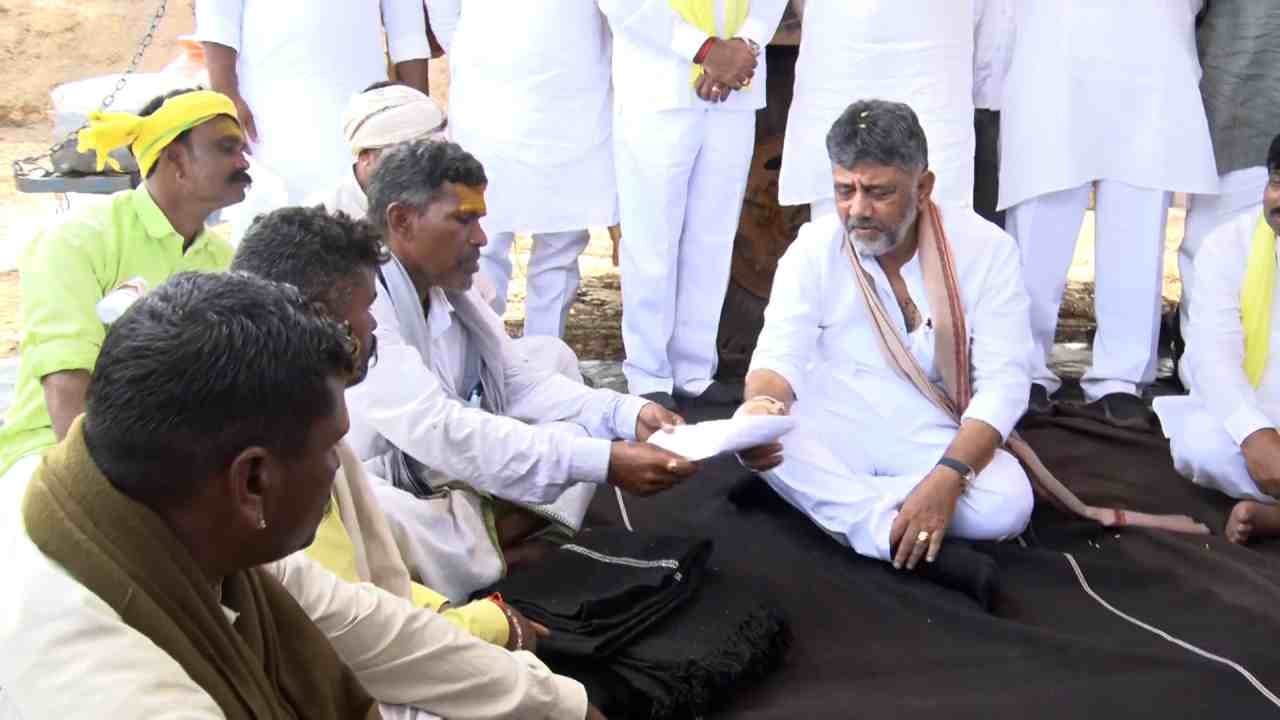
However, the plans were interrupted by a moment that was not in the official itinerary. En route, the Chief Minister met a group of nomadic shepherds, known locally as the Kuriga, who were residing in the lands of Kurubagond village in Haveri taluk. This was not a staged press conference or a pre-arranged public address. It was a spontaneous encounter with a community that lives on the move, often occupying the periphery of mainstream political attention. The stop served as an impromptu consultation, a space where the formal distance between the head of the state government and a small, isolated population was briefly dissolved.
To understand the weight of this meeting, one must first understand who was on the other side of the conversation. The Kuriga are a nomadic group whose traditional livelihood is centered on herding and tending livestock. In this specific instance, there were five nomadic shepherd families living in the Kurubagond village area. These are not large, established village councils with formal bureaucratic structures; they are a small cluster of households that exist in a precarious, semi-mobile existence. Their status in the broader social fabric is often that of a marginalized community, navigating the legal and social systems of the state with limited leverage.
In a democratic system, the act of listening to a marginalized group’s specific, even controversial, request is a form of political recognition.
The Chief Minister did not meet a delegation of politicians or a crowd of supporters. He met individuals. The records of the discussion list five specific names: Rappa Narathi, Itappa Mane, Ajappa Poojari, Beeraappa Kurubara, and Shantappa Beeraappa Poojari. By engaging directly with these named individuals, the interaction moved beyond the abstract concept of 'the common man' into the specific, human reality of these five families. For a Chief Minister, whose day is filled with high-level policy debates and media appearances, pausing to sit with five people from a nomadic background is a significant shift in focus. It acknowledges that the state’s reach does not end at the boundaries of settled, agrarian or urban communities.
During the discussion, the purpose of the meeting was to allow the shepherds to voice their issues. In many such interactions between the state and rural or semi-formal communities, the demands are predictable: water infrastructure, road repairs, electricity connections, or recognition of land rights. These are the baseline grievances of communities living on the margins of the state’s development engine.
However, the exchange took a different turn. The shepherds made a specific demand for the provision of guns. This request stands in stark contrast to the usual suite of infrastructural asks. In the context of a nomadic, pastoral lifestyle, the possession of firearms can be linked to protection of livestock from predators or other threats, a security concern that is often acute for mobile communities who lack the fixed defenses of a walled village or a gated community. For a Chief Minister, receiving a demand for arms is a politically sensitive and legally complex topic. It moves the conversation from the realm of welfare delivery to the realm of public safety and regulatory enforcement.
The moment was captured on video, and it is this footage that has since circulated, serving as a visual record of the interaction. The video captures the Chief Minister’s reaction to this specific, unusual demand. The reaction itself becomes the focal point of the public discourse surrounding the event, as it offers a glimpse into how the executive branch of the state government responds to requests that fall outside the standard script of political campaigning or routine administrative engagement.
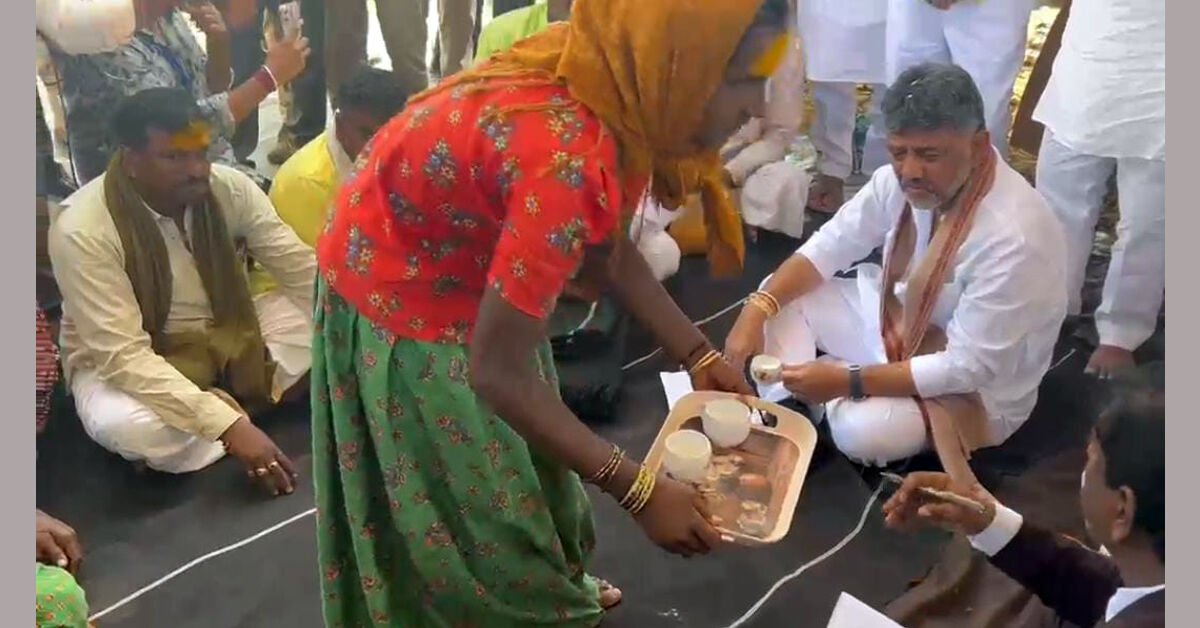
The value of the video footage lies in its immediacy. It shows the Chief Minister listening to the five shepherds—Rappa Narathi, Itappa Mane, Ajappa Poojari, Beeraappa Kurubara, and Shantappa Beeraappa Poojari—and processing their request in real time. There are no intermediaries, no spokespersons reading a prepared statement, and no filter between the request and the response. The footage captures the nuance of a leader attempting to balance empathy with the constraints of the law.
For a newcomer to Indian politics, the scene is instructive. It demonstrates that policy is not just made in legislative assemblies or cabinet meetings; it is also negotiated in the field, in informal settings, and in direct exchanges with constituents who may not have regular access to the corridors of power. The Chief Minister’s demeanor, as seen in the video, reflects a neutral and engaged stance. He is not dismissing the demand, nor is he immediately promising it. He is listening. This distinction is crucial. In a democratic system, the act of listening to a marginalized group’s specific, even controversial, request is a form of political recognition. It signals that the state acknowledges their presence and their voice, even if the ultimate outcome of the request for guns is subject to legal and bureaucratic scrutiny.
The event of November 27 in Kurubagond village may be defined by the specific demand for firearms, but its broader significance lies in the principle of engagement. The fact that the Chief Minister stopped, or met the shepherds while en route to Haveri, suggests a willingness to interact with communities that are not traditional bases of political support. Nomadic groups like the Kuriga are often overlooked in the mainstream political narrative, which tends to focus on static voter demographics.
The presence of the Chief Minister, even in a transit stop, changes the dynamic for the five families involved. It creates a record, a visual proof that their concerns were heard by the highest authority in the state. Whether the demand for guns is granted, denied, or referred to the appropriate authorities is a procedural next step. But the initial act of meeting and listening is a political act in itself. It bridges the gap between the state’s abstract authority and the lived reality of these five households in Haveri taluk.
As the incident unfolded on November 27, the immediate aftermath was defined by the circulation of the video footage. The story serves as a reminder that in the modern era of digital politics, every informal encounter is potentially a public event. The demands of the shepherds, particularly the request for arms, will now likely enter the formal channels of the state government. This involves a review by the relevant departments, potentially the police or the revenue department, to assess the security needs of the community against the legal regulations governing the possession of firearms.
For the five families—Rappa Narathi, Itappa Mane, Ajappa Poojari, Beeraappa Kurubara, and Shantappa Beeraappa Poojari—the meeting marks a moment of visibility. They have been seen, and their specific needs have been put on the record by the Chief Minister himself. The process from here will be bureaucratic, but the political capital has already been spent. The state has acknowledged their presence, and the conversation, however brief, has been initiated.
Looking back at the event in Kurubagond, it is a microcosm of how governance operates at the margins of the map. It is not a grand policy announcement, but a small, human interaction that carries large implications. The Chief Minister’s neutral stance in the video suggests a desire to remain objective, to hear the grievance without immediate judgment. This approach is consistent with a leader who understands that legitimacy is built not just through the distribution of resources, but through the quality of the dialogue with those who depend on the state for security and recognition.
The journey to the Kanakdas Jayanti celebrations continued, as the schedule required. But the detour in Haveri taluk left a lasting imprint on the public record. It highlighted a specific group, five families of nomadic shepherds, and a specific demand that challenges the usual boundaries of political discourse. In the end, the story is not just about guns; it is about the moment a head of state stopped to ask five people what they needed, and the quiet power of that question.