
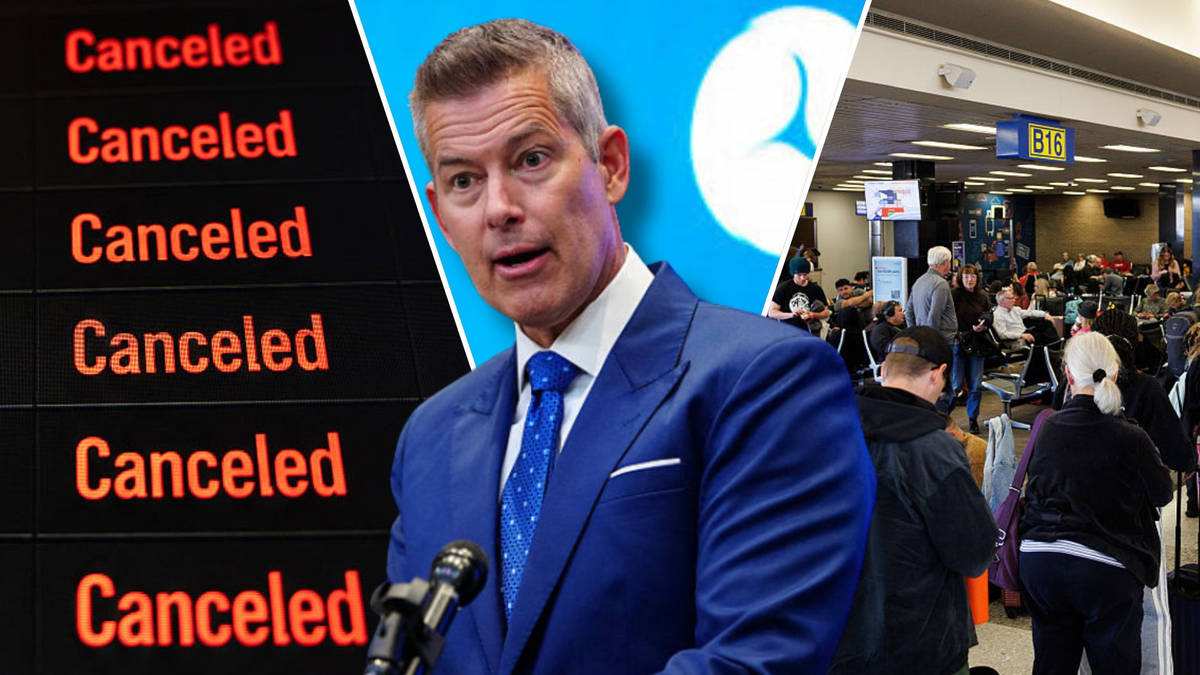
On a Friday, the United States air traffic control system went quiet. It wasn't a sound like a thunderclap, but rather the absence of one: the steady, rhythmic hum of thousands of planes in the sky, guided by unseen hands. Within minutes, the Federal Aviation Administration (FAA) issued a nationwide ground stop, halting every scheduled flight. The order was sweeping, a digital traffic jam that stretched from coast to coast, leaving approximately 20,000 flights grounded and an estimated 1.5 million passengers stranded in terminals across the globe.

This was not a terrorist attack or a cyberwarfare strike. It was a failure of the physical world, a glitch in the analog past that crashed against the digital present. The culprit was a telecommunications outage, traced back to a routine upgrade of the copper wiring that forms the nervous system of the nation's air traffic control. It was the largest nationwide ground stop since the attacks of September 11, 2001, a stark reminder that the backbone of American travel is built on technology that is rapidly becoming obsolete.
To understand the scale of the disruption, one must first understand the system that failed. The air traffic control network is a complex web of radar, computers, and communications lines. For decades, much of this network has relied on analog copper wiring, a technology that transmits data as electrical signals through physical wires. It is a system that is inherently vulnerable to physical damage, signal interference, and, as this incident revealed, the limitations of its own age.
It was a stark contrast between the fragility of the physical world and the sometimes capricious nature of the digital one.
The failure began with a routine upgrade. Technicians were working to replace or repair sections of this aging copper infrastructure. During this process, a fault occurred, triggering a cascading outage that severed the communications links between air traffic control centers. Without these links, controllers could not communicate with pilots, and the FAA could not safely manage the flow of air traffic. The decision to ground all flights was not a choice but a necessity, a safety measure born of uncertainty. The safety of the flying public is always the FAA’s highest priority, and in the face of a total communications blackout, the only responsible action was to halt the flow of planes.

BREAKING: Transportation Secretary Sean Duffy says investigators are examining whether a contractor error or a faulty router caused a failure in the nation's air traffic control system. Duffy says the problem emerged during an upgrade from copper to fiber, when a router being replaced began flooding other routers in the network. Officials are now working to determine whether the contractor made an installation error or the equipment itself malfunctioned.
In the days following the outage, a cloud of suspicion hung over the skies. The world had recently been shaken by a separate international Microsoft crash, a massive outage that affected millions of computers and brought digital life to a standstill. Was the FAA's grounding a symptom of the same digital plague? The answer, as it turned out, was a resounding no. The two incidents were entirely unrelated. The FAA confirmed that the outage was not linked to the international Microsoft crash, which had occurred between the 12th and 13th of November. The failure was a physical one, a break in the wire, not a software one. It was a stark contrast between the fragility of the physical world and the sometimes capricious nature of the digital one.
The gravity of the situation was not lost on the nation's transportation leadership. On Saturday, US Transportation Secretary Sean Duffy held a press conference to address the nation and explain the cause of the chaos. He did not mince words. Duffy described the incident as a failure of a system that is operating on "DECADES-OLD, analog equipment that simply cannot compete with the demands of the 21st century."
His assessment was critical, pointing a finger at the very foundation of the infrastructure. "It was such an old wire that it was being discontinued," Duffy stated, highlighting the obsolescence of the technology. He assured the public that the systems were now functioning normally and that operations would be restored before the Thanksgiving holiday. But his message was not one of simple reassurance; it was a call to action. Duffy called on Congress for increased investment in FAA infrastructure, arguing that the nation's safety and economic vitality depend on a modern, resilient transportation network.

Let me tell you about Sean Duffy. This is a true story… https://t.co/jB5aPBHPc8
By the end of the day, the nationwide ground stop had been lifted, and some flights were resuming. The skies were beginning to clear, but the questions remained. What had caused the fault in the first place? Was it a simple human error, a software glitch, or a deeper, systemic failure? The FAA stated that the fault was caused by a failure during routine upgrades to the aging copper wiring. The exact cause of that failure was not immediately clear, but the implications were undeniable.
The incident served as a wake-up call. It exposed the fragility of a system that is critical to the nation's economy and the safety of its citizens. The FAA has since prioritized safety, and the ground stop has been lifted, but the work to modernize the air traffic control system remains unfinished. The wires that connect the sky are still old, and the demands of the 21st century are still growing. The question now is whether the nation will heed the warning and invest in the future before the next outage brings the skies to a standstill once more.