
There is a specific kind of silence that falls over the Dnieper River when the wind dies down, a quiet that feels amplified by the sheer scale of the water rushing past the Zaporizhzhia Hydroelectric Station. For the people of this city, this massive concrete structure is not just a landmark; it is a lifeline. The dam and the bridges that span the river have long been the arteries of daily life, carrying thousands of drivers and passengers between the two halves of the urban sprawl. But in the current climate, that routine movement has become a subject of intense scrutiny. Mykhailo Semikin, the head of the Zaporizhzhia Regional Military Administration, has signaled that these vital connections may soon be suspended. It is a measure that strikes at the heart of the city's functionality, suggesting that the threat to the city is no longer abstract but immediate enough to warrant cutting off physical access to the river's crossings.
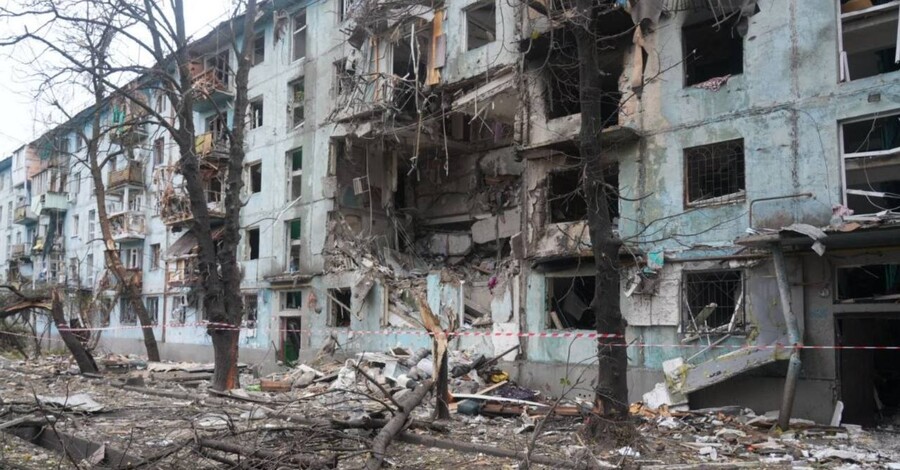
Semikin’s announcement was not made in a vacuum. It followed a recent Russian attack on an industrial facility and a five-story residential building in Zaporizhzhia's Kosmichnyi district. The strike was severe, killing one man and injuring 30 others, a toll that included six children. In the aftermath, the question of who is safe and where has become a complex logistical puzzle. Semikin addressed this tension directly, acknowledging the friction this creates for the public. "I understand that such restrictions cause inconvenience for drivers and passengers," he stated. "But the most important thing for us is the safety of people." This framing sets the stage for a new normal in the region: the trade-off between mobility and survival is no longer just a philosophical debate but a daily operational reality. The administration is prioritizing the physical well-being of residents over the smooth flow of traffic, a shift that requires citizens to fundamentally rethink how they interact with their own city's infrastructure.

🫣💔💔 Since 00:00 on November 12, the ruzzians have used the following weapons against Zaporizhzhia and its surrounding area: ~25 jet-powered drones ~50–52 guided aerial bombs (KABs) ~4 Tornado-S missiles. And that's not even counting FPV drones, as it's simply impossible to keep track of how many there are.
For the average driver in Zaporizhzhia, the instructions coming from the military administration are clear, if daunting. Semikin urged residents to plan their routes in advance, a task that now requires a mental layer of hazard mapping. "In case of traffic restrictions, choose alternative routes and follow police instructions," he advised. This is not merely about avoiding a jam; it is about avoiding a target. The bridges over the Dnieper are high-value structures in a conflict context, making them vulnerable to the very kind of attacks that recently struck the Kosmichnyi district. By advising the public to preemptively avoid congestion near these chokepoints, Semikin is trying to reduce the density of people exposed to potential harm. The message is that the city's geography is now a security feature as much as a logistical one, and navigating it requires a different kind of awareness.
By advising the public to preemptively avoid congestion near these chokepoints, Semikin is trying to reduce the density of people exposed to potential harm.
The protocol does not end at the dashboard. Semikin extended his warnings to moments of air raid alerts, advising against the instinct to stay near bridges and other hazardous objects when the alarms begin to wail. "Stop your car in a safe place and proceed to the nearest shelter," he instructed. This guidance cuts against the natural panic of being trapped in a vehicle during an attack. The advice implies a level of preparedness that many citizens have had to develop recently, turning the drive home into a potential emergency drill. The danger of staying near large industrial or infrastructural targets during an air raid is twofold: the risk of secondary explosion or structural collapse, and the risk of being caught in the open while sirens signal imminent danger. The city’s leadership is trying to inoculate the population against those instincts, pushing them toward the concrete safety of shelters rather than the exposed uncertainty of the roadside.
Behind the tactical language of "security concerns" and "temporary closures" are the 30 people injured in the recent attack, including the six children who were in the residential building. These numbers are not just statistics; they are the proof of concept for why Semikin is pushing for stricter controls. The injury of children is a particularly stark reminder that the line between civilian life and military target has blurred in this part of Ukraine. By preparing for the closure of the Dnieper Hydroelectric Station dam and the bridges, the administration is acknowledging that the infrastructure of the city is now part of the battlefield. It is a sobering reality for a population that still relies on these structures for power, water, and transit. The upcoming restrictions will disrupt commerce and commute, but they are presented as a necessary shield. In Zaporizhzhia, the map of the city is being redrawn not by architects, but by the imperative of survival, forcing residents to look at their own streets with the wary eyes of those who know that safety is a temporary and often contested state.