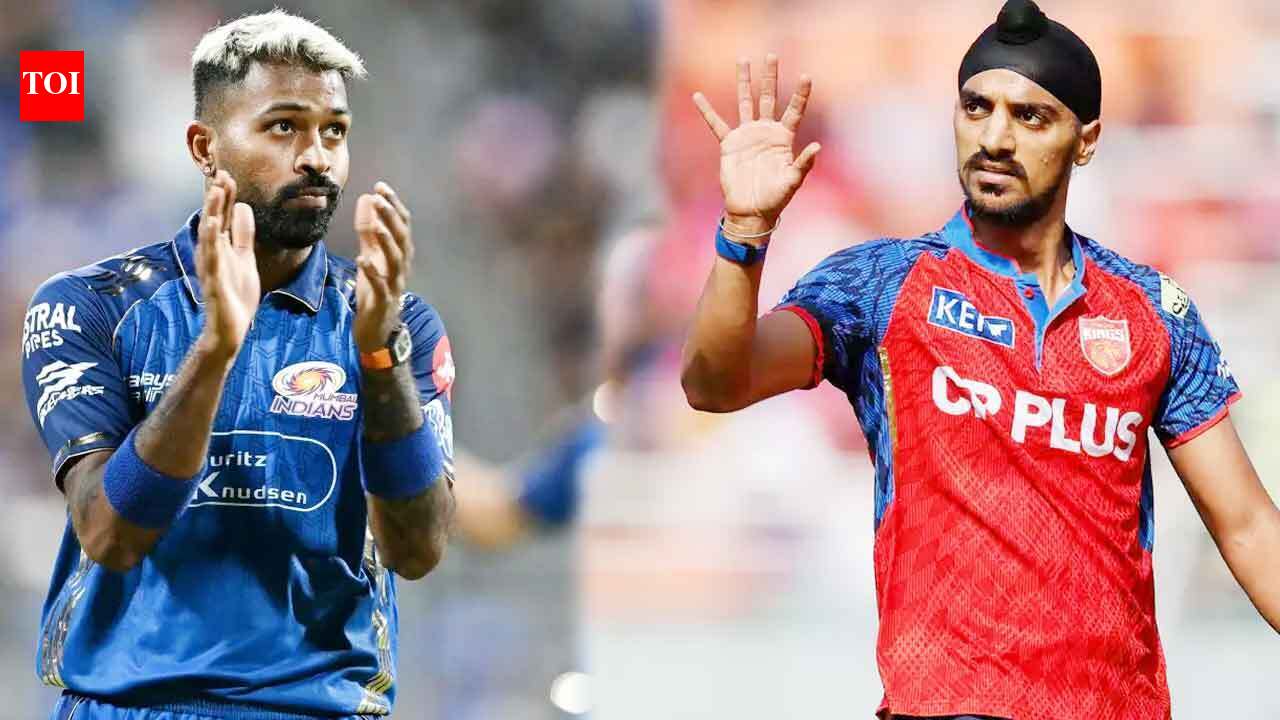
In the world of franchise cricket, player movement is usually reserved for the chaotic auction room, where hundreds of bidders raise paddles and fortunes shift with every crore. Yet the most consequential moves often happen in the quiet corridors between seasons, away from the auctioneer's chant. On November 11, the TATA Indian Premier League witnessed just such a maneuver. Two of its most recognizable assets—Mumbai Indians captain Hardik Pandya and Punjab Kings’ Arshdeep Singh—were swapped. It was not a blockbuster sale of an unclaimed star, but a calculated exchange of established talents, a move designed to fix specific fractures in both squads as they look ahead to the 2027 season.

The trade’s financial structure reveals the underlying logic. Hardik Pandya, the all-rounder who became the face of Mumbai Indians, is moving to Punjab Kings at a fee of 18 crore rupees. This is a tangible increase from his previous valuation of 16.35 crore. In return, Punjab Kings are sending Arshdeep Singh, the left-arm quick, to the Mumbai side. He will join the five-time champions at his existing fee of 18 crore. For Mumbai Indians, the arithmetic was simple: they are paying a small premium for a player whose performance curve had flattened, while acquiring a bowler whose pedigree was unmatched in the T20 international format.
The decision to move Pandya was not born of malice, but of data. Since taking the captaincy at Mumbai Indians, Pandya had guided the team through 39 matches, winning just 15. This yielded a win-loss ratio of 0.625, a figure that stood in stark contrast to his tenure with Gujarat Titans, where his ratio was a dominant 2.444. The numbers suggested that the captaincy burden, combined with the team’s recent struggles, had sapped the explosive edge from Pandya’s game. In 162 IPL matches, he had scored 2,955 runs and taken 82 wickets, but the context of those numbers had changed. To Punjab Kings, he was no longer just a player; he was a catalyst to be unlocked in a new environment. Crucially, he was not expected to take on the captaincy in Punjab, which had been firmly established by Shreyas Iyer. Pandya was brought in to play, not to lead.
As a left-armer, he complements Bumrah’s right-arm pace, creating a devastating opening pair that changes the geometry of the attack.
For Mumbai Indians, the acquisition of Arshdeep Singh addresses a more critical vulnerability: the need for a premier new-ball partner for Jasprit Bumrah. The departure of Trent Boult left a significant gap in the opening spell, and Boult’s recent season had underwhelmed. Arshdeep Singh, described as India’s leading wicket-taker in T20 Internationals, offered a different profile. As a left-armer, he complements Bumrah’s right-arm pace, creating a devastating opening pair that changes the geometry of the attack. His presence allows Mumbai to dictate the early overs more aggressively, shifting the momentum of a match before the middle overs even begin.
The trade was finalized with the official announcement on November 11. The move has already been heralded on social media, with the league’s handles announcing that Hardik Pandya heads to Punjab Kings and Arshdeep Singh moves to Mumbai Indians. This exchange is not merely a roster adjustment; it is a statement about the future of fast bowling. By placing two of the game’s best bowlers in new contexts, the two franchises are betting that environment and fit are more powerful than individual pedigree.
For Pandya, the move to Punjab Kings is a chance to reclaim his form without the weight of captaincy on his shoulders. For Mumbai Indians, it is a chance to solidify their attack around Bumrah with a bowler who has proven himself at the highest level. As the 2027 season approaches, the trade has reset the competitive balance. The teams have spoken, not through the auction house, but through the quiet, decisive language of a swap. The question is no longer who has the best players, but whether a new chemistry can transform established talent into a winning formula. In this new landscape, the focus has shifted from acquiring stars to unlocking them.