
For a student sitting for intermediate computer science finals in Jhelum district, a Tuesday in November is just another day on the academic calendar. But in the corridors of the provincial government, that specific Tuesday became the pivot point of a brief administrative storm. The storm was not sparked by a natural disaster or a security emergency, but by a clash of two rigid codes: the unwritten rule that everything bows to a visiting provincial leader, and the unbreakable clock of public education.
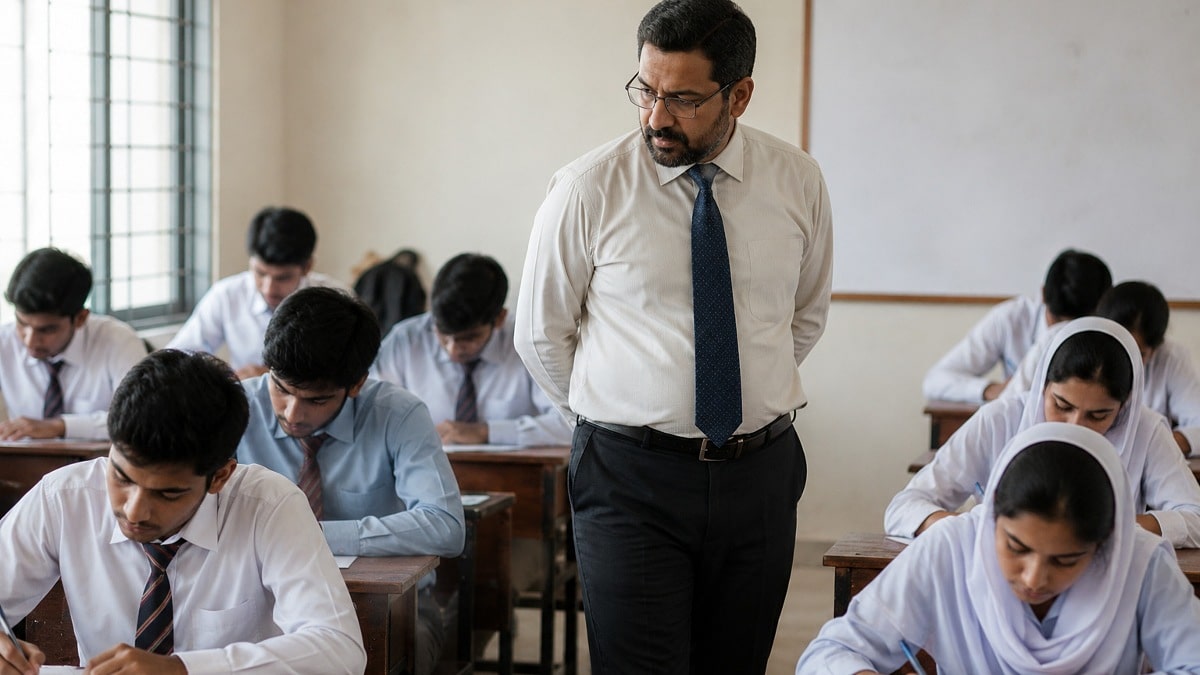
The trouble began well before the Chief Minister's wheels ever touched the ground in the district. On November 6, 2026, Mir Raza Ozgen, the Deputy Commissioner of Jhelum, made a bold bureaucratic move. He wrote to the chairperson of the Board of Intermediate and Secondary Education, the authority that sets exam timetables across the province. His argument was one of administrative feasibility. He claimed it was impossible to conduct the exams smoothly while accommodating a VVIP visit. He requested that the board postpone the test for the sake of everyone's convenience.
It was an argument that seemed rooted in logistics, yet it ignored the standard operating procedure of the province. In Pakistani provincial administration, when a top leader visits a district, the entire district administration typically bends to her will. Roads are closed, public offices shut their doors, and civil services halt to make way for the entourage. Ozgen had turned this predictable hierarchy on its head, essentially arguing that the province's highest political priority was an obstacle to his district's routine. He was the one who had to run the district; he was the one who had to run the exam; and he was the one who insisted the two could not coexist.
Nawaz announced that the exams would happen exactly as originally scheduled.
Two days later, on November 8, the response from Maryam Nawaz was swift and unforgiving. It was not delivered through the quiet machinery of civil service memorandums. Nawaz addressed the public directly. She called the decision a disregard for her instructions. She was clearly irritated. In her words, she had given "explicit instructions that no inconvenience or disruption whatsoever should be caused to the public during my visits to the districts." Her visit to Jhelum was meant to be an act of public engagement. Ozgen's request to disrupt the public's education schedule for the sake of the visit felt to her like an insult.

🚨🚨So Govt servants will do marketing of political Govt🚨🚨 In a move apparently aimed to win over young students, Chief Minister @MaryamNSharif has directed the deputy commissioners (DCs) across Punjab to visit universities and colleges in their respective districts and brief students on the ongoing development projects and other initiatives by the provincial government. The move is an unusual step aimed at enhancing the government’s outreach to students bytasking senior civil servants with presenting its performance directly to young people. https://t.co/TgPMZmIZaM
The dismissal was announced the same day, November 8, but the practical order that followed it mattered more than the personnel move. Nawaz announced that the exams would happen exactly as originally scheduled. She used a phrase that captured the mood of the office: she would not let any acts of "foolishness or misplaced over-smartness on part of the district administration" derail the students' academic progress. The exams would be held strictly on Tuesday, November 10, 2026. This was not a postponement. It was a reaffirmation of the original date.
In her view, Ozgen had shown a misplaced cleverness. He had tried to use a VVIP visit as a shield for what might have been a genuine operational flaw in the district's planning. But Nawaz refused to let a bureaucratic maneuver, however clever, override a commitment to the students. The visit had to be accommodated; the exams had to be the priority. These two facts, which Ozgen presented as mutually exclusive, she presented as merely an ordering problem that a competent administrator should have solved without a public crisis.
By the time the students sat down at their desks on November 10, the district had a new boss. Asma Ijaz had been appointed as the new Deputy Commissioner. It was a standard personnel action, the kind that happens every time a district chief is dismissed. But in this specific case, it served as a public marker. The new DC had a specific mandate: to prove the system works. She had to ensure the visit proceeded without issue while the exams went off without a hitch.
Somewhere in the Jhelum district, the intermediate computer science students were taking their finals. They did not have to worry about the administrative drama above them. The exam hall had been set up, the question papers had been distributed. The date had been kept. In a province where exams can be delayed by political shifts, security concerns, or infrastructural failures, this was a victory for normalcy. It was a reminder that while the people who govern a district can be fired in a single phone call, the students who take their exams are not so easily moved. The calendar held.
This episode highlights a recurring tension in public administration: who gets to set the order of priorities? Ozgen argued that operational reality dictated the schedule. Nawaz argued that political command dictated the schedule. Her decision on November 8, 2026, sent a clear message down the administrative ladder: public service, especially education, was the baseline. VVIP visits were a temporary accommodation, not a weapon to be used against the public's routine. The new DC, Asma Ijaz, was given the task of walking that line without a second dismissal.