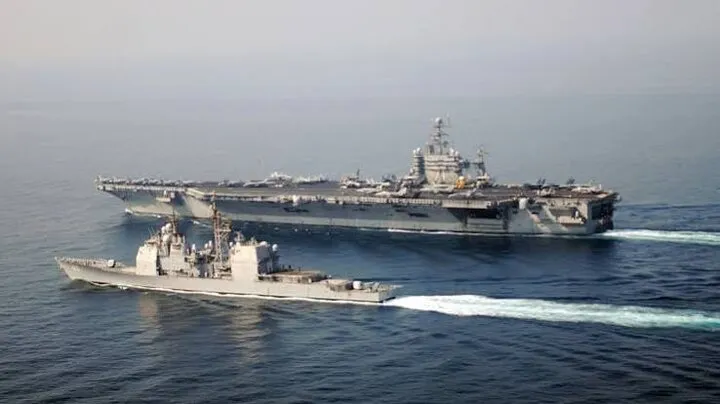
In the vast, heat-shimmering expanse of the Middle East, the movement of a single aircraft carrier can alter the geopolitical temperature of an entire hemisphere. For much of the recent past, the region has been a theater of managed tensions and fragile diplomatic threads. But those threads are fraying. According to reports from The New York Times, citing a US military official, the USS Theodore Roosevelt is expected to arrive in the Middle East within a few days. If the deployment proceeds as anticipated, the massive vessel will not be traveling alone; it is slated to join two other US aircraft carriers already deployed in the region.
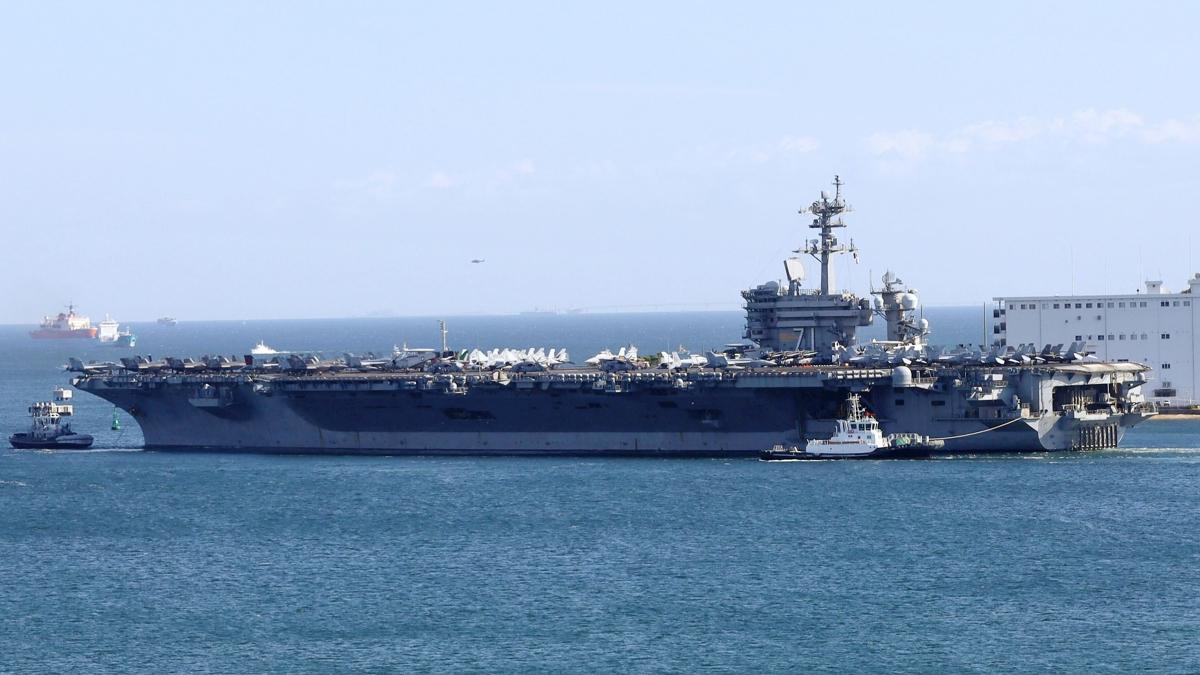
This concentration of naval power—three carriers operating in close proximity—represents a significant escalation in the American maritime presence. While the Pentagon and the US Central Command (CENTCOM) have yet to issue official statements confirming the movement, the logistical reality of moving a carrier strike group suggests a strategic pivot that matches the volatility on the ground.
The impetus for this naval surge appears inextricably linked to a sudden spike in regional kinetic activity. On November 15, 2026, Iran conducted a second drone attack on Bahrain within a mere three-day window. These unmanned aerial incursions represent more than just localized security breaches; they serve as a direct challenge to the stability of the Persian Gulf and the maritime corridors essential to global commerce.
The era of seeking a formal accord seems to be receding into the past.
When drones strike a sovereign territory like Bahrain, the response is rarely confined to the immediate airspace. The arrival of the USS Theodore Roosevelt suggests that the United States is preparing to meet these provocations with a visible, overwhelming deterrent. The presence of three carriers provides a layered defense and a massive projection of force, intended to signal that the cost of further drone incursions may be prohibitively high.

🚨 BREAKING: The USS Theodore Roosevelt has ARRIVED in CENTCOM's area, giving the U.S. THREE carrier strike groups in the region — Axios GOD BLESS OUR HEROES 🇺🇸 Roosevelt joins the USS George H.W. Bush and USS George Washington, with more than 5,000 sailors and Carrier Air Wing 11 aboard The last time three carriers were there at once was Feb. 28, when the IRAN WAR began It comes as Iran launched drones at Bahrain Sunday, its second attack in three days, AND Trump is about to head to Asia Iran should take the hint.
As the steel of the US Navy moves toward West Asia, the tools of diplomacy appear to be being packed away in Washington. The political landscape in the United States has undergone a sharp realignment that mirrors the military buildup. President Donald Trump recently made a decisive move that signaled a new era in American foreign policy: the removal of Vice President JD Vance from peace negotiations.
This was not merely a change in personnel, but a change in philosophy. By stripping the Vice President of his role in the peace process, the administration has signaled a departure from the long-standing effort to find a diplomatic middle ground with Tehran. The President’s stance has become increasingly blunt, reflecting a growing impatience with the prospect of a negotiated settlement.
This shift in personnel is underscored by a fundamental change in how the White House views its relationship with the Iranian government. The era of seeking a formal accord seems to be receding into the past. President Trump has been explicit about this new direction, stating that "Washington no longer needs an agreement with Iran" and further noting that "Washington's no longer needs a deal with Tehran."
For years, the goal of US policy in the region was often framed around the containment of Iranian influence through structured deals and international oversight. However, the current administration's rhetoric suggests a pivot toward a policy of pure deterrence. If the US no longer views a deal as a necessity, the primary lever of influence shifts from the negotiating table to the deck of an aircraft carrier.

According to @BarakRavid of Axios, the USS Theodore Roosevelt (CVN-71) has now arrived in the CENTCOM area of responsibility, raising the current U.S. carrier posture to 3. This comes against the backdrop of largely stalled U.S.-Iran negotiations, continued and increasing reciprocal strikes between the two nations, and uncertainty surrounding the Trump administration’s current outlook for the region in a post-Midterm dynamic.
Amidst this buildup of hardware and the hardening of political rhetoric, a storm of intelligence reports and media speculation has begun to swirl. Israeli media outlets have recently suggested that preparations are underway to resume military operations against Iran. Such reports, if true, would imply that the region is on the precipice of a much larger, more conventional conflict.
However, the US military has moved quickly to dampen these expectations. Officials have dismissed the reports of imminent operations against Iran as "pure speculation," calling the claims completely unfounded. This denial creates a complex tension: while the US is deploying massive amounts of military power to the region, it is simultaneously attempting to manage the narrative to prevent a full-scale escalation that might be triggered by mere rumors.
What we are witnessing is a high-stakes game of strategic signaling. The deployment of the USS Theodore Roosevelt is a fact of movement, even if it remains unconfirmed by the official channels of the Department of Defense. By placing three carriers in the region, the US is creating a massive, floating fortress designed to monitor, deter, and, if necessary, respond to the shifting dynamics of the Middle East.
The question remains whether this concentration of force will act as a stabilizer or a catalyst. The drone attacks on Bahrain have proven that the current status quo is insufficient to prevent provocations, while the President's dismissal of the need for a deal suggests that the US is no longer interested in the traditional path of de-escalation through compromise. As the Theodore Roosevelt nears its destination, the Middle East finds itself in a moment of profound uncertainty, caught between the shadow of the drone and the weight of the carrier.

BREAKING: USS THEODORE ROOSEVELT ARRIVES IN MIDDLE EAST, 3 CARRIERS IN REGION w/ Matt Bracken https://t.co/mFrw7gPmsb