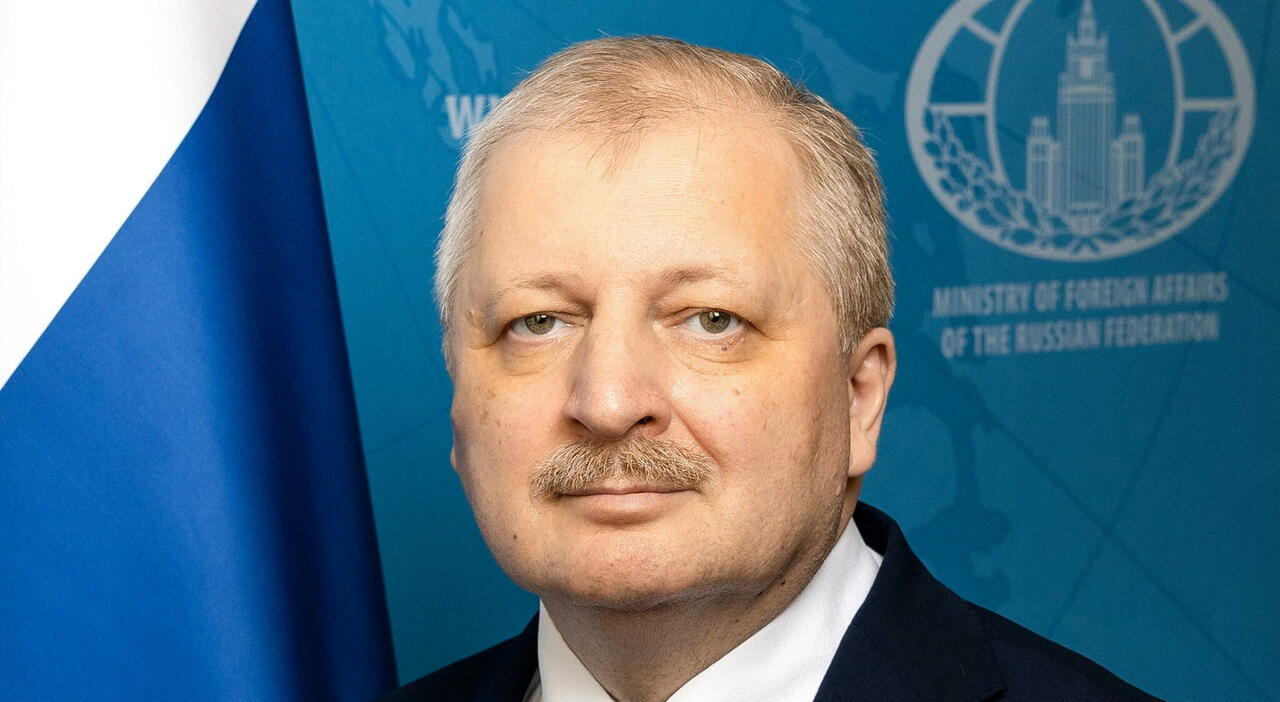
In the high-stakes theater of international relations, few positions are as isolating or as critical as that of an ambassador to a rival power. It is a role that demands patience, linguistic nuance, and an unshakeable understanding of the culture on the other side of the table. For the Russian Federation, that role was filled by Alexander Darchiev, a man who died suddenly on November 11 at the age of 66. The Russian Foreign Ministry described him as a highly skilled expert on American affairs, a role that required deep engagement with the complex political landscape of the United States. His passing is not just the loss of an individual; it is the abrupt severing of a diplomatic link that was only just beginning to show promise of repair.
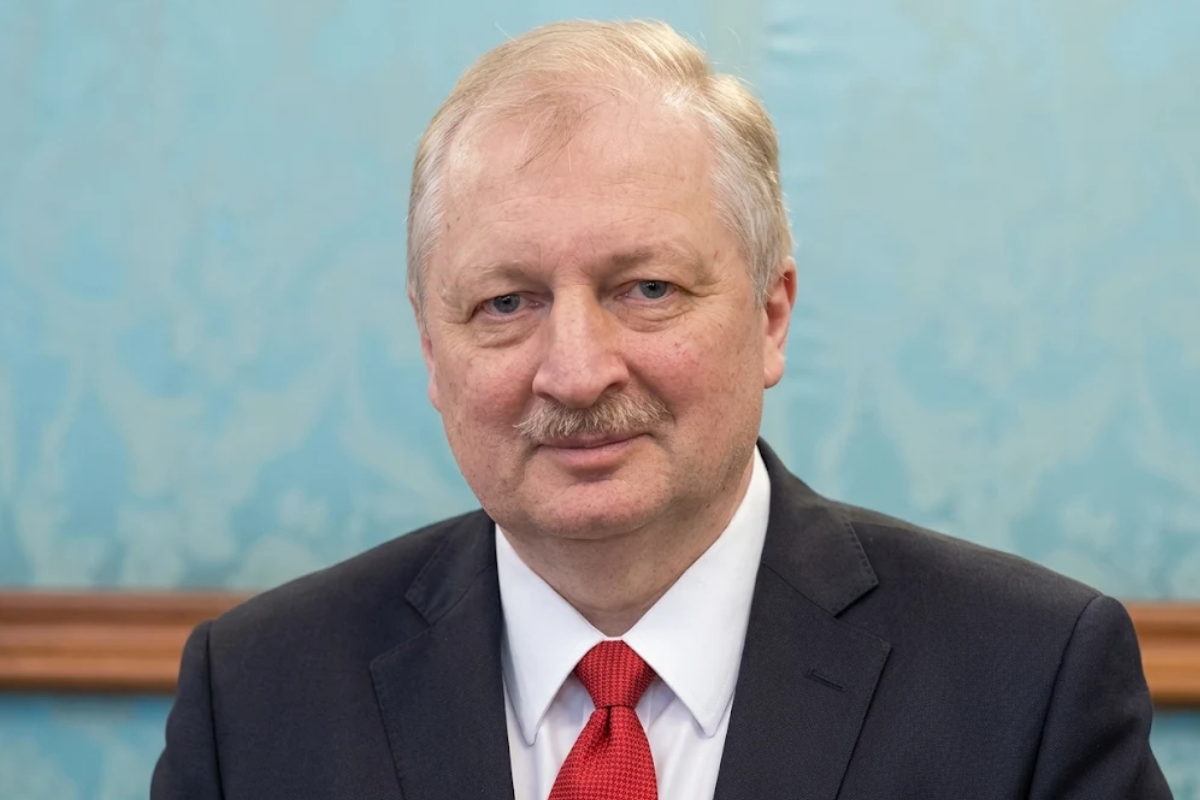
The Russian Foreign Ministry did not offer a specific medical explanation for Darchiev’s death, nor did it describe the circumstances surrounding his passing. The announcement relied on the word "sudden," a term that carries a particular gravity in diplomatic circles. It implies a lack of preparation, a finality that offers no period of transition for those who had to step into his shoes. The ministry’s statement characterized his death as a profound shock, noting that he "passed away suddenly on November 11 at the age of 66." In an era where state functions are meticulously choreographed, the absence of a detailed narrative leaves a vacuum. It is that vacuum, rather than the facts of the case, that now defines the early days of this story. The cause remains undisclosed, a private matter in a public role, leaving observers to wonder about the physical toll of the position he held.

Russia’s Ambassador to US, Alexander Darchiev, dies at 66 - https://t.co/unixAr5I9B
To understand the significance of Darchiev’s death, one must look beyond his final post. He was not a new recruit thrust into the limelight; he was a veteran of the system. Over the course of his career, Darchiev spent a total of about ten years in Washington, D.C. He had previously served two distinct posts at the U.S. embassy, a history that provided him with a granular, on-the-ground knowledge of American political and bureaucratic culture. This tenure was not a one-off assignment; it was a sustained immersion. For a diplomat, time spent in the capital of the other power is currency. It buys empathy, it buys access, and it buys the ability to read the mood of a complex political landscape. Darchiev’s decade in Washington meant he was not just representing Russia; he was navigating a system he had learned to breathe without thinking.
They described him as a "professional of the highest order and a brilliant expert on American affairs.
The Russian Foreign Ministry did not simply list his roles; it highlighted his intellectual capital. They described him as a "professional of the highest order and a brilliant expert on American affairs." In diplomatic discourse, labels are careful constructions. To call someone an "expert" suggests a depth of research and analysis that goes beyond rote reporting. It implies that Darchiev was a key node in the information network that advises the Kremlin. He was not just transmitting instructions; he was interpreting reality. This characterization suggests that his value lay in his mind as much as his rank. He was a filter, a translator, and an analyst who helped Moscow understand how Washington actually functioned, often in ways that counteracted the simplifications of state propaganda or foreign perception.

#World | Russia's US ambassador Alexander Darchiev dies suddenly at 66, Moscow announces - Russian Ambassador to US Alexander Darchiev died at age 66. - He had served as Moscow's top diplomat in Washington. - The ministry did not provide a cause of death. Read More: https://t.co/Gab6tOBpxW
Darchiev’s appointment in March 2025 was not made in a vacuum. He took office during a period that was framed as one of improved relations between the United States and Russia. In the recent history of U.S.-Russia relations, such periods are rare and fragile. They are moments when the volume of hostility is turned down, not off, allowing for the possibility of dialogue. By placing Darchiev at the helm during this specific window, the Kremlin was signaling an intent to build a bridge. It was a strategic choice to use a known quantity, a man who had spent years in the U.S. capital, to manage the delicate process of re-engagement. His job was to turn the dial on cooperation, to find the seams in the policy framework where the two nations could still find common ground, even if only for short periods.
In the wake of his death, the reaction from the highest levels of power has been notable for its absence. The Kremlin, which typically issues formal statements of condolence and praise for senior diplomats, had not issued a public comment as of the initial reports. Similarly, officials in the United States had not publicly responded. This silence is a form of diplomatic etiquette, certainly, but it also reflects the sensitivity of the moment. In a world where every gesture is analyzed for political signal, both sides are choosing caution. For the U.S., a public statement might be seen as an opportunity to comment on the broader state of relations, a risk many wish to avoid. For the Kremlin, the delay in the top-level acknowledgment suggests an internal process of decision-making is underway, weighing the political implications of their words. The lack of immediate, public eulogies from the heads of state leaves the narrative in the hands of the Foreign Ministry, which has already set the tone with its supportive and reverential language.

🔴Russian Ambassador to the US Alexander Darchiev Dies Suddenly at 66 Russian Ambassador to the United States Alexander Darchiev, 66, has reportedly died suddenly, marking a significant development in Moscow’s diplomatic establishment. A veteran diplomat appointed to the post in March 2025, Darchiev played a key role in managing Russia-US relations amid continuing tensions between Washington and Moscow. The circumstances surrounding his death have not yet been disclosed.
Among the descriptors used by the Russian Foreign Ministry, one stood out for its personal warmth: "outstanding diplomat, experienced leader, kind colleague and mentor." This human element in a state announcement serves to ground the figure of the ambassador, moving him beyond a bureaucratic functionary. It suggests that his influence was felt in the daily interactions of diplomatic life, fostering relationships that transcend official policy. For a diplomat representing a state often characterized by rigid statecraft, the attribution of kindness and mentorship paints a more nuanced portrait of how he operated behind the scenes. It is this blend of professional expertise and personal regard that the ministry has chosen to emphasize in its final tribute to a man who served as a bridge between two complex and often adversarial capitals.