In the high-stakes theater of Spanish politics, the math of governance is often more important than the passion of the campaign trail. As the official electoral campaign for November 29 begins, a new barometer from the CIS has arrived to provide a snapshot of a nation in flux. The data suggests a political landscape that is not merely divided, but deeply fragmented, presenting a puzzle that may prove impossible for the traditional right-wing opposition to solve.
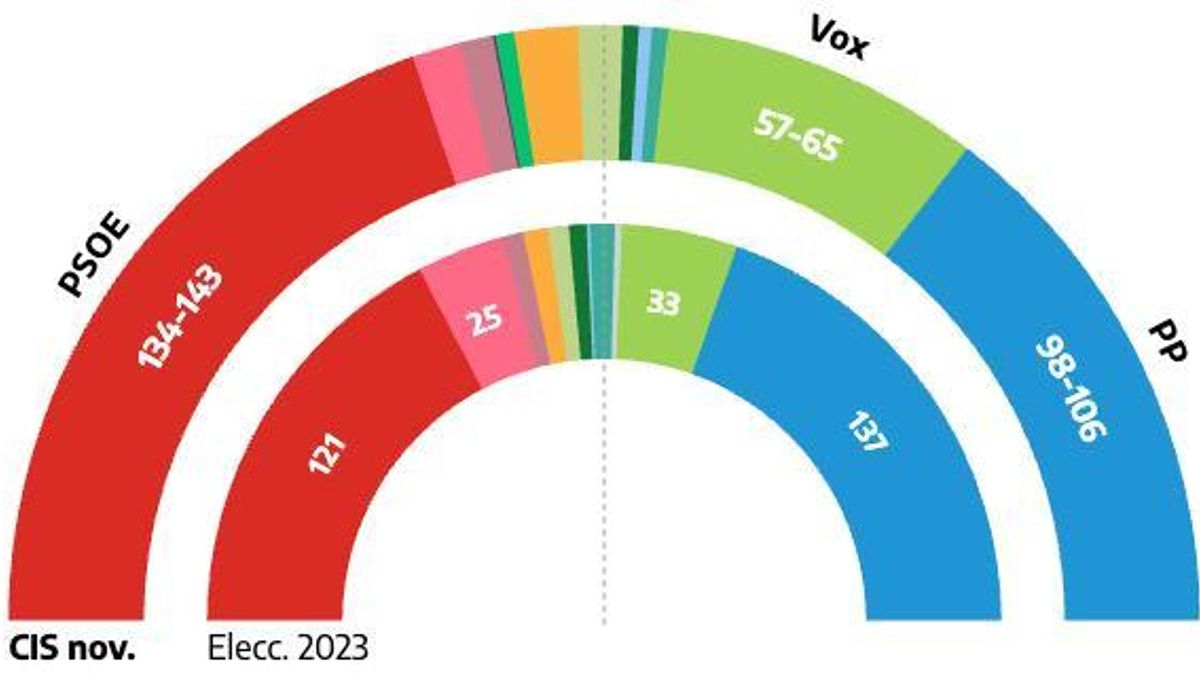
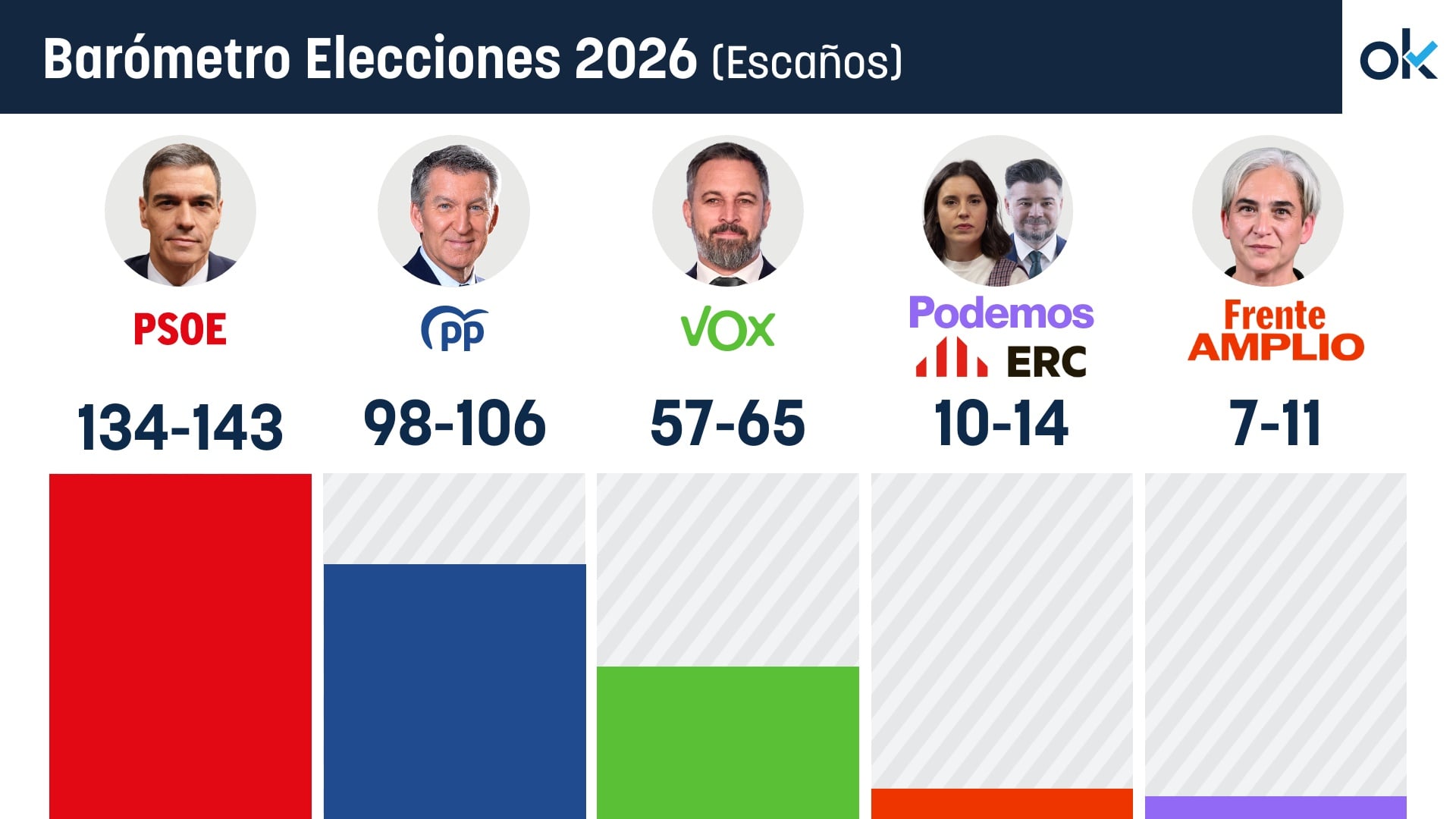
At the center of this projection is the PSOE, the Socialist Party led by Pedro Sánchez. According to the latest polling, the PSOE is positioned to emerge as the largest force in the Congress, capturing an estimated 33.3% of the vote. This share would translate into a parliamentary presence of between 134 and 143 seats. It is a projection that offers a sense of momentum, showing no signs of decline even in the wake of the Urda accident, and placing the Socialists nearly eight percentage points ahead of their nearest rival.
The People's Party (PP), led by Alberto Núñez Feijóo, finds itself in a difficult mathematical position. The CIS estimates the PP will secure 25.5% of the vote, which would yield a range of 98 to 106 seats. While the PP remains a formidable force, the numbers suggest they are struggling to bridge the gap with the Socialists.
Additionally, an alliance between the ERC and Podemos could contribute up to 14 seats to a potential coalition.
Adding to the complexity is the presence of Vox, the right-wing party led by Santiago Abascal. The poll projects Vox will capture 18.4% of the vote, resulting in between 57 and 65 deputies. While Vox maintains a significant presence, the combined weight of the two primary right-wing parties—the PP and Vox—reveals a critical barrier to power. When their projected seats are added together, they fail to reach the 176-seat threshold required to command an absolute majority. This mathematical reality suggests that a governing coalition between Feijóo and Abascal may be an impossibility under these current projections.
If the traditional right-wing bloc cannot find a way to unite, the focus shifts to the diverse array of smaller parties that will define the next legislature. The CIS data paints a picture of a highly fragmented Congress, where the ability to form a government will depend on the intricate dance of alliances between various regional and ideological factions.
For Pedro Sánchez, the path to stability may lie in a progressive bloc. The projections suggest several potential partners could provide the necessary support. The 'Frente Amplio' is expected to hold between 7 and 11 seats, representing roughly 5% of the national vote. Additionally, an alliance between the ERC and Podemos could contribute up to 14 seats to a potential coalition.
The electoral map shows significant movement within Spain's autonomous communities, particularly in the Basque Country and Navarre. EH Bildu, a current legislative partner to the Sánchez government, appears to be enjoying a strong boost. The poll projects a base of 7 seats for the party, with a potential ceiling of 10 seats in the Basque Country and Navarre.
This surge for EH Bildu comes at the expense of the PNV, which is projected to suffer a significant collapse, falling to a range of only 2 to 4 seats. In Catalonia, the shifting tides of regionalism are also evident, as Junts is projected to see a decline in influence, with voters appearing to favor the ERC instead.
As the political map redraws itself, new players are making their mark. Adelante Andalucía is projected to be a winner in its national debut, expected to secure between 3 and 4 seats. Similarly, the party Compromís is projected to hold a presence with 4 to 6 seats.
However, not all new or smaller movements are finding success. SALF (Sumar) remains on the margins of the political landscape, with a projected 1.4% of the vote and a failure to secure any seats in Madrid. This highlights the difficulty of breaking through in a field where even small shifts in percentage can mean the difference between parliamentary representation and political irrelevance.
Nowhere is the tension more palpable than in Madrid, where the competition for influence is razor-thin. The CIS analysis suggests a technical tie between the two major national parties in the capital. The PSOE and the PP are projected to be neck-and-neck, with each party expected to secure between 12 and 14 seats.
Vox also maintains a strong footing in the capital, with projections suggesting they will capture between 6 and 8 seats. This tight competition in Spain's most populous city underscores the broader national trend: a country where every seat is contested and where the margin for error in coalition building is virtually non-existent.
As the campaign for November 29 moves forward, the central question remains one of stability. The CIS barometer suggests that while the PSOE is poised to lead, the resulting Congress will be one of many voices, requiring a delicate balancing act to maintain a functional government. With the right-wing parties unable to reach a majority on their own, the upcoming weeks will be defined by whether the progressive bloc can coalesce or if the fragmentation of the Spanish legislature will lead to a period of prolonged political uncertainty.