
For Maricarmen Abascal, the crisis was not an abstract economic trend; it was a door slamming shut on an 87-year-old tenant. Her eviction, followed by her death, became the catalyst for a profound rupture in Spanish society. It transformed a grumbling discontent over rising costs into a unified, nationwide halt. On November 11, 2026, Spain experienced its first general strike in 14 years. The silence that fell over the nation was not empty; it was heavy with the frustration of a population that felt left behind by its own economic growth. The major trade unions, UGT and CCOO, organized the action, framing it as a direct response to a housing market that had decoupled itself from the ability of the average worker to pay rent.
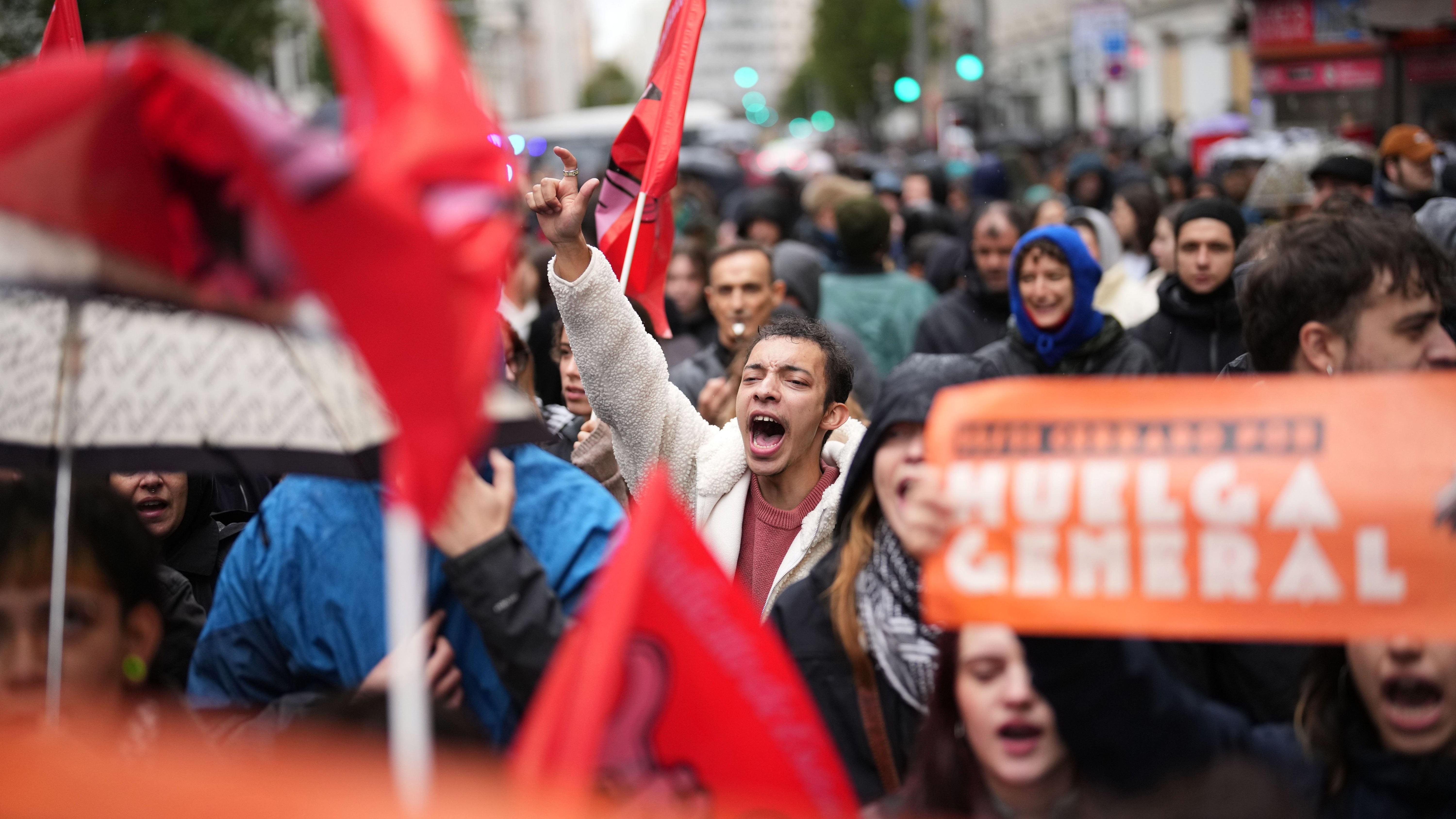
The timing of the strike was politically charged, landing just two weeks before a general election. The narrative driving the protest was stark: Spain's economy had grown at twice the European Union average since 2022, yet the benefits of that expansion had not trickled down to the working class. Unions argued that while the national statistics looked healthy, the reality for the citizen was one of stagnating wages against skyrocketing living costs. This paradox—a growing economy paired with a shrinking quality of life—fueled the anger that eventually boiled over into a nationwide standstill. The strike was not just about housing; it was a symptom of a broader anxiety that the social contract was breaking down.
In Madrid and Catalonia, the strike moved from the digital realm to the physical one. Traffic in the capital came to a standstill, and public services were severely disrupted. The atmosphere in the streets was volatile; while many protesters marched peacefully, the tension erupted in dozens of arrests and physical attacks on estate agencies, symbols of the inflated rental market. For the average commuter, the day was defined by the inability to move, work, or access public transport. The scale of the disruption was undeniable, forcing a pause in the daily rhythm of the country and highlighting the depth of the unrest. The violence against real estate firms was a visceral expression of blame directed at the institutions thought to be profiting from the housing emergency.
Perhaps the most surprising development was the reaction of the Prime Minister.
While the streets of Madrid provided the spectacle, the numbers from industrial zones provided the proof of participation. In the shipyards and the automobile industry, union leaders reported a 90 percent participation rate. Unai Sordo, a key figure in the labor movement, described the turnout as "very significant." However, these high figures were not uniform across the entire economy. This variance would later become a point of contention, as different sectors of the workforce had varying levels of leverage and ability to stop work without immediate catastrophic consequence. The high numbers in heavy industry suggested a solid core of support for the unions' cause, even if it did not reach every single profession.
Perhaps the most surprising development was the reaction of the Prime Minister. Pedro Sánchez, whose government had previously struggled to pass housing reform, did not condemn the strike. Instead, he supported the action, using his platform to validate the protesters' grievances. In a direct appeal to the public, Sánchez recalled the value of collective rights: "Your eight-hour day. Your pension. Your public healthcare… These were collective conquests." This was a strategic pivot; by aligning with the unions, Sánchez hoped to rally the electorate ahead of the snap elections he called for November 29. While the People's Party was critical of the strike, Sánchez's endorsement signaled that the government acknowledged the severity of the housing crisis, even if it had so far failed to solve it through legislation.
As the unions celebrated the turnout, the business world pushed back. The Spanish Confederation of Business Organisations, known as CEOE, argued that the strike was overblown. They stated that in most industries and regions, business activity remained normal. They sought to diminish the impact of the one-day halt. This created a public debate over the strike's true magnitude: was it a mass movement or a localized disruption? This discrepancy between union claims and business reality became a central theme of the post-strike analysis.
Underlying the political maneuvering and the industrial numbers was a simple, devastating math problem that affected millions. The housing crisis had reached a point where rental prices in Madrid were soaring to near half the average monthly salary. This means that just for rent, a tenant is paying out nearly half of their income. Economists generally recommend that housing costs should not exceed a certain threshold of a household's budget. By far exceeding this threshold, the average Spaniard is trapped in a financial bind that has become unsustainable for millions. This fundamental economic pressure was the invisible force driving millions to join the strike, transforming abstract economic statistics into a daily reality of impossible choices.