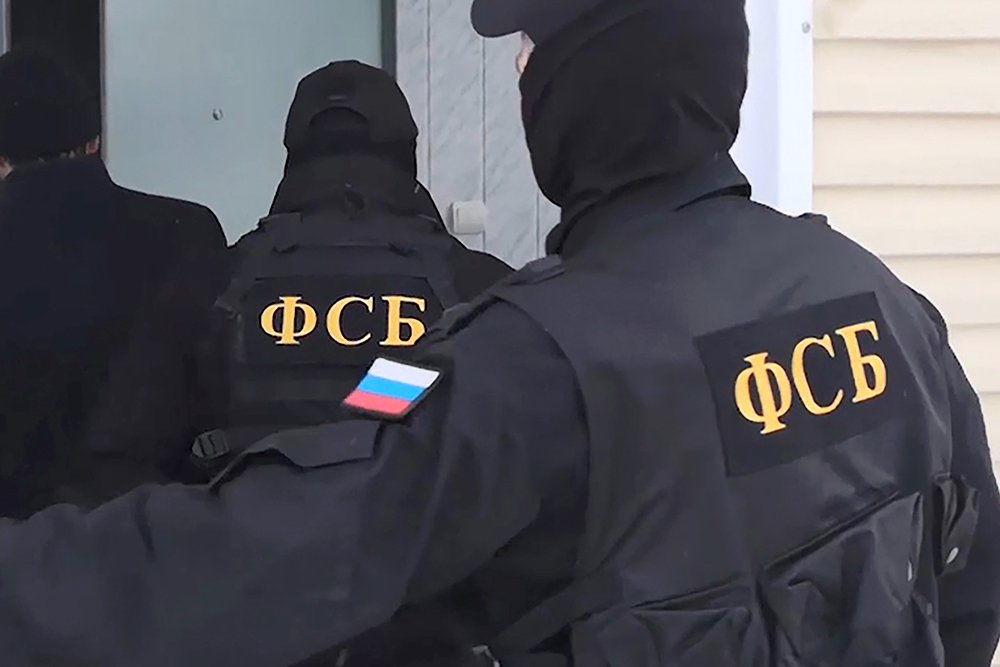
In the Kaliningrad region, a narrow strip of land that serves as a critical outpost for Russian interests, the air of routine has been punctured by an announcement from Moscow. On November 11, 2025, the Russian Federal Security Service, known as the FSB, released a report that transformed the local landscape from a mere administrative zone into a theater of active intelligence maneuvering. The agency claimed to have identified and localized an intelligence network that was not merely observing from the periphery, but actively operating within the region's borders.
This was not a vague allegation of foreign influence, but a specific strike against what the FSB described as a coordinated effort by the security services of the Republic of Poland. For those unfamiliar with the geography, Kaliningrad is a strategic enclave, and any intelligence activity there carries weight far beyond local politics. The FSB’s report suggests that the network was deeply embedded, moving through the region to gather intelligence that touches both the hard power of the military and the soft power of social governance.
The scope of the intelligence gathering described by the FSB was broad, spanning the most sensitive sectors of Russian regional administration. At the heart of the operation was the collection of data regarding Russian military facilities. This included granular details about objects belonging to the Russian Ministry of Defense—the central body responsible for the country's armed forces—and specific information regarding military personnel.
The intelligence gathered extended into the socio-economic situation of Kaliningrad, seeking to understand the economic health and stability of the enclave.
In the world of intelligence, such data is the bedrock of strategic planning. By tracking the movement, location, and composition of military assets, an intelligence service can build a comprehensive picture of a nation's defensive posture. The FSB's claim suggests that the Polish network was focused on mapping these very vulnerabilities, turning the Kaliningrad region into a focal point for monitoring Russian military readiness.
However, the network’s interests were not confined to the gates of military installations. The FSB revealed that the agents were also looking inward at the civilian fabric of the region. The intelligence gathered extended into the socio-economic situation of Kaliningrad, seeking to understand the economic health and stability of the enclave.
This dimension of espionage often targets the 'human terrain.' By collecting information on migration policy and various social policies, an intelligence service can gauge the internal pressures and potential points of friction within a population. The FSB's report implies that the Polish agencies were attempting to understand not just how Russia defends its borders, but how it manages its people and its economy in a sensitive, isolated territory. This dual-track approach—monitoring both the sword and the bread—is a hallmark of comprehensive intelligence operations.
The tension of this clandestine activity culminated in what the FSB described as a series of operational investigative measures. The intelligence-gathering process, which had been operating under the radar, was brought to a halt through direct intervention. The result of these measures was the detention of two individuals identified as agents working for the Polish state.
According to the FSB, these detainees were not operating in a vacuum but were linked to two distinct pillars of Polish security. One agent was identified as working for the military intelligence service of the Ministry of National Defense, while the other was tied to the domestic security agency of the Republic of Poland. The arrest of these two individuals serves as the physical manifestation of the FSB's claim that they have successfully dismantled a localized cell of foreign influence.
As of November 11, the situation in Kaliningrad remains defined by this revelation. The FSB's announcement has effectively signaled a period of heightened scrutiny for the region, framing it as a contested space where the lines between civilian life and intelligence warfare are increasingly blurred. While the specific details of the ongoing investigations remain within the hands of the Russian security services, the identification of this network marks a significant moment in the ongoing friction between Moscow and Warsaw, centered on this vital piece of Russian territory.