The stage was set for a moment of financial tension in Sydney, where the air hummed with the quiet anxiety of investors and policymakers. It was here that Jim Chalmers, the Treasurer of Australia, took the podium at the Australian Securities and Investment Commission conference. The room was filled with the kind of silence that usually precedes a number, but Chalmers began not with a figure, but with a metaphor. He was about to explain how his government intended to navigate a fiscal storm without capsizing the economy. His central message, delivered with the steady confidence of a man who has managed the nation’s ledger for years, was one of calibrated restraint. He described the upcoming mid-year budget update not as an axe, but as a scalpel.
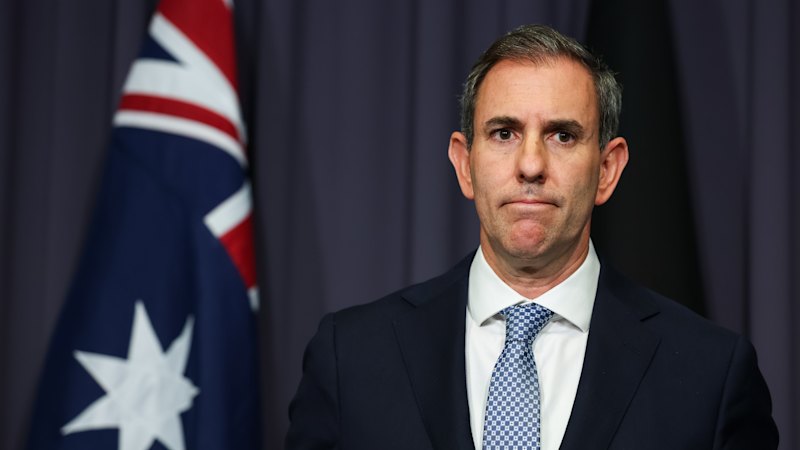
Chalmers framed his approach as a search for the "Goldilocks" solution: a path that is neither too warm, in the sense of reckless spending that fuels inflation, nor too cold, which would strangle growth. The stakes were set by the numbers already known. The budget papers project a deficit just shy of $10 billion for the 2024-25 financial year. That is a manageable hurdle. But the horizon stretches out into the red. For 2025-26, the projection is a deficit of $22.3 billion. Then there is the expected shortfall of $31.5 billion for the current financial year, a gap that looms large over the government’s ability to fund its promises.
"It will cut enough, but not too much," Chalmers told the audience, a phrase that has since become the shorthand for his strategy. "It will strike some fine balances." The balance he was describing was between immediate fiscal pressure and long-term economic health. He argued that the cuts were necessary to "ease immediate capacity pressures without putting growth at risk." In practical terms, this meant making room for the "responsible cost-of-living relief" the government had been rolling out, ensuring that households could catch their breath without adding to the broader price pressures that were already heating up the economy.
To this end, he outlined a package to lift productivity, valued at $10 billion in currency terms, and a separate $2 billion infrastructure fund.
To justify these adjustments, Chalmers offered a two-part rationale that wove together domestic realities with global trends. "First, because of the intensifying spending pressures coming at us, including higher debt interest, rising costs of essential services, and other unavoidable spends and variations," he explained. This is the unglamorous, mechanical side of government finance. As interest rates climb, the cost of servicing the national debt rises, consuming more of the revenue that could otherwise go to hospitals, schools, and roads. "Second, because we take seriously and embrace our responsibilities in the fight against inflation," he added. This was the ideological commitment. The government was not just reacting to the market; it was actively choosing to tighten the belt to combat the rising price of goods.
He placed these domestic struggles in a global context to underscore the urgency. "In contrast, rates are expected to continue climbing in every major advanced economy," Chalmers noted. While other nations faced similar macroeconomic headwinds, Australia’s specific challenge was to maintain stability while its peers navigated their own adjustments.

Jim Chalmers says: tell me what to cut - as if it's hard to trim record-breaking government spending. Challenge accepted: PVO https://t.co/MSadLXPmwI
The announcement was not just about balancing the books; it was a prelude to a broader tax reform agenda that has faced stiff opposition. Chalmers defended the government’s plans to implement a 30 percent minimum tax on income from discretionary trusts. This measure targets high-income entities that currently pay relatively little tax, aiming to close loopholes and increase revenue. He also outlined efforts related to Capital Gains Tax, proposing a reduction of the discount from 50 percent to 40 percent. Chalmers argued that these CGT reforms would help address the disproportionate amount of investor lending going towards existing housing. By changing the tax incentive for long-term investors, the government hopes to steer capital toward productive economic activities and housing construction rather than simply hoarding existing assets.
Despite the looming deficits, Chalmers did not shy away from the government’s track record. He highlighted the claim of $180 billion in total savings since Labor came to office in 2022. This figure is central to the government’s narrative: that they have inherited a chaotic budget and imposed a new era of fiscal discipline. To this end, he outlined a package to lift productivity, valued at $10 billion in currency terms, and a separate $2 billion infrastructure fund. These investments are designed to boost the economy’s long-term potential, ensuring that the cuts today do not result in a weaker tomorrow. It is a complex trade-off, where immediate savings are traded for long-term growth, a bet that Chalmers is confident will pay off.
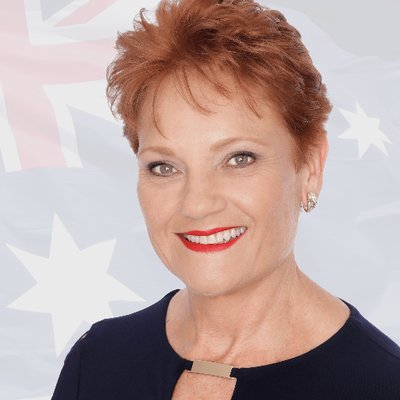
Media Release: One Nation will reverse Dr Chalmers’ budget experiments One Nation will fix Dr Jim Chalmers’ destructive budget experiments by reversing his capital gains tax and trust changes. One Nation will also protect negative gearing for up to two investment properties and vows to fight any plan by the Treasurer to impose death taxes and taxes on the family home. One Nation leader Senator Pauline Hanson said Australians were paying for a Treasurer who had no idea what he was doing and the Albanese Labor government who just cannot stop spending and driving up inflation. “Dr Jim Chalmers is experimenting on the Australian economy, and everyday Australians are his guinea pigs.” Senator Pauline Hanson said. “He’s playing with your home, your rent, your business and your savings. When his experiments fail, Australians will pay dearly. “He has smashed business confidence, cut off business investment and helped send the property market into free fall. “Already, more than 1,100 households who bought through Labor’s expanded five per cent deposit scheme are now estimated to owe more than their homes are worth. “Labor encouraged them into the market, then pulled the rug out from under them. “They botched the ATO credit card ban and lied about their involvement. They were forced to back down on their widow tax. Now accountants warn Labor’s trust changes could cost Australians billions in unnecessary advice and restructuring. “Labor couldn’t run a corner shop. But they know how to send one broke. “One Nation will restore the 50 per cent capital gains tax discount and scrap Labor’s proposed 30 per cent minimum tax on trusts. “The status quo of allowing unlimited taxpayer concessions for property tycoons was not working for Australians. The Liberal plan to back the broken model protecting property moguls makes no sense. “One Nation would continue to allow Australians to negatively gear up to two investment properties. “Anthony Albanese has pulled the ladder up behind him on young people trying to break into the property market, protecting tax concessions for existing properties. This includes the Prime Minister’s own ocean view clifftop house in Copacabana, the hundreds of properties held by his own cabinet and the thousands of properties held by property tycoons. “The Labor government must answer whether members of cabinet who benefited from grandfathering negative gearing concessions recused themselves from voting on the measures given their conflict of interest. “Australians should be able to work hard, invest and get ahead. For many young Australians, an investment property was one way they could get a foot into the property market. “One Nation will end this disastrous experiment and reverse Chalmers’ destructive budget experiments. “And we will draw a line around the family home and stop any plans for Labor’s death taxes. “It’s not enough that you already work several days a week to pay for Labor’s uncontrolled spending. Because Labor cannot control their own spending, they will keep coming back to shake you down for more. “My warning is that your family home, your super, and what you leave your children will be in the firing line next. “Labor broke its promises on negative gearing and capital gains tax. Why would Australians trust anything they say? “One Nation will never impose a death tax. We will never impose a tax on the family home. “You should not have to spend your life paying for Labor’s spending addiction, then have them send your children the final bill.”
The conference also served as a backdrop for broader geopolitical and economic maneuvering. In a world where financial stability is often a matter of national security, Australia’s ability to manage its debt and inflation is watched closely by peers and rivals alike. The message from Sydney was clear: Australia is managing its own house, but it is doing so in a building that is part of a larger, more complex complex.
As Chalmers concluded, the focus returned to the human element of fiscal policy. It is not just about numbers on a screen; it is about the cost of a bag of groceries, the price of a home, and the security of a pension. He emphasized that the goal was to make room for relief without adding to price pressures. This is the "Goldilocks" balance: not too much spending that overheats the engine, not too little that stalls it. The road ahead is narrow, paved with billions in projected deficits and ambitious tax reforms, but Chalmers stood firm on the conviction that the path chosen was the only one that kept the vehicle moving forward.

Jim Chalmers wants you to cut your spending, but he won’t cut his. https://t.co/OYSTea6KBD
Now, the attention turns to the actual release of the mid-year update. The public and political markets are braced for the details. Will the $31.5 billion shortfall be met with the cuts Chalmers promised? Will the 30 percent trust tax and CGT changes survive their journey through parliament? For now, the promise of a balanced approach holds the narrative. It is a strategy of careful calibration, betting that the right amount of restraint will allow the economy to grow steadily, even if the journey is fraught with bumps.
Chalmers’ speech was more than a budget update; it was a manifesto of modern Australian economic policy. It acknowledged the pain of inflation, the reality of debt, and the need for productivity. By framing the cuts as a necessary step toward "responsible cost-of-living relief," he sought to align fiscal austerity with social support. The $180 billion in savings since 2022 provides the moral authority for this approach. The challenge now is to execute it without fracturing the consensus that holds the political coalition together. The fine line between cutting enough and cutting too much will be the test of the next several months.