
The image that captured the world’s attention was not a grand policy speech or a new treaty, but a simple photograph. In Moscow, Raul John Aju, a 16-year-old Commerce student from Kochi, India, stood shoulder-to-shoulder with Russian President Vladimir Putin. Aju had just shaken the Russian leader’s hand following the plenary session of the AI Journey 2026 conference on November 26, 2026. The moment was captured by Russian state-funded broadcaster RT, which shared a video of the encounter, sending it viral across social media platforms. For Aju, the moment was surreal. Reflecting on the event, he noted, "I never imagined in my dreams that one day I would take a selfie with President Putin. I never guessed life would bring me this far." It was a stark contrast to the teenager’s origins: a Class 12 student at North Edappally GHSS, far removed from the diplomatic halls of the Kremlin, yet present at one of the most significant gatherings for artificial intelligence technology.
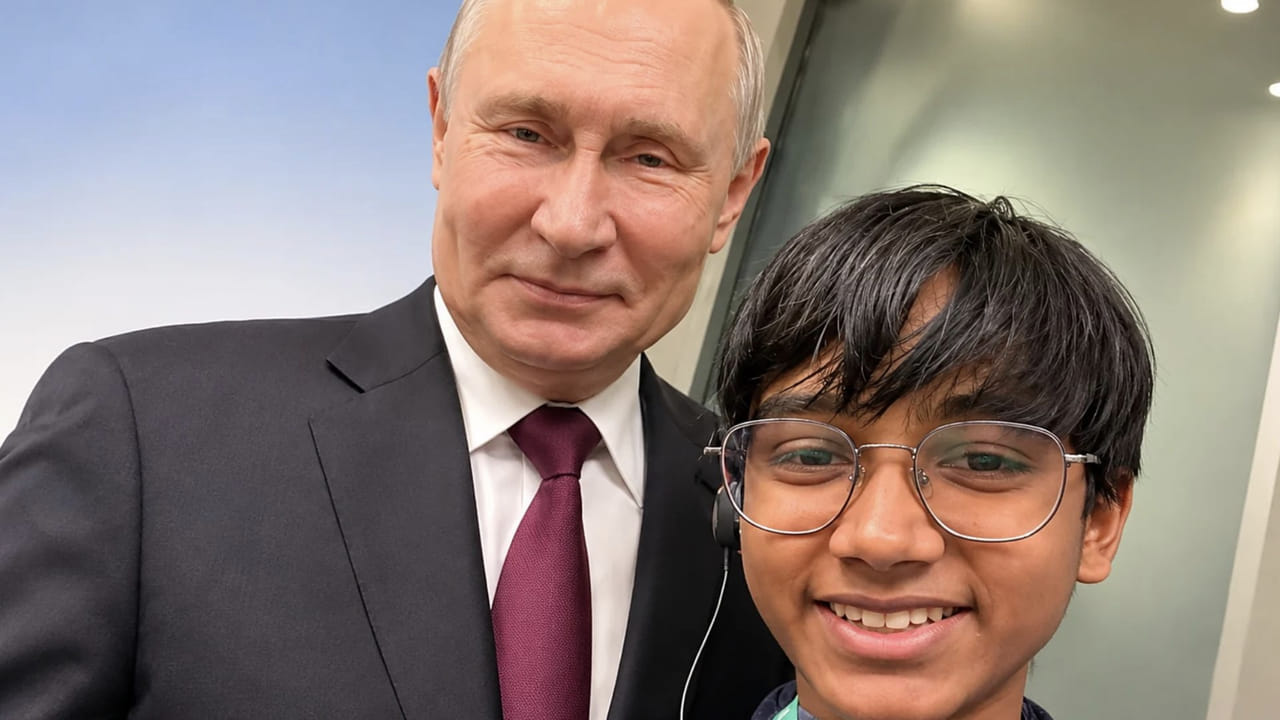
The path from a teenager in Kerala to a conference in Moscow did not begin with a computer science degree. It started, as Aju recounted, in a bathroom. At the age of nine, he began exploring video editing using his father’s access to Adobe software. This early tinkering evolved rapidly. By the time he was twelve, he had built a humanoid robot named MeBot for a school science project. These small steps accumulated into a career that defies traditional timelines. Today, Aju is the Chief Technology Officer of his own startup, AI Realm Technologies, and the founder of the ThinkCraft platform. He employs 15 people and has trained approximately 500,000 students globally through his ThinkCraft Academy, which offers AI skills training to students from top Indian and international institutions. The AI Journey 2026 conference drew delegates from India, China, Russia, and Brazil, placing Aju among global peers and heads of state, including Kazakhstan President Kassym-Jomart Tokayev, with whom Aju also interacted during the plenary session.
The interaction with Vladimir Putin carried political weight beyond the viral moment. The Russian leader praised Aju’s AI initiatives and explicitly linked the young entrepreneur’s efforts to the ‘Make in India’ vision promoted by Prime Minister Narendra Modi. This connection highlighted a growing global recognition that AI innovation is no longer the exclusive domain of massive Silicon Valley conglomerates, but is being driven by young, agile startups in the Global South. Aju’s company, which he describes as AI Technologies, operates in this space, developing tools that solve specific problems. He has developed over 15 AI-based tools, including RESQ AI, ZapGap, and Investo AI. These products represent a shift in how AI is being built: not just as abstract models, but as practical applications integrated into daily life and industry. The praise from a head of state like Putin served as a validation that the skills Aju had honed in his classroom were recognized at the highest levels of international diplomacy and technology.
Perhaps the most striking detail of Aju’s venture is not what he built, but who he hired.
Perhaps the most striking detail of Aju’s venture is not what he built, but who he hired. Aju employs his own father, a move that blends family legacy with business pragmatism. His father has extensive experience at major tech companies, including Amazon, Adobe, Wipro, and IBM. Aju hired him specifically for this expertise and for marketing assistance, paying him a monthly salary of 2 lakh rupees. When explaining this unconventional arrangement, Aju was candid about the dynamics: "I can gain as much knowledge as I want from my phone, but I don't have his experience. He has worked for companies like Amazon, Adobe, Wipro, and IBM, so I can learn from him. Also, to be honest, it was good for my marketing." This relationship underscores a broader trend in the startup world where family resources are leveraged as early-stage capital, both financial and intellectual. For a 16-year-old, having a mentor with such a pedigree on payroll provided a crucial bridge between raw coding talent and the business acumen required to scale a global training platform.
Aju’s journey in AI innovation began at age nine when he started creating videos, using his father’s Adobe access to explore early technology. His story is not just about meeting a president; it is about the democratization of artificial intelligence. By training half a million students, Aju is actively participating in the global AI workforce pipeline, a role usually reserved for established educational institutions. He is from Pathanamthitta, Kerala, a region not traditionally known as a tech hub, yet his reach is global. As the AI industry matures, the narrative is shifting from ‘who can build the model’ to ‘who can scale the talent.’ Aju stands at the intersection of these trends, a teenager who took a selfie with a head of state not as a celebrity, but as a recognized innovator. His journey from bathroom video editor to global trainer is a clear signal that the next wave of AI leadership may not come from the typical corporate pipeline, but from classrooms and garages where curiosity meets code.