
In a recent proposal, the Russian Ministry of Digital Development (Minitsifry) has pushed the public back into a technology that many thought was long buried: the wired radio receiver in the home. What began as a state-mandated broadcast point was nearly wiped out by the rise of FM broadcasting, but a draft amendment to the 2035 Communications Industry Development Strategy wants to bring the system back to life. The driving reason is less nostalgia than survival. The Russian government has long worried about a "single point of failure" for its public alert systems. When a power grid goes down, or a wireless network gets jammed or hacked, the wired radio in a wall socket is the last channel still carrying a voice. For a state that views its population as a network of assets to be secured, the wired radio is the ultimate insurance policy.
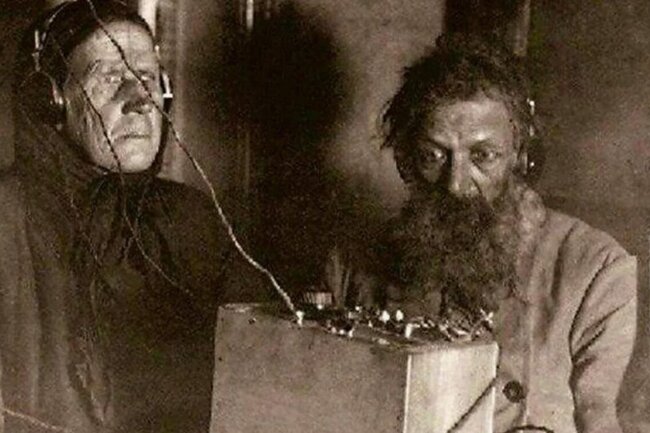
To understand why this ancient technology still matters, it helps to look at how the system actually works and why it won't die. The modern Russian wired radio system is called radiotelephony. A central signal from the national network is carried through physical copper and fiber-optic cables directly into residential buildings. Inside the home, a standard wall-mounted radio point receives that signal. The critical feature of this setup is that it requires no power from the user's side. It is powered by the signal line itself. This means that if a war, a natural disaster, or a massive cyberattack knocks out the local power grid and severs all cellular service in a city, the wired radio in an apartment will still go on playing. This inherent independence from household power grids makes it the most resilient public alerting tool in the federal strategy.
It is not the same system that had 48 million radio points installed across the Soviet Union at its peak. At one point, 90% of the Soviet population had a wired radio in their home, largely because the state made it mandatory for new and renovated multi-unit buildings. It was a tool for the state to reach its citizens, not just with news, but with the single source of cultural truth. But the rise of portable FM radios, which were cheap and could pick up a wide variety of channels, began to erode that monopoly. Wired radio became a fixture of public spaces—factories, schools, state offices—while in private homes it became optional. Then the Soviet Union fell, and its technological networks with it.
But the draft strategy wants to expand this presence from a few major cities back to the entire nation.
What the proposal actually wants to revive is the infrastructure that survived. In cities like Moscow, Saint Petersburg, and Sevastopol, the wired radio network never fully went away. It was maintained by local utility companies and the state broadcaster, Russian Public Radio (Radio Russia). In these three cities, millions of apartments still have the physical sockets in their walls, and the state's broadcasting program is still piped through them. But the draft strategy wants to expand this presence from a few major cities back to the entire nation. The proposal aims to create a robust channel for public alerting specifically in residential buildings, recognizing that wired radio is the only communication technology that is fundamentally immune to the electromagnetic interference and sophisticated cyberattacks that could disable modern wireless and digital systems. It is a physical, tangible connection, and for a state that controls its own borders, it represents a kind of technological sovereignty.
The strategy document makes the economic case plainly. Wired radio is cheaper to operate than any modern digital alternative. It does not require the constant upgrading of cell towers or the deployment of satellite networks. The existing multi-unit building stock, which the strategy notes accommodates 70% of the Russian population, already has the conduit systems in place. It would only take a minor upgrade to the central network and the local transmitters to re-activate the system for the whole country. By reviving a system whose primary purpose was to reach everyone, the Ministry is not just buying back a broadcast channel; it is buying back a state security tool.
The public response to this announcement has been largely one of bemused curiosity. For younger Russians, the wired radio is an object from a previous century, one of those things the grandparents used to talk about, and many see the draft as an attempt to restore the aesthetic of the Soviet era. But the Ministry has not sold it as nostalgia. The framing is strictly practical and security-oriented. The wired radio is presented as a technological basis for emergency notification systems that cannot be spoofed, jammed, or turned off by an outside actor. In a world where the state’s own digital infrastructure can be vulnerable to the cyberattacks that plague all major economies, the wired radio is a dead-man switch. It is a physical presence, and the draft wants to make it a permanent part of the modern Russian home.
As of the recent proposal, the draft is in the public consultation phase, and the final timeline for implementation remains tied to the broader 2035 national strategy. For the residents of Moscow, Saint Petersburg, and Sevastopol, the change will be invisible; the socket is already in the wall. For the rest of Russia, it could mean a return to a physical infrastructure that most have forgotten. It is a quiet, low-tech answer to a high-tech threat, and the draft is its most serious attempt yet to bring it back.