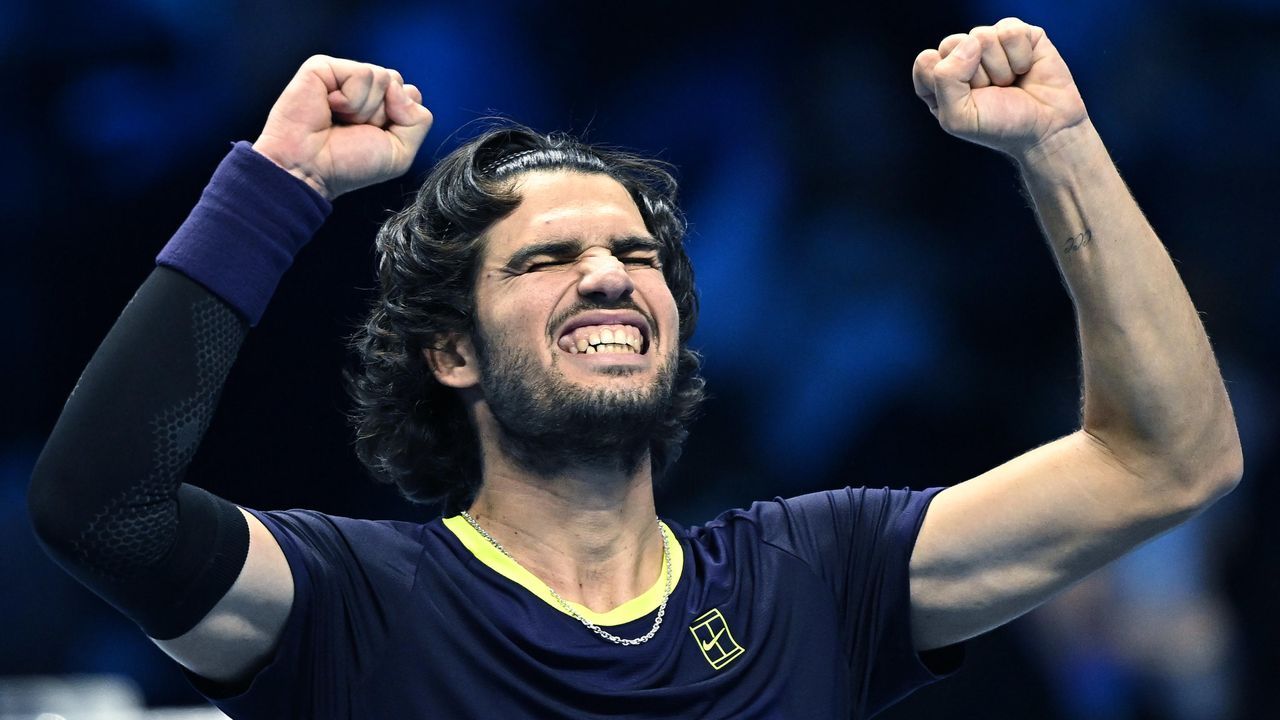
The arena in Turin had likely seen plenty of high-stakes drama over the years, but on this November day in 2026, the atmosphere shifted from anticipation to near-shock. Carlos Alcaraz, the Spanish champion who had spent weeks navigating the fragility of his body, stepped onto the hard courts of the season-ending tournament not as a participant hoping to avoid embarrassment, but as a force of nature demanding respect. For his opponents, the return of Alcaraz was not just a scheduling inconvenience; it was a warning shot fired across the tennis world. He did not need to prove he belonged. He needed to prove he was still the player everyone feared.
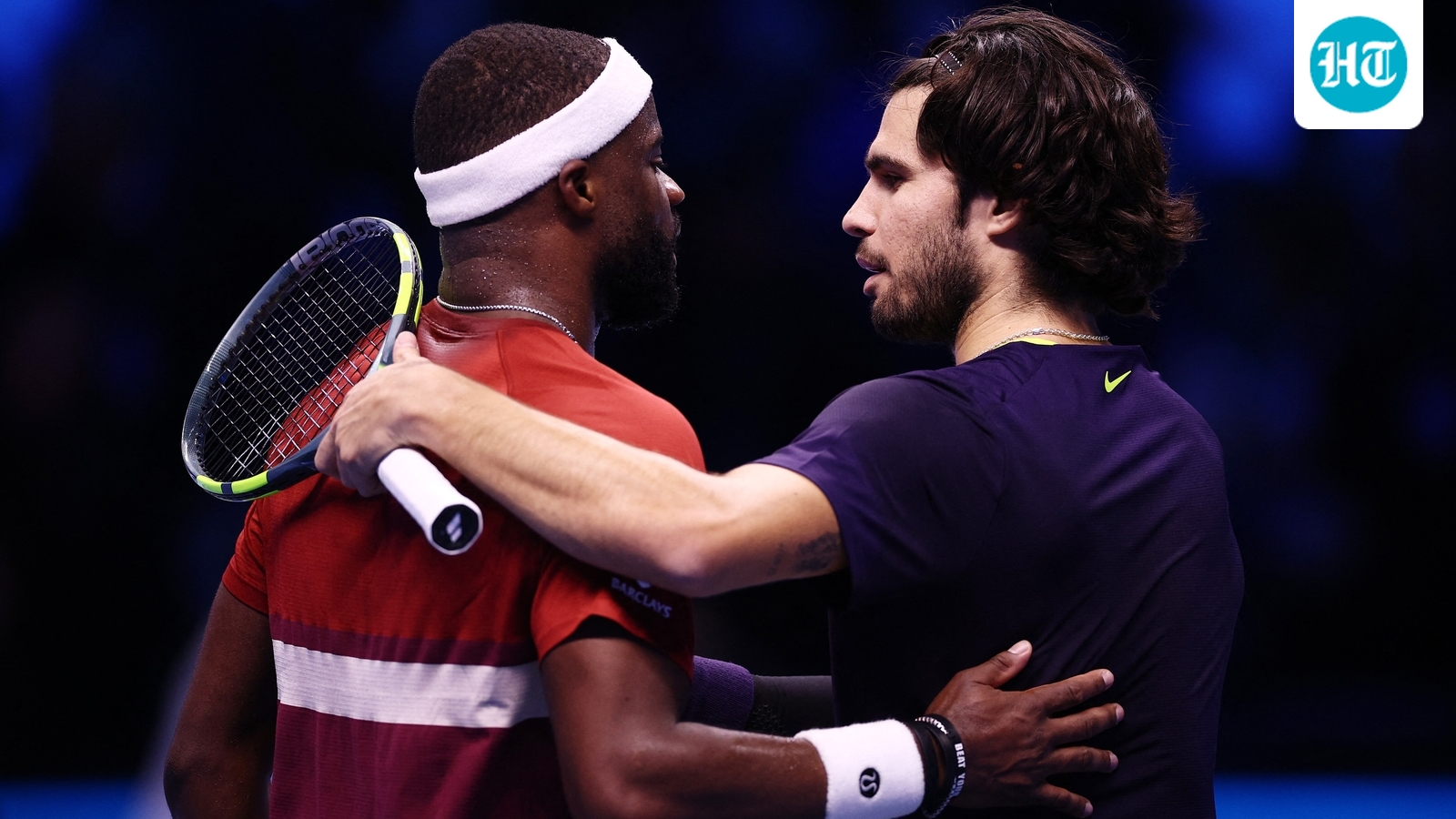
Frances Tiafoe walked into this matchup as a respected competitor on the men’s tour, an American whose power and flair had earned him a place on the ATP Finals roster. But in sport, especially in the elite confines of the season-ending final eight, reputation is currency that can evaporate quickly if you fail to convert it into results. Tiafoe’s debut at this year’s ATP Finals was defined by its brevity and its brutality. He found himself on the receiving end of a performance so one-sided that it borderlined on a public execution. There was no rhythm, no counter-offensive, no moment where the match hung in the balance. It was a nightmare scenario for a top-tier player: to be dismantled by the world’s third-ranked star before the tournament had even truly found its legs.
The scoreboard tells the story with stark simplicity: 6-2, 6-2. In tennis, where matches are often measured in hours and contested to the final point, straight-set victories are common. Straight-set victories by a margin of six games to two in both sets are rare. They signal not just skill, but a chasm of confidence between the two sides. Alcaraz did not wrestle with Tiafoe for four or five hours. He did not need to. He dismantled the American’s game with such efficiency that the entire contest lasted just over an hour. That duration is a critical detail. It suggests that Alcaraz did not merely win; he controlled the tempo so completely that he was able to dictate the pace of the match from the very first service game through to the final point. Tiafoe, despite his power, was unable to impose his own style. He was reactive, frustrated, and ultimately overwhelmed by a Spaniard who played with a calm, surgical precision that left little room for error.
There is a subtext running through Alcaraz’s recent journey that adds another layer to this victory.

Tennis from another planet. Carlos Alcaraz lays down a MARKER at the #NittoATPFinals - blitzing Tiafoe 6-2 6-2 https://t.co/MyEY9rZPHe
To understand the significance of this match, one must look beyond the scoreline to the broader context of Alcaraz’s season. He is the world number three, a ranking that carries immense weight in the hierarchy of men’s tennis. Being in the top three means you are not just good; you are part of the elite inner circle that determines the future of the sport. When Alcaraz enters a tournament, the betting markets, the media, and the competing players all adjust their expectations accordingly. In Turin, he entered the court not just as a participant, but as the presumptive favorite. The 6-2, 6-2 result was not just a win; it was a declaration of intent. It showed that the player standing on the other side of the net was not just here to play his role; he was here to take the title. This match effectively removed any ambiguity about where the power dynamic lies in this year’s final eight.
There is a subtext running through Alcaraz’s recent journey that adds another layer to this victory. He had been sidelined by a wrist injury, a niggling but potentially career-defeating issue that had forced him to withdraw from competition and sit out key tournaments. The anxiety of an injury return is palpable for any athlete. There is the fear that the body will betray you, that the sharpness has dulled, or that the rust will show. But Alcaraz has been doing more than just returning to form. He has been reasserting his dominance. In the five tournaments he has entered since returning from that wrist injury, he has won three. That is a 60% win rate in top-level ATP events, a statistic that speaks to resilience and an ability to perform under pressure even when the physical foundation has been compromised.

Carlos Alcaraz after beating Tiafoe at the ATP Finals "Let them start realizing that, if they want to win, they have to raise their level" 😤😤 Everyone is in trouble. (🎤 @alexcorretja74) https://t.co/sv5Zkq6pZY
The immediate consequence of this victory is tactical as much as it is psychological. By sweeping Tiafoe, Alcaraz has put himself in a position where he can secure a spot in the semi-finals with a single victory. His next opponent, scheduled for Wednesday, is Flavio Cobolli. If Alcaraz defeats the Italian, he locks his place in the final four of the tournament. This path offers a strategic advantage. It allows Alcaraz to manage his energy, potentially resting slightly more than his rivals who might face tougher first-round opponents or who might be struggling to find their footing. For a player coming off an injury, managing workload is as important as managing the ball. By beating Cobolli, Alcaraz not only advances but signals that his body is holding up, that the wrist is stable, and that the machine is running at full capacity.
In a city like Turin, which has hosted this event for decades, the mood shifts after a dominant opening performance. The crowd, which might have been waiting for a competitive contest, instead witnesses a display of force. The realization that Alcaraz is the favorite is no longer a tentative assumption; it is a proven fact. Tiafoe’s defeat serves as a case study in the brutality of the top tier. You can be highly ranked and talented, but if you face a player who is physically and mentally in peak form, the margins disappear. Alcaraz’s performance was a reminder that in the final eight, there is no margin for error, and no quarter given.

Something new is happening to Carlos Alcaraz at the ATP Finals https://t.co/579tLfXQcF
As the tournament progresses, the focus now turns to the semi-finals and the potential final. Alcaraz has shown that he is not just returning to form; he is returning to a level of dominance that few can match. The fact that he took the match in just over an hour suggests that he has no desire to test his limits against lower-ranked opponents. He wants to save his energy for the harder trials ahead. The narrative of the ATP Finals in 2026 is now centered on Alcaraz. Is he the player who will break through and claim the crown? The opening match suggested the answer is a resounding yes. The stage is set, the favorite is established, and the world number three is ready to chase the ultimate prize.