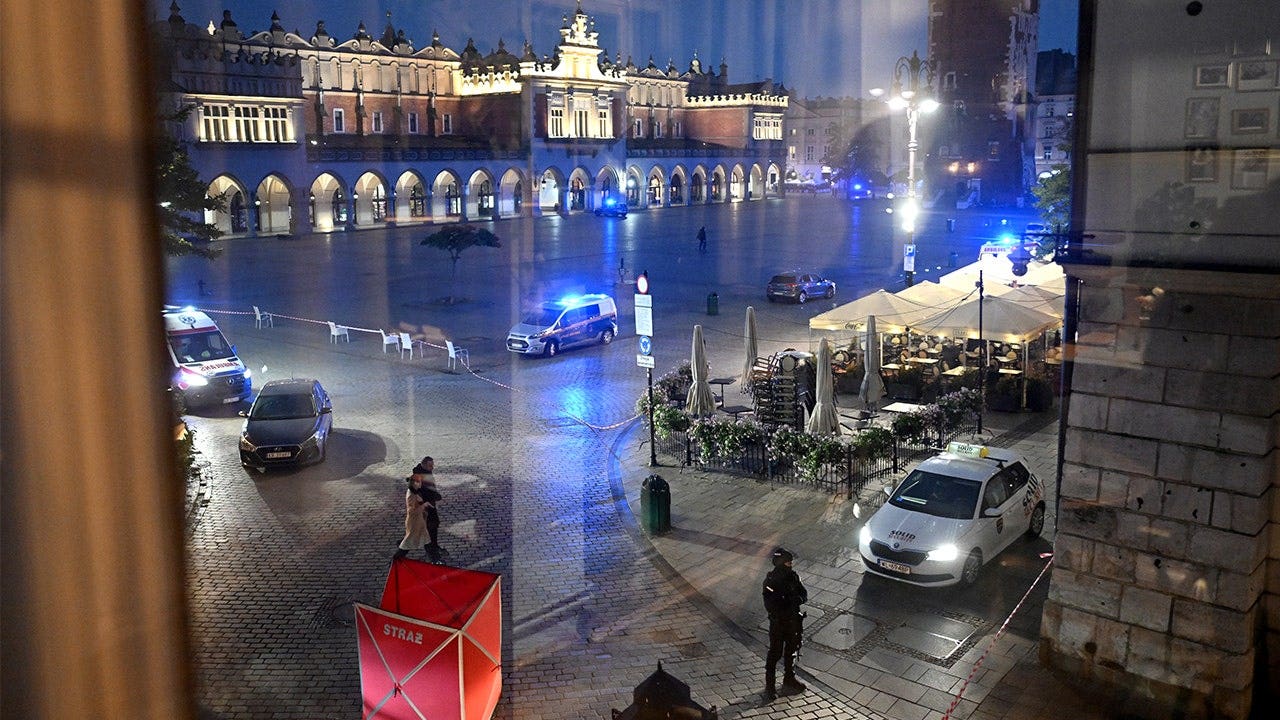
In the heart of Krakow, the rhythm of daily life is often marked by the St. Mary’s Trumpet Call, a haunting, centuries-old melody that rings out from the basilica to signal the passage of time. But recently, that sound was silenced. In a rare and somber gesture of mourning, the city suspended the tradition, a quiet acknowledgment of a tragedy that has shattered the peace of one of Poland’s most historic urban centers. The silence followed a harrowing shooting rampage that left six people dead and 15 others wounded, turning a bustling public square into a scene of chaos and international grief.
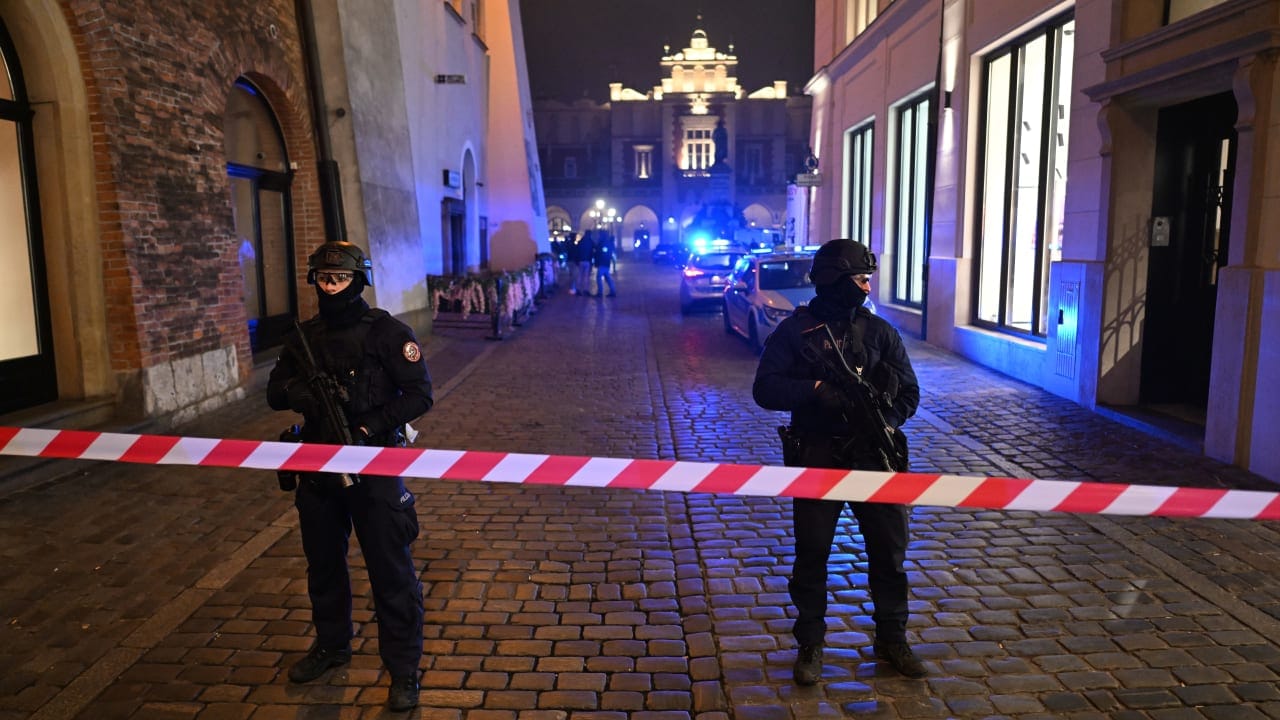
The violence did not begin in Krakow. Authorities have traced the suspect’s movements back to Ostrowiec Swietokrzyski, a town located approximately 150 kilometers away. It was there that the 24-year-old man, whose identity has been at the center of a sweeping investigation, is accused of killing three of his own family members. This initial act of violence served as a grim prelude to the broader attack that would soon unfold, as the suspect traveled toward Krakow, bringing a wave of terror to a wider, unsuspecting public.

The 24-year-old gunman who killed six people in a mass shooting in Krakow, Poland, on Saturday has died in hospital after being shot by police. Authorities suspect he may have been inspired by far-right ideology, citing symbols found on his clothing. Investigators are still examining the possible motive. Source: Reuters
The spree eventually culminated in a violent confrontation with law enforcement. As police moved to neutralize the threat, a shootout ensued, leaving the suspect critically injured. He was transported to a hospital, where he remained under guard as investigators began to piece together the motives behind his actions. On October 23, 2023, regional police confirmed the end of the immediate threat, stating: "We inform you that the perpetrator of the tragic events died this morning in the hospital."
The victims of the rampage represent a diverse cross-section of society, with reports confirming that those killed and wounded were of various nationalities.
While the physical threat has been neutralized, the psychological and political fallout is only beginning. Polish authorities have officially classified the incident as a terrorist offense, a designation that underscores the calculated and ideological nature of the violence. Interior Minister Marcin Kierwinski has been vocal about the suspect’s background, describing him as an individual who held radical and ultranationalist views. This framing suggests that the shooting was not a random act of madness, but the manifestation of a deeply held, extremist belief system that sought to target individuals regardless of their nationality.

Kraków gunman dies in hospital after Poland mass shooting that killed six https://t.co/ekiLoYT9VG
The victims of the rampage represent a diverse cross-section of society, with reports confirming that those killed and wounded were of various nationalities. This international dimension has added a layer of complexity to the investigation and deepened the sense of shock across the country. In a nation where gun ownership is strictly regulated—with only 411,000 people holding valid gun permits—the ease with which such a high number of casualties was inflicted has prompted urgent questions about security and the monitoring of radicalized individuals.
As the investigation continues, the focus has shifted toward understanding how a 24-year-old could descend into such extreme violence. The classification of the incident as terrorism highlights the state's concern over the influence of ultranationalist rhetoric. For a country like Poland, which prides itself on the stability of its public spaces, the realization that an internal threat of this magnitude could emerge from within its own borders has been a sobering experience.

A young gunman who killed six people in Poland on Saturday has died in hospital, police said. Very little information has emerged about the shooter, who was shot by police officers and arrested minutes after he opened fire at people at Krakow’s historic main square from his car. #krakow #poland #shooting #tourism
Today, the city of Krakow remains in a state of reflection. The commemorations held for the victims have served as a focal point for a community trying to process the loss of six lives. The suspension of the St. Mary’s Trumpet Call remains a poignant symbol of a city that has had its history interrupted by a modern, man-made horror. As the legal and social inquiries move forward, the focus remains on the families left behind and the broader challenge of preventing such radicalized violence from taking root again.